
Grocery Store Roofing in Hialeah, FL
Property Types We Roof
A grocery roof leak above a sales aisle is urgent, but a leak near refrigeration equipment can threaten a different operation. The first decision is where water entered, what materials are wet and whether the opening sits near electrical or mechanical equipment. Hialeah’s retail geography includes West 49th Street, Palm Springs Mile and Westland Mall; a grocery tenant may serve customers through long operating hours in any of these commercial settings. We inspect the roof section, trace the water route and coordinate a repair boundary with the facilities contact before moving material or equipment.
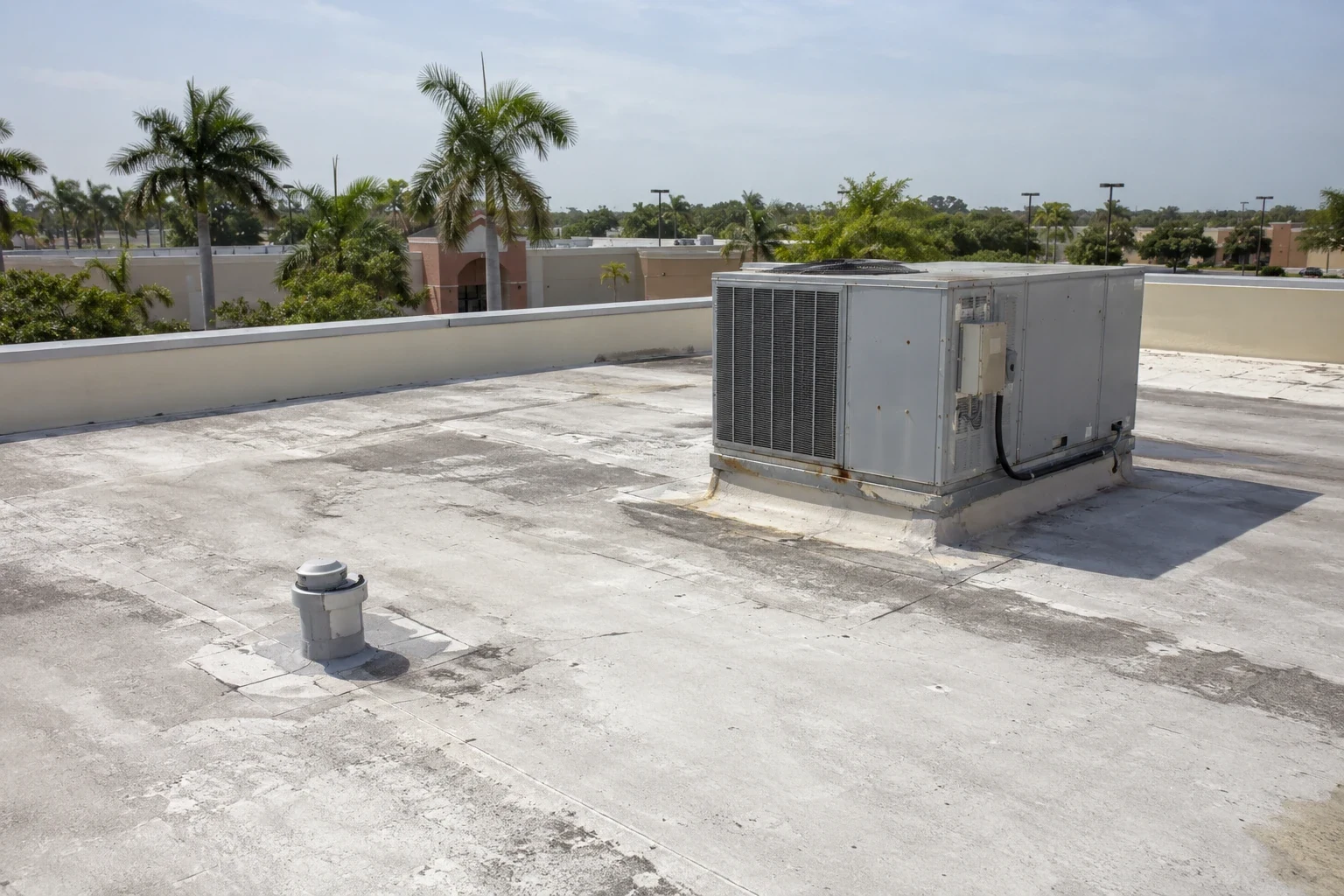
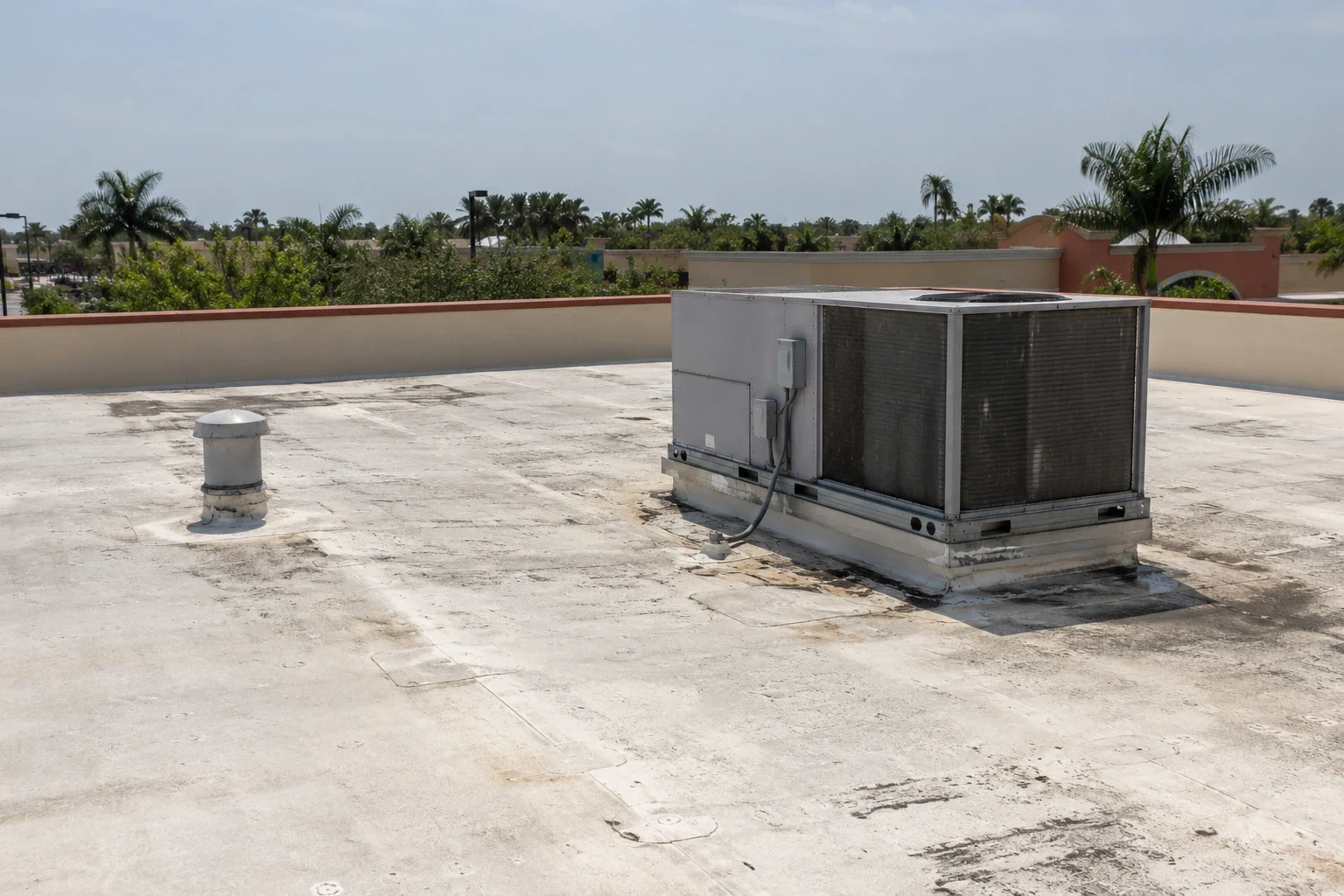
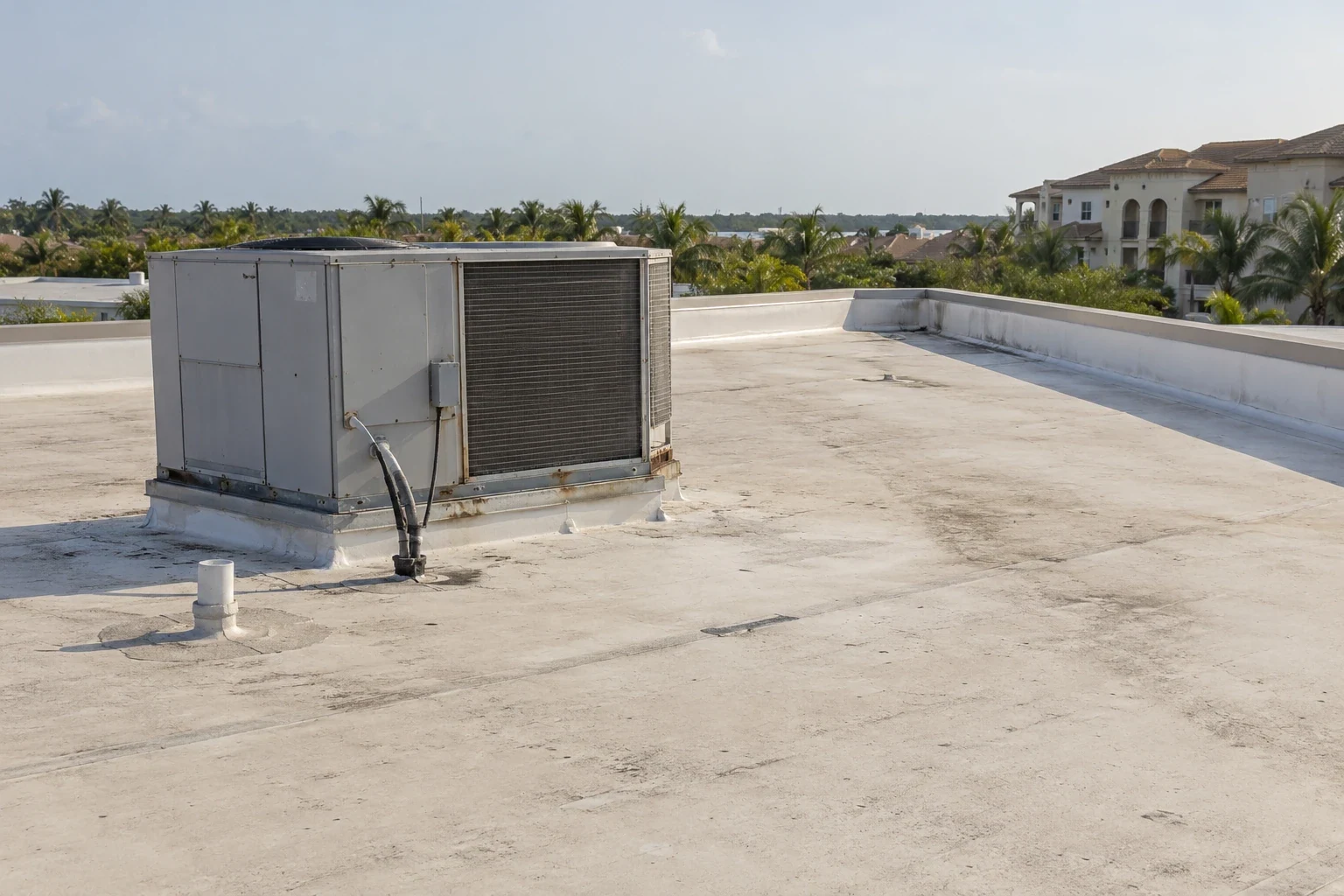
Grocery buildings often combine a low-slope roof with curbs, piping, vents and other penetrations. We verify the actual assembly and condition rather than infer it from the store type. The inspection checks seams, flashing, drains, edge details, prior repairs and signs of moisture below the membrane. An active leak can receive temporary protection while we document permanent repair or replacement options. For time-sensitive water entry, our emergency roof repair response is available around the clock, all week and on holidays.
Map wet areas against equipment and inventory
Interior staff can help locate the time and place a leak appeared, but the roof inspection must establish its source. We plot reports above sales space, stockrooms, receiving and mechanical areas, then check corresponding roof details. Water can move under a membrane or along a deck before showing indoors. Moisture testing helps determine whether insulation is affected and whether the repair can remain local. Where a scan identifies a suspect zone, targeted verification keeps the scope tied to actual roof conditions.
Record equipment curbs and penetrations near the defect. A damaged flashing may admit water while the unit above it continues to operate; moving or shutting down equipment requires coordination with store staff. We note the boundary between roofing work and mechanical access so responsibilities stay clear. Hialeah’s wet-season normal is 48.19 inches, with the stormiest portion generally from mid-May through early July. Drain capacity, clear scuppers and the path to each outlet matter during a heavy downpour. A drain and scupper review should accompany roof condition findings where water is ponding or backing up.
Keep service lanes and store hours in the sequence
Roof material deliveries and lifts can interfere with grocery receiving if the work plan ignores loading patterns. We agree on delivery windows, staging zones, customer-safe boundaries and the person who can approve a change. Interior controls may be needed below a repair, especially near food preparation, refrigerated stock or active electrical equipment. The scope states which areas are affected and how the work crew and store team will communicate if a concealed condition expands the repair.
Safe work windows also shift with the weather. July and August heat index commonly reaches or exceeds 100°F, restricting the period available for rooftop labor. Tropical risk rises from late August into mid-October, so a replacement sequence needs a secure temporary dry-in plan each day. We can split work into sections and define hold points rather than leave a broad opening vulnerable to a passing storm. For an occupied grocery property, our occupied-building roofing plan coordinates access and phasing with store operations.
Separate the membrane repair from equipment work
The roof price depends on the affected area, insulation condition, flashing details, number of penetrations, access, drainage corrections and the store’s operating window. A localized puncture with dry adjacent materials may support a defined repair. Wet insulation, repeated seam openings or degraded details across several areas can justify a broader scope. The estimate should mark what the roofer handles and what requires mechanical shutdown, equipment support or another trade. That avoids treating a curb adjustment as included when the requested work covers only the membrane.
For replacement planning, Miami-Dade’s roofing permit plans require drains or scuppers, pressure zones and parapets to be shown. The county is in the High Velocity Hurricane Zone, so selected products and assemblies must follow approval and installation requirements. We identify the roof construction and relevant details before proposing a new assembly. Emergency stabilization, permanent repair and full replacement should appear as distinct decisions. A roof insulation and cover-board assessment can help identify whether the concern is limited to the waterproofing layer or extends into the assembly. Compare nearby retail property needs in a shopping center roof plan and restaurant roofing scope.
Leave maintenance staff a record they can act on
Closeout should include a marked roof plan, dated photographs, repair materials and locations, drain observations, equipment-adjacent details and open recommendations. Identify any temporary protection by location and date. The maintenance contact needs to know which interior reports were traced to a roof issue and which remain open for another trade. If the next rain produces a new leak, this record gives the team a precise starting point. Keep the repair date, responsible contact and follow-up inspection in the same log. If recurring moisture appears near a curb or outlet, facilities staff can compare new photographs with the earlier condition instead of relying on memory. That is useful when operating shifts or service vendors change between visits. Note whether temporary protection is still in place and who is assigned to remove it after permanent repair.
We can set recurring checks for drains, seams, flashings, curbs and prior repairs through a preventive roof maintenance visit. A store with several locations may also need multi-site roof tracking so each property retains its own condition and approval status. For properties along Hialeah’s West 49th Street commercial corridor, customer access and receiving windows belong in the site plan. Share the address, roof history, active leak report and approval contact. We will return a practical repair boundary, needed coordination and next decision for the store operator.

Questions
WHAT OWNERS ASK
Does a leak near refrigeration equipment require a roofing and mechanical scope?
It may. We inspect the flashing and membrane, document the likely water entry and identify whether equipment access or shutdown is needed. The written scope separates roofing tasks from mechanical work so store staff can coordinate the right contact.
Can a grocery store keep receiving deliveries during reroofing?
Usually the work can be sequenced around agreed delivery periods, provided access and staging are coordinated. We identify lift zones, material routes and the daily dry-in line before starting. The receiving manager and site contact should know who approves changes.
How do you protect products below an active roof repair?
We define the work area with the facilities contact, identify inventory or equipment beneath it and put interior protection or temporary controls in place as the condition requires. If the repair boundary changes, the contact receives the finding before the scope expands.
What Hialeah weather should shape roof maintenance?
The wettest seasonal stretch is typically mid-May through early July, making drainage checks important before repeated downpours. Summer heat narrows safe work windows, and the greater tropical risk period runs from late August into mid-October.
Related Roofing Work
Protect the store and document the roof condition
Send the grocery address, active leak location, equipment constraints and last repair record. We will inspect, identify the repair boundary and coordinate the next step with your operating contact.