
Shopping Center Roofing in Hialeah, FL
Property Types We Roof
A shopping center roof can have one owner, several tenants and multiple interior reports describing the same water event. The first task is to locate the affected roof section and match each ceiling mark to the roof condition above it. Hialeah’s retail activity is concentrated along West 49th Street, Palm Springs Mile and Westland Mall, where customer access and tenant operations make work sequencing a practical part of the scope. We inspect the membrane, drains, curb flashings and adjoining details, then mark what needs immediate repair and what belongs in a larger plan.
We handle low-slope and metal roof repair, replacement, recover, restoration, coatings, inspection and maintenance. We compare each tenant report with roof and interior findings before defining the repair boundary. Water may travel beneath the membrane before appearing inside, and a shared roof can direct flow toward another suite. The written finding should identify the likely entry, the evidence, the repair limit and any unresolved moisture. If several spaces show symptoms, track them separately before assuming a single defect. A commercial roof inspection gives ownership a documented condition and a basis for the next approval.
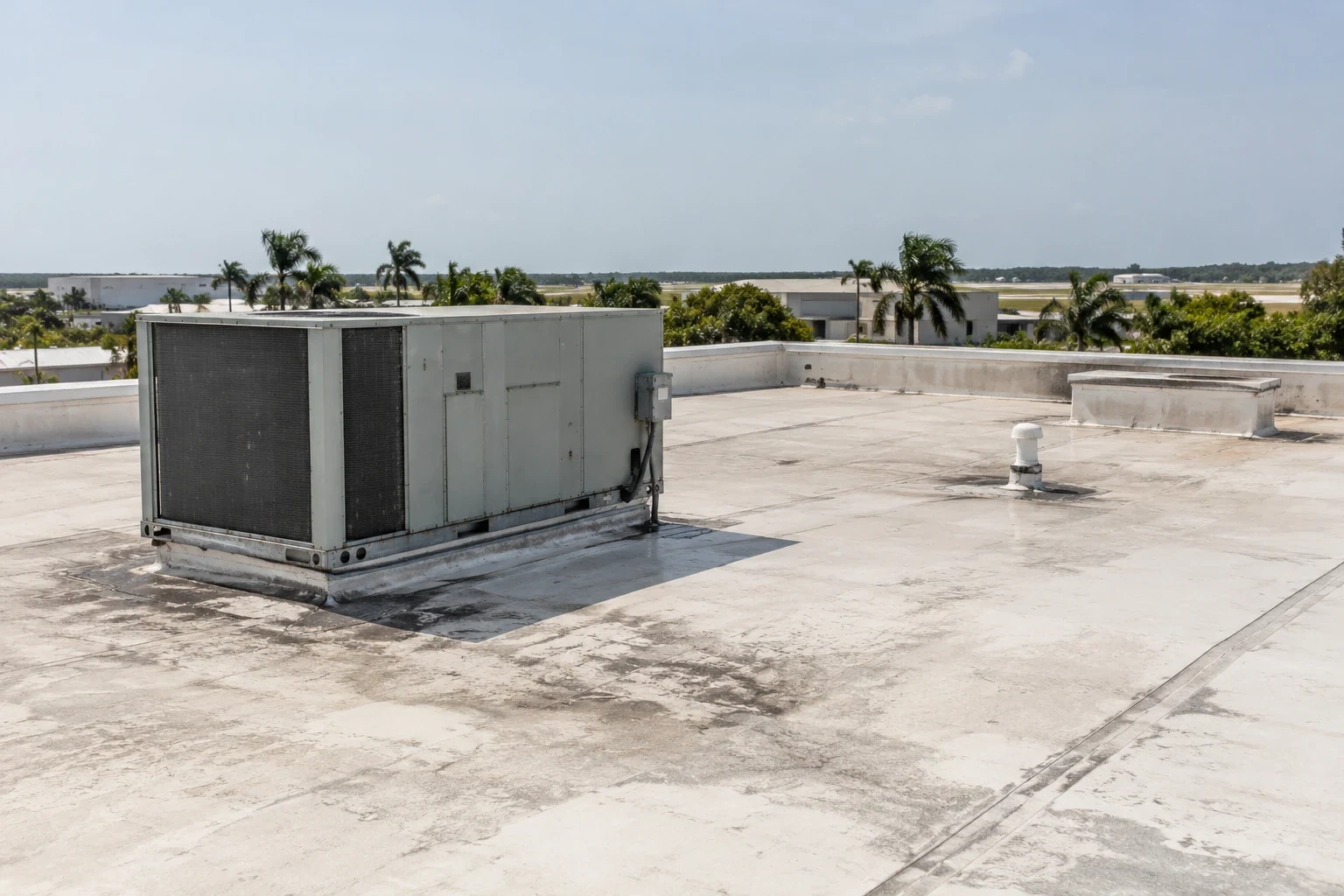
Match tenant reports to roof sections
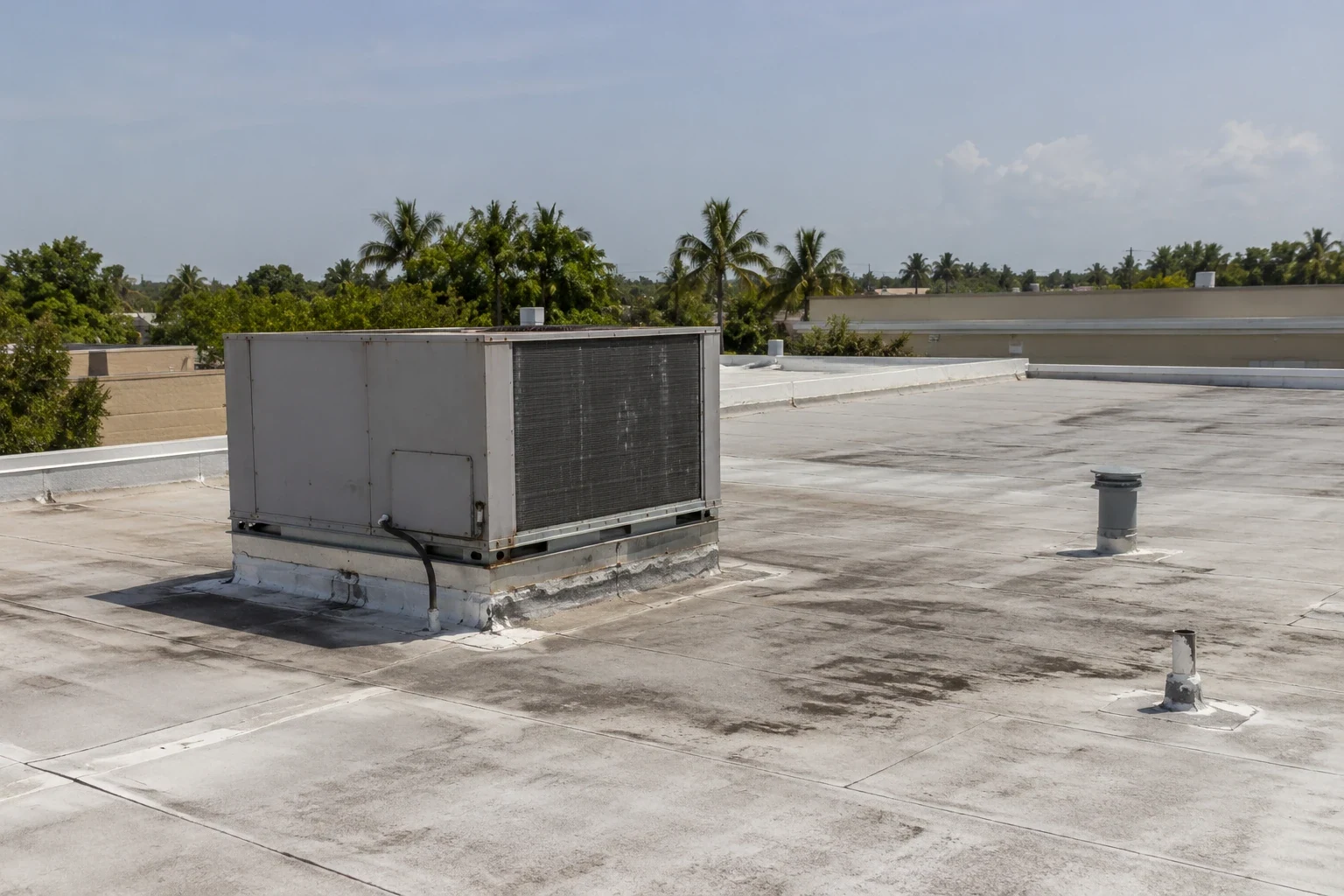
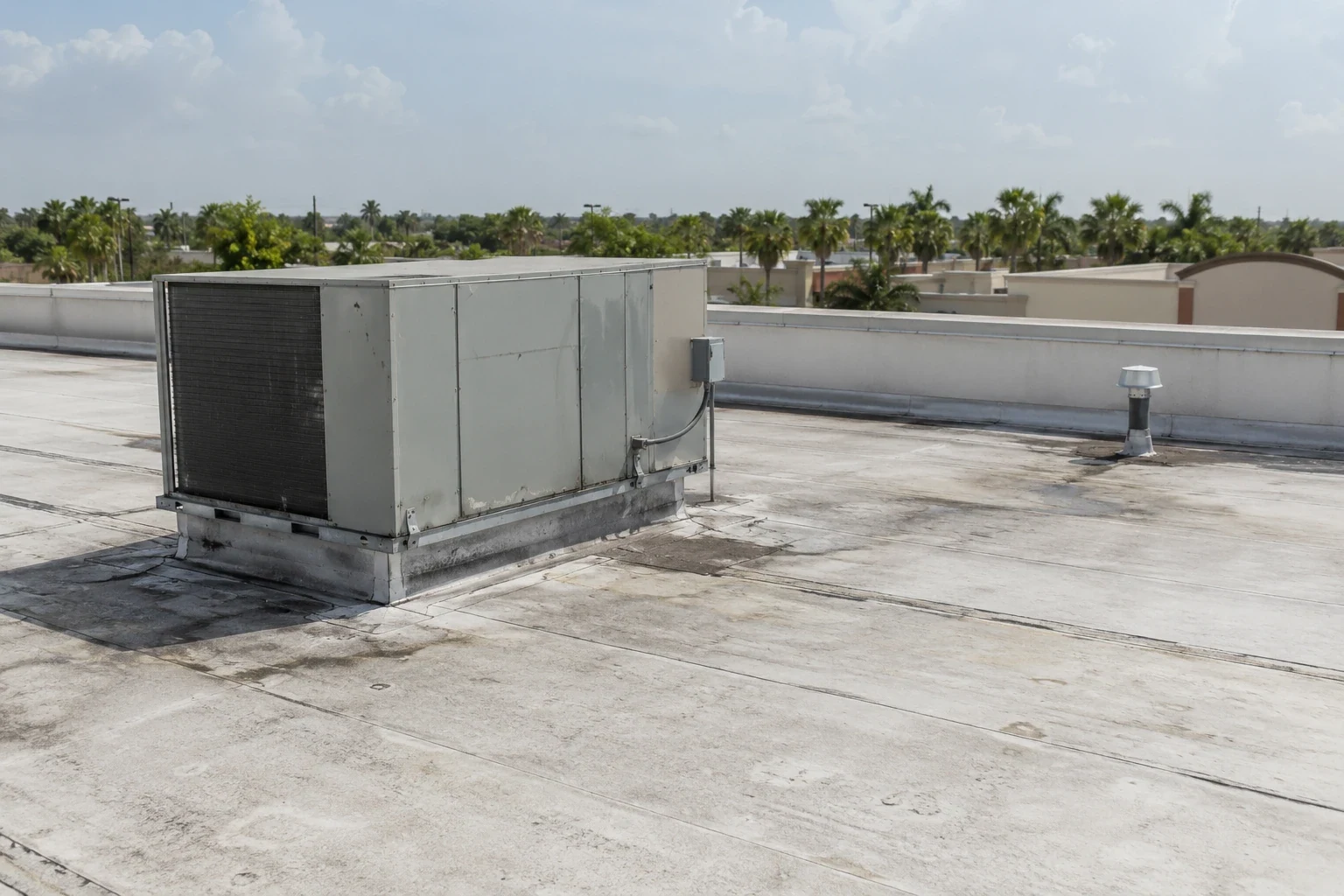
Start with a dated log: suite, room, first reported date, rain conditions, ceiling effect and any change after temporary protection. We compare that map with roof penetrations, seams, drains, parapet transitions and prior repair locations. The visible leak may sit away from its entry point. If moisture readings indicate wet insulation beyond one detail, the repair area may need to grow; if surrounding materials are dry, a contained repair may be appropriate. The report should distinguish confirmed damage from suspected paths so the owner does not pay to replace unaffected areas without evidence.
Hialeah receives a 48.19-inch normal wet-season rainfall, and the stormiest period falls from mid-May into early July. Drain bowls and scuppers deserve particular attention before that stretch. Standing water can load weak seams and expose low spots, while a blocked drain can send water toward tenant interiors. We record the route to the outlet and note whether the outlet was clear during the inspection. When an active opening needs a prompt response, our leak repair service can control the entry while a broader condition is assessed.
Protect tenant operations in the work plan
Retail work cannot be scheduled from the roof plan alone. We coordinate loading access, customer entrances, rooftop staging, noise and any interior protection with the property contact. Work above a food tenant, major retailer or common corridor can require a different sequence from a vacant suite. Each phase should have a clear roof limit, tenant notice owner, delivery path, weather hold point and daily dry-in plan. If crews uncover wet insulation or a larger failure, the contact needs the evidence and price change before the work boundary shifts.
During July and August, heat-index readings can top 100°F, a constraint for scheduling roof work across a retail property. Tropical risk is higher from late August into mid-October. Build contingency into the schedule rather than leaving a roof opening dependent on perfect weather. We respond to emergencies around the clock, every day, including holidays, when active water threatens stores or common areas. A phased occupied-building reroof can keep work separated from business hours and customer circulation.
Price the repair limit and the retail disruption
Cost reflects the number of affected sections, roof access, tenant coordination, penetrations, insulation condition, drainage corrections and whether the existing assembly can support repair or recovery. A spot repair may resolve a documented breach; repeated leaks in different suites can point to broader membrane or drainage issues. We show the immediate scope separately from optional preventive work so management can approve what stops water first, then evaluate the remaining roof life and budget.
Replacement submittals in Miami-Dade need to map roof drainage, pressure zones and parapet conditions. High Velocity Hurricane Zone rules apply in Miami-Dade, making product approval and its installation limitations part of system selection. We verify the existing roof construction and project requirements before proposing an assembly. Hialeah’s West 49th Street and Palm Springs Mile retail corridors help make access questions concrete, but no two shopping centers have identical tenant hours or roof layouts. Property managers comparing the retail asset to other occupied buildings can review big-box retail roofing considerations and restaurant roof conditions.
Close the loop with each tenant and owner
After the work, ownership needs a closeout record that tenants can understand without turning it into an engineering file. Mark the repaired area, include before-and-after photographs, identify any temporary work and state whether follow-up inspection is needed. Keep a separate entry for every suite report and roof section. That lets a manager see whether new leaks track to one location or whether a drainage pattern is affecting several tenants.
A maintenance round can document drains, seams, flashings, coating condition and prior repair points before the next rainy season. We can pair that work with an inspection of drains and scuppers and a preventive roof maintenance plan. For localized retail context, the West 49th Street commercial corridor is one of Hialeah’s principal shopping areas. Keep the address, tenant contact and next approval together in the portfolio record, then assign a person to confirm that interior symptoms have stopped after the next rain. That final check closes the roof work and the tenant communication loop. Retain the inspection date and the person who verified interior conditions. If the suite remains dry, record the result; if it does not, reopen the investigation with the prior repair location in hand. This avoids treating a second symptom as unrelated without checking the roof evidence first.
Questions
WHAT OWNERS ASK
Several stores reported leaks after the same storm. Is that one roof failure?
Not automatically. We map each report to the roof above it, look for shared drainage or membrane conditions and test for moisture where needed. A common cause may emerge, but the work order should keep confirmed locations separate from suspected connections.
Can repair work happen while shops are open?
Often, with an agreed access route, staging area, noise window and protection plan. The sequence depends on where roof access sits relative to customers, deliveries and tenant operations. We define the limits before starting and notify the designated property contact if conditions change.
What if a tenant ceiling keeps staining after a roof patch?
We return to the recorded repair location, check the water path and determine whether the opening held. Water can remain in concealed materials or enter at a nearby detail, so the follow-up compares roof and interior evidence rather than adding another patch without diagnosis.
Which Hialeah weather periods affect retail roofing plans?
The stormiest rainy-season stretch is generally mid-May through early July. The schedule must leave room for midsummer heat limits and the later tropical-risk window, which intensifies from late August into mid-October. Drainage and temporary dry-in planning should be reflected in the schedule.
Related Roofing Work
Get one roof record across tenant reports
Send the center address, suite reports, prior repairs and ownership contact. We will map the symptoms to roof sections and return a repair scope with access and phasing noted.