
KEE Roofing in Hialeah, FL
Roof Systems
A roof with repeated seam repairs or a difficult rooftop exposure needs more than a comparison of membrane names. We inspect the existing sheet, welded joints, drains and equipment discharge, then match the proposed assembly to the building. Hialeah's wet season and the active business strip along Palm Springs Mile make drainage and work sequencing practical decisions. The recommendation should identify why KEE is being considered and what evidence supports that choice.
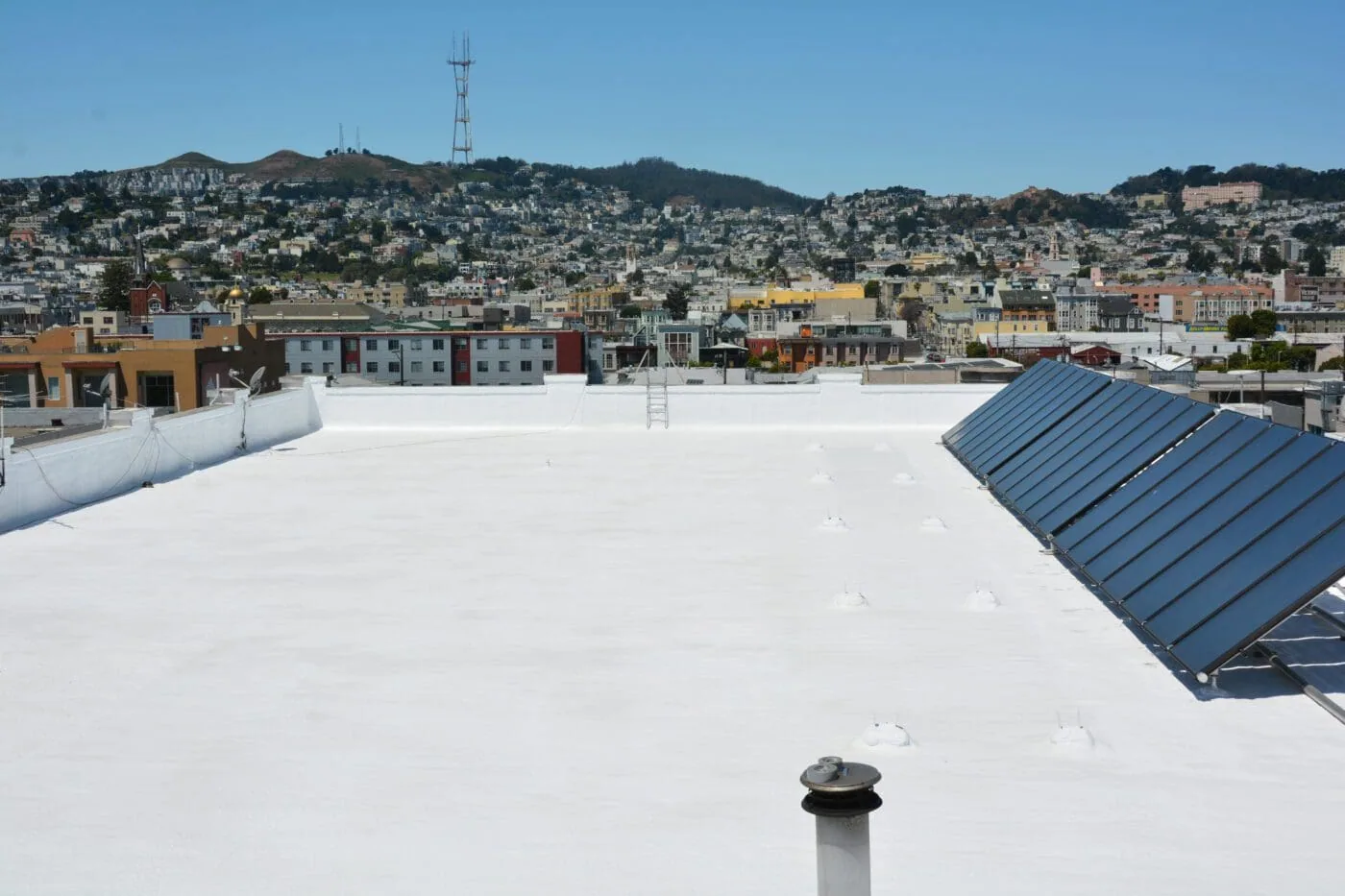
Identify the membrane and its exposure
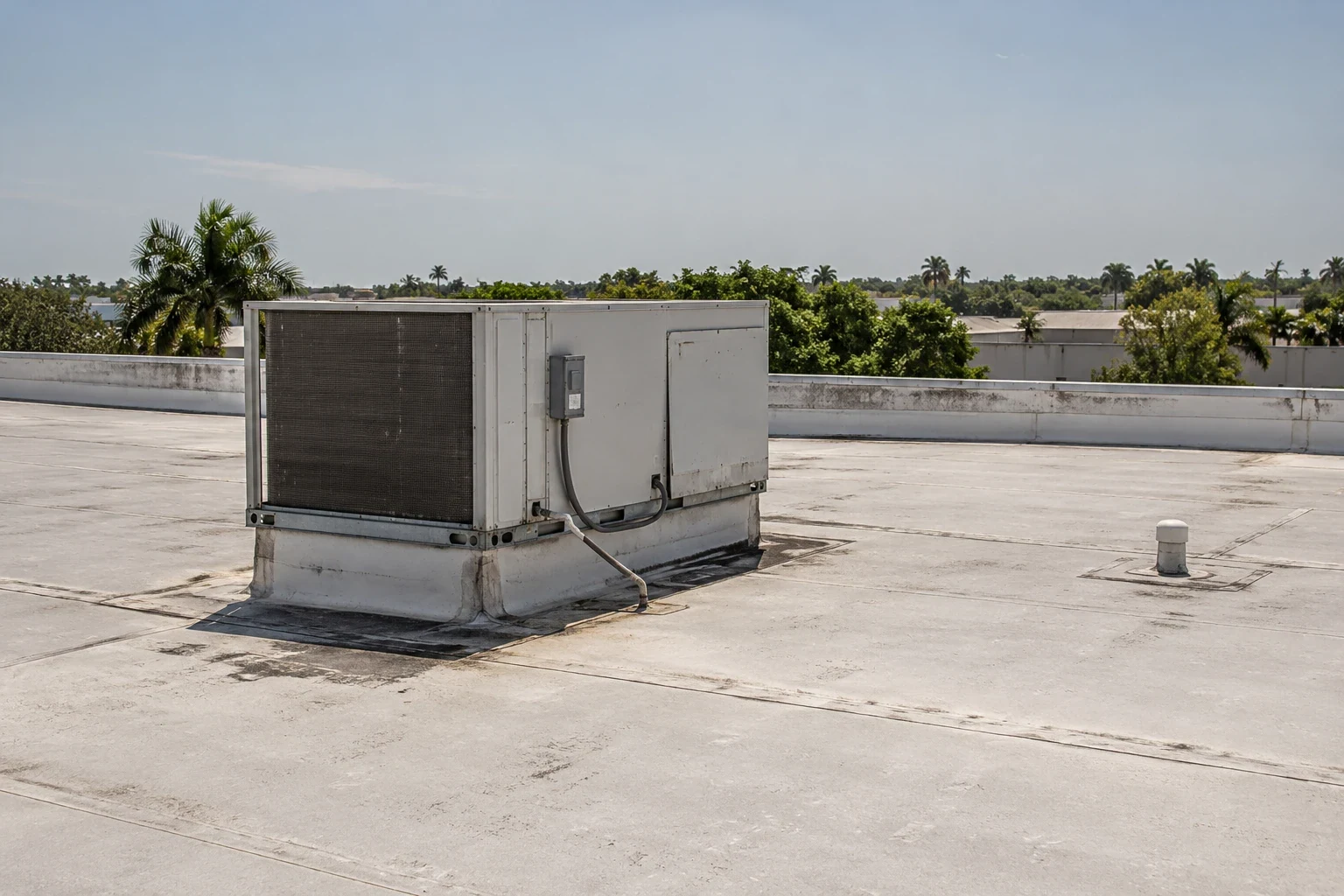
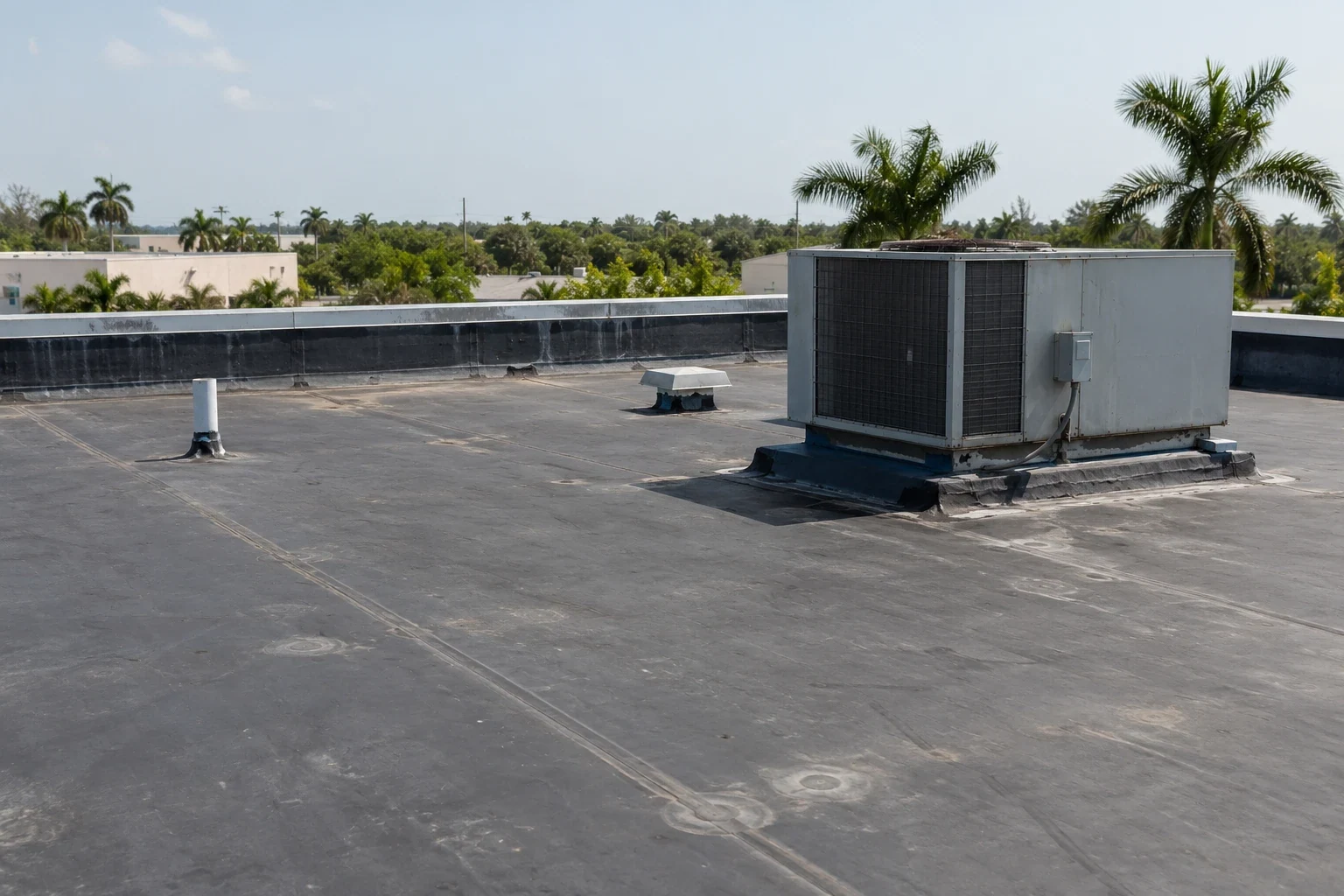
KEE refers to ketone ethylene ester, a resin used in some PVC-based roofing membranes. Product formulations and reinforcement vary, so the specification should identify the exact membrane and compatible accessories rather than rely on a general KEE label. We review available submittals, repair records and roof samples when identification is uncertain. At the roof, we inspect seam welds, field condition, flashing, penetrations, perimeter attachment and areas exposed to rooftop exhaust or service traffic. We also note which equipment areas receive routine service so compatible walk paths and discharge checks remain part of maintenance.
Exposure matters because oils, grease, chemicals and cleaning products can affect different materials in different ways. We document what is discharged, where it reaches the roof and how frequently the area is serviced. The facility contact confirms roof chemical exposure and discharge patterns; test cuts or moisture checks can establish insulation condition beneath a recurring leak. A roof inspection records the condition by section and sets a defensible repair boundary before a new assembly is priced.
Service records can help clarify chemical exposure. We compare maintenance logs, equipment discharge locations and prior repair notes with the visible roof pattern, then ask the site contact to confirm what changed. We verify current compatibility by comparing service records, discharge locations and visible roof materials. Recording the source and route of discharge gives the design team a usable basis for checking the membrane specification and protective detailing.
Specify the whole KEE assembly
Membrane selection is only one line in the assembly. Deck, insulation, cover board, fastening or adhesive, perimeter attachment, flashing and drainage all have to work together. We check how the sheet terminates at walls and parapets, turns around curbs and pipes, and connects at drains. The fastener pattern and edge details matter because loads at the perimeter differ from the field. The proposed configuration must match its product approval.
Hialeah falls within Miami-Dade's High Velocity Hurricane Zone. Permit drawings identify drains or scuppers, pressure zones and parapets, and the selected roof system must stay within its documented installation limits. We compare the proposed KEE product with a PVC membrane or TPO roof when the building, exposure or project documents support a different option. We present tradeoffs in the context of the actual substrate and service needs.
Plan for rain between installation steps
Hialeah's 1991 to 2020 wet-season normal totals 48.19 inches; the period with the most storms begins in mid-May and runs into early July. That amount of seasonal rain makes secure tie-ins and functioning drains part of each shift's closeout. We limit the area opened at one time, check that temporary protection sheds water and keep the route to drains clear. If water is already ponding, the condition needs to be understood before another membrane covers the field.
Summer heat adds crew-safety and material-staging limits, while late-season tropical risk can narrow the schedule. We track completed welds and check details as the work progresses rather than leaving all quality review until the end. If leaks continue while the capital scope is under review, commercial leak repair can address the immediate entry point and document conditions for follow-up. Temporary work remains clearly separated from a permanent system replacement.
Compare scope assumptions before approval
KEE project cost moves with tear-off, insulation depth, deck repairs, cover board, attachment, metal edges, penetration count, access and how many sections remain occupied during work. A proposal should identify the product, thickness, assembly components, approved details and treatment of concealed damage. It should also state which old layers are removed and whether drains and curbs need height adjustments. A sheet-only comparison misses much of the installed system.
For a business near Palm Springs Mile, controlled deliveries and customer access can influence staging. Along the NW 107th Avenue corridor, we confirm each property's entrances, work hours and roof drainage with its site contact. We verify the actual property entrances, work hours and drainage conditions with the site contact. A capital planning record can compare KEE replacement with repair or a phased roof program without mixing observations across buildings.
Make future inspection easier
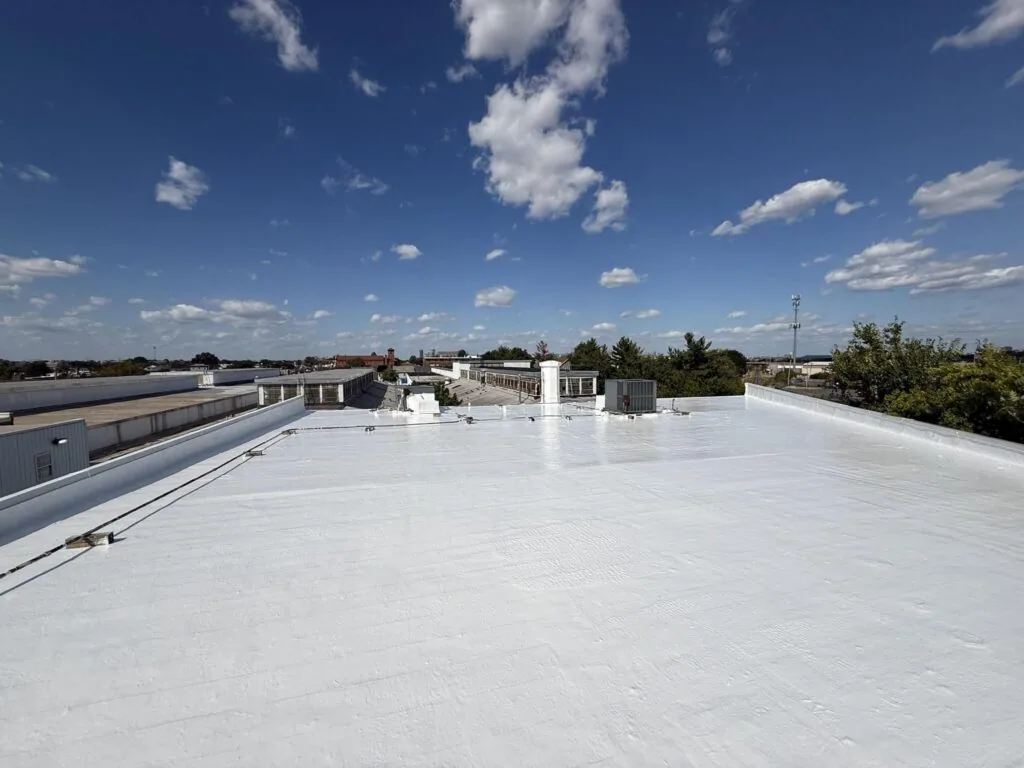
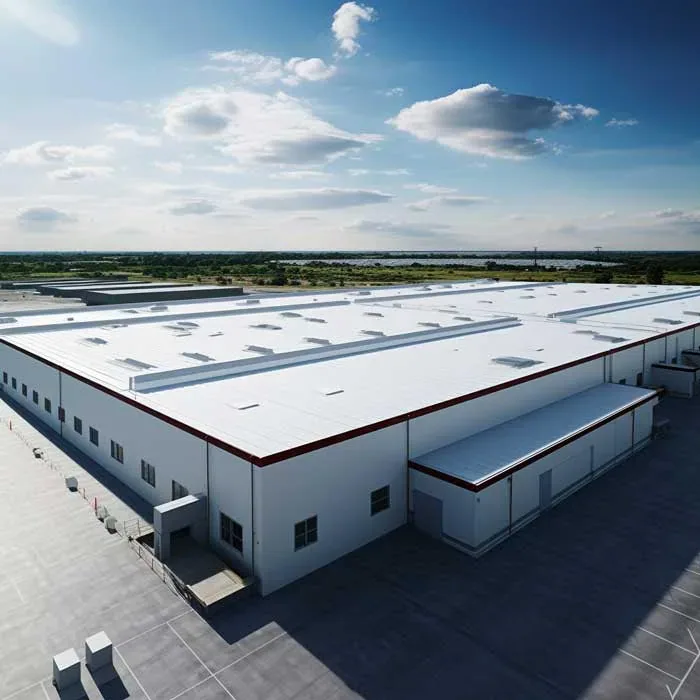
Closeout should preserve the membrane product information, installation scope, field photos, seam checks, flashing details and locations of any substrate repairs. We note the sections included and any conditions that remain outside the contract. A clear maintenance schedule should call for inspection after rooftop service work and after significant weather, with drains and transitions included. The owner then has a baseline for later decisions.
Bring the property address, repair history, roof plan and approval contact. We will confirm the existing system and exposure, then present the evidence behind the proposed KEE option. Near NW 107th Avenue, access can vary with traffic and drainage work; retail service around Palm Springs Mile has another schedule to coordinate. The roof conditions remain the basis for the assembly decision.
Questions
WHAT OWNERS ASK
What does KEE mean on a roofing proposal?
It identifies a PVC-based membrane formulation that uses ketone ethylene ester resin. The exact product, reinforcement, thickness and approved accessories still need to be listed. We review the product documents and the roof details together, since the acronym does not specify the entire assembly or prove compatibility with a particular discharge.
Does KEE handle grease or chemical exposure?
Some KEE and PVC products are selected for resistance to certain oils and chemicals, but suitability follows the product limits and actual exposure. We identify the substance, concentration, temperature and path across the roof, then check the manufacturer documentation for the proposed system. If discharge is localized, the scope may include a different detail or service arrangement around that area.
How is a KEE roof attached in Miami-Dade?
The approved assembly, deck, insulation, roof geometry and project design set the attachment method. We verify the fastening or adhesive method along with perimeter and corner details, then make sure the installation stays within product limits. The permit package identifies drainage, pressure zones and parapets. An assembly that is approved in one configuration cannot be assumed to fit another.
What should happen after a KEE roof is installed?
Keep the closeout documents and inspect seams, flashings, drains and rooftop service areas on a planned schedule. New penetrations, dropped tools or equipment changes can disturb the membrane. We can record maintenance findings by section, complete minor repairs where appropriate and flag conditions that call for a capital review. The first baseline report helps future staff interpret changes.
Related Roofing Work
Review the KEE assembly before ordering
Send the roof plan, exposure details, repair records and approval contact. We will inspect the existing membrane and verify the proposed product and installation scope.