
Commercial Roof Repair in Hialeah, FL
Commercial Roofing Services
A commercial roof repair should stop a defined failure and explain whether the surrounding roof remains serviceable. We trace the water path, inspect the membrane or roof covering, check flashings and drainage, then mark the repair boundary. A stain inside a warehouse near Hialeah Heights can originate far from the roof opening; a leak beside a storefront along West 49th Street may follow a curb or parapet. We record what is visible, what testing confirms and what still needs monitoring before quoting a repair.
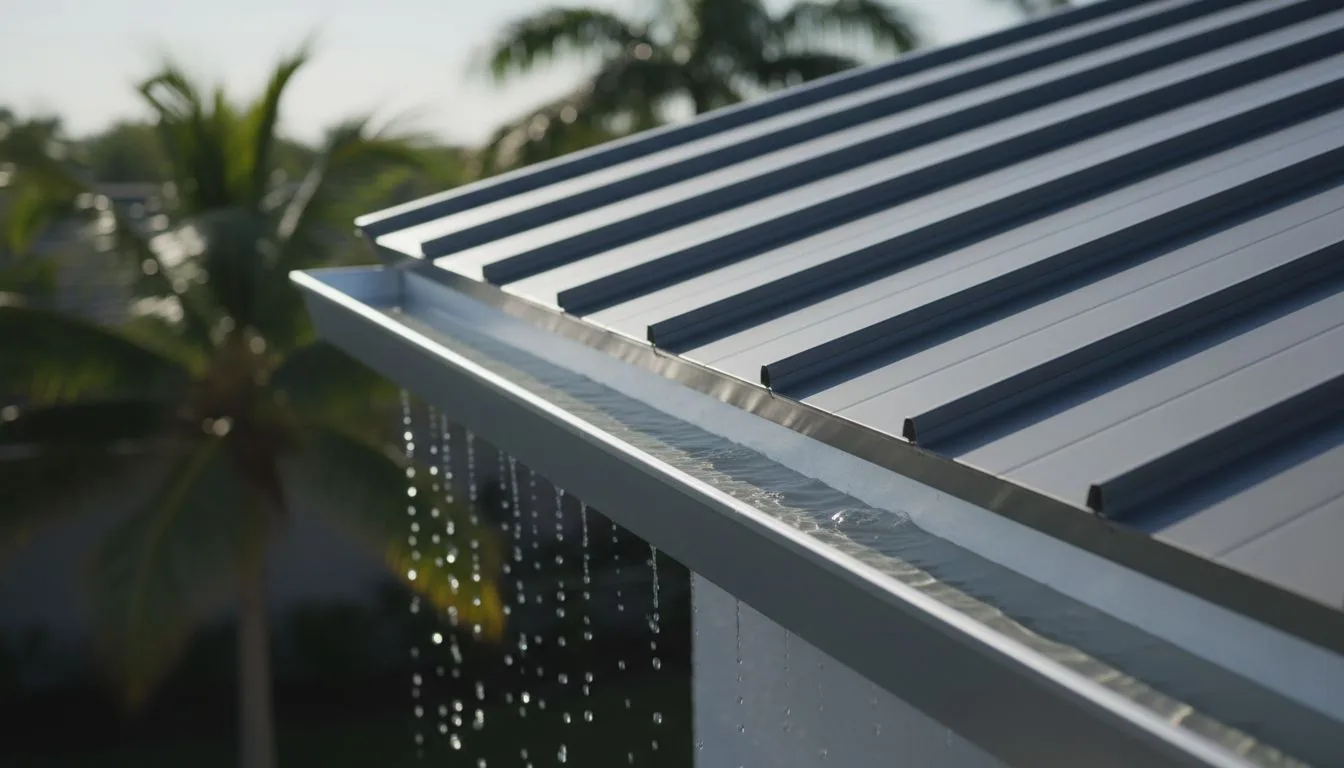
Trace the path before opening the roof
Water can travel along insulation, deck flutes, framing or conduit before it appears on a ceiling. We compare the interior symptom with roof seams, penetrations, edge details and drainage above it. The inspection considers recent rain, prior patches and whether the leak repeats under a particular wind direction. We photograph the affected interior area and the likely roof entry points, then use targeted probes or test cuts when surface inspection cannot distinguish a local defect from concealed moisture.
That evidence keeps a repair from becoming a bead of sealant over the nearest visible gap. If wet material extends beyond the opening, the repair boundary must include removal and replacement of affected layers. If water enters at a curb, wall or drain, those interfaces need a compatible detail. A commercial roof inspection records the condition by section, while commercial leak repair focuses on tracing and stabilizing an active opening.
Match the repair to the installed assembly
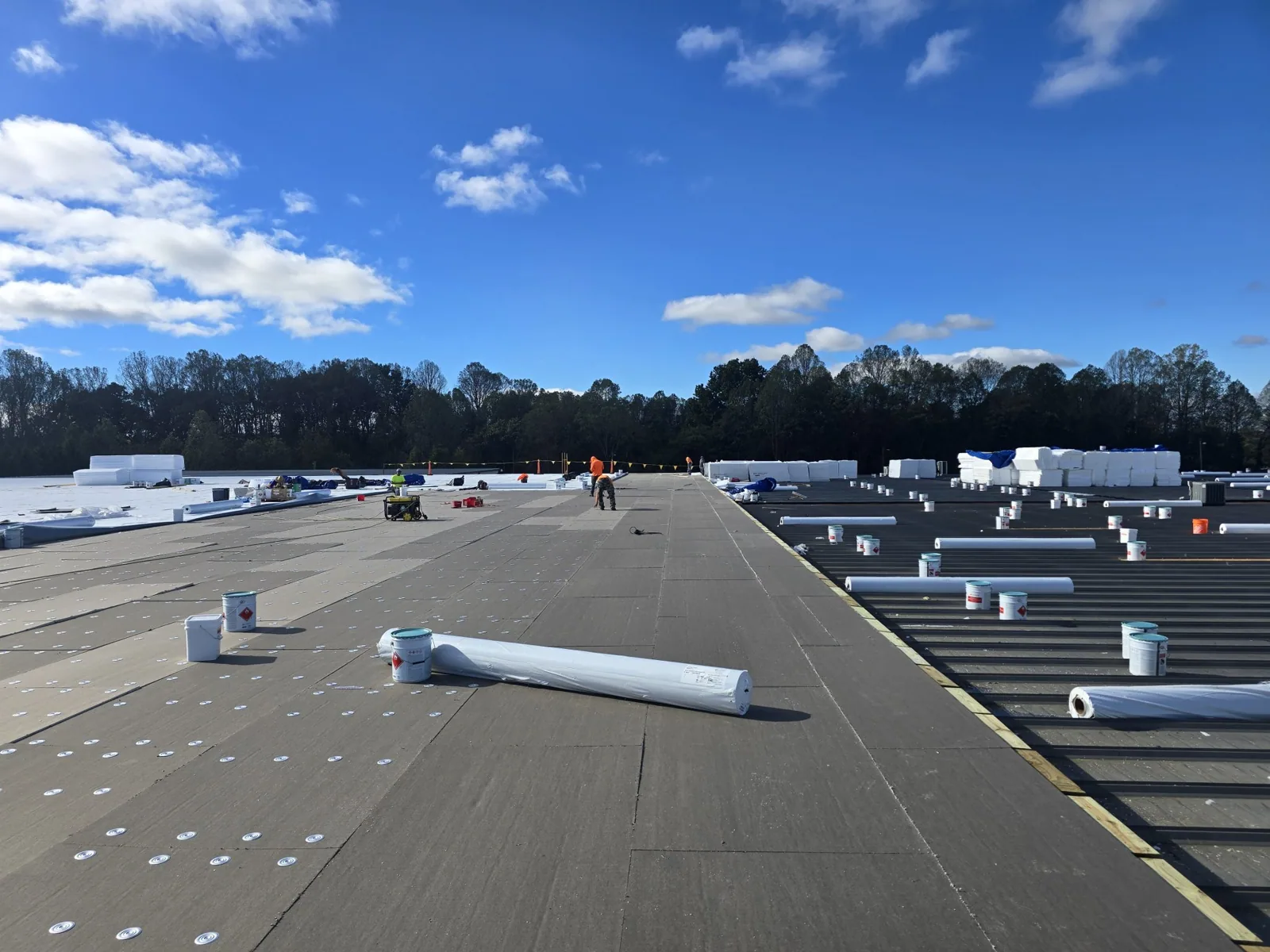
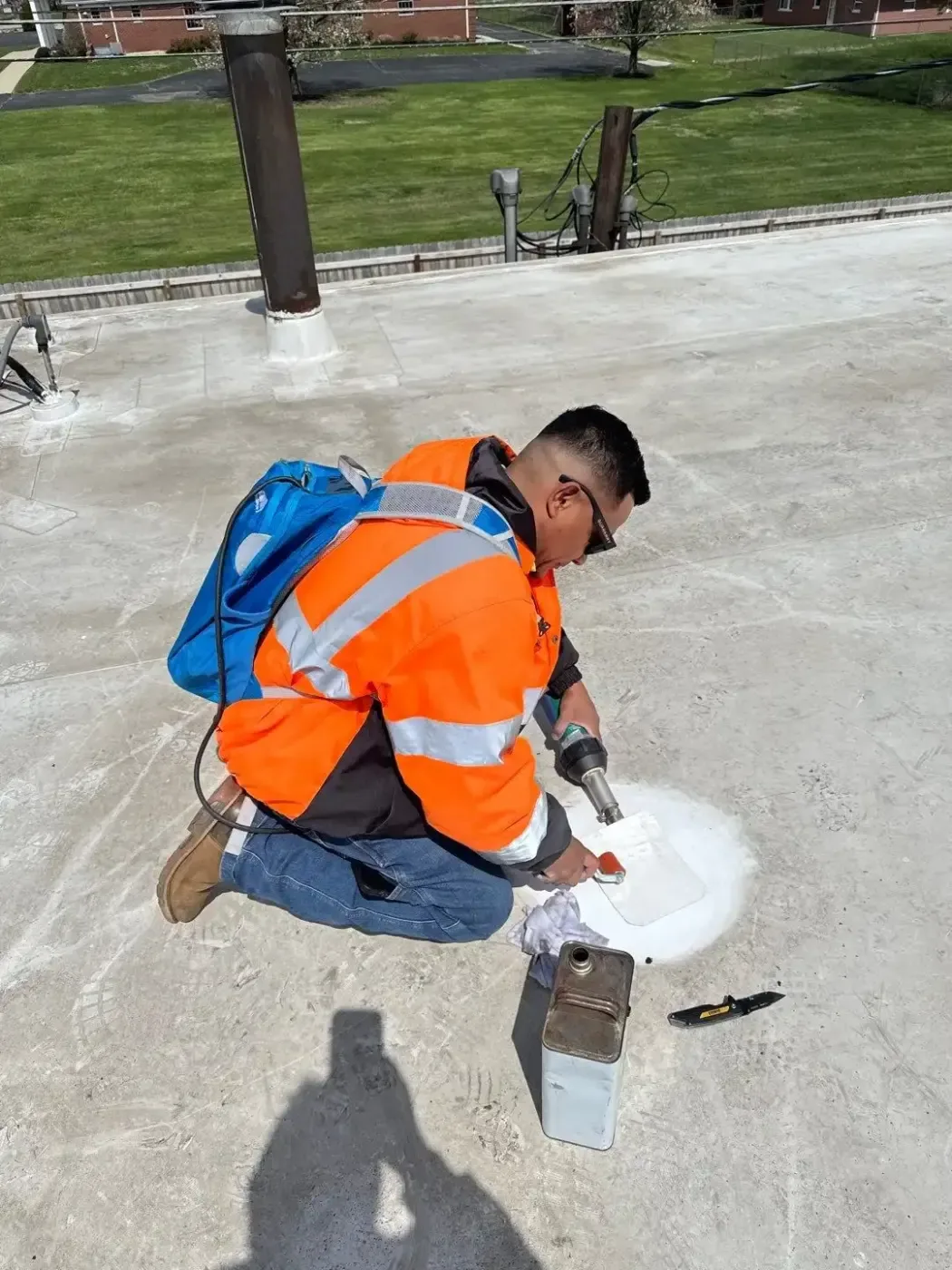
Repair materials need to work with the existing roof. We identify the membrane or panel, surface condition, attachment, seams and prior coatings before selecting a patch method. TPO, PVC, EPDM, modified bitumen, built-up roofing and metal all have different preparation and tie-in requirements. Before installation, we verify surface preparation and compatible bonding conditions. The scope records patch dimensions, reinforcement and termination so another reviewer can identify the detail being installed.
At flashings, we inspect corners, counterflashing, pitch pans, equipment curbs, skylights and wall transitions. Movement or incompatible materials can reopen a patch even when the field membrane is sound. Drain and perimeter issues may need adjacent work, so we flag when a penetration flashing repair or drain and scupper correction is required. If recurring failures indicate that isolated repair is no longer durable, we compare the affected section with a replacement scope rather than selling repeated temporary work.
Separate a repair from a larger capital problem
A practical repair proposal identifies the defect, affected area, layers to remove, substrate condition, replacement materials and limits of the work. It also explains what remains outside the boundary. We tie the repair scope to inspected sections and state any warranty coverage only when the applicable terms support it. If moisture mapping or additional test cuts are needed to set quantities, the proposal can identify that inspection as a separate step.
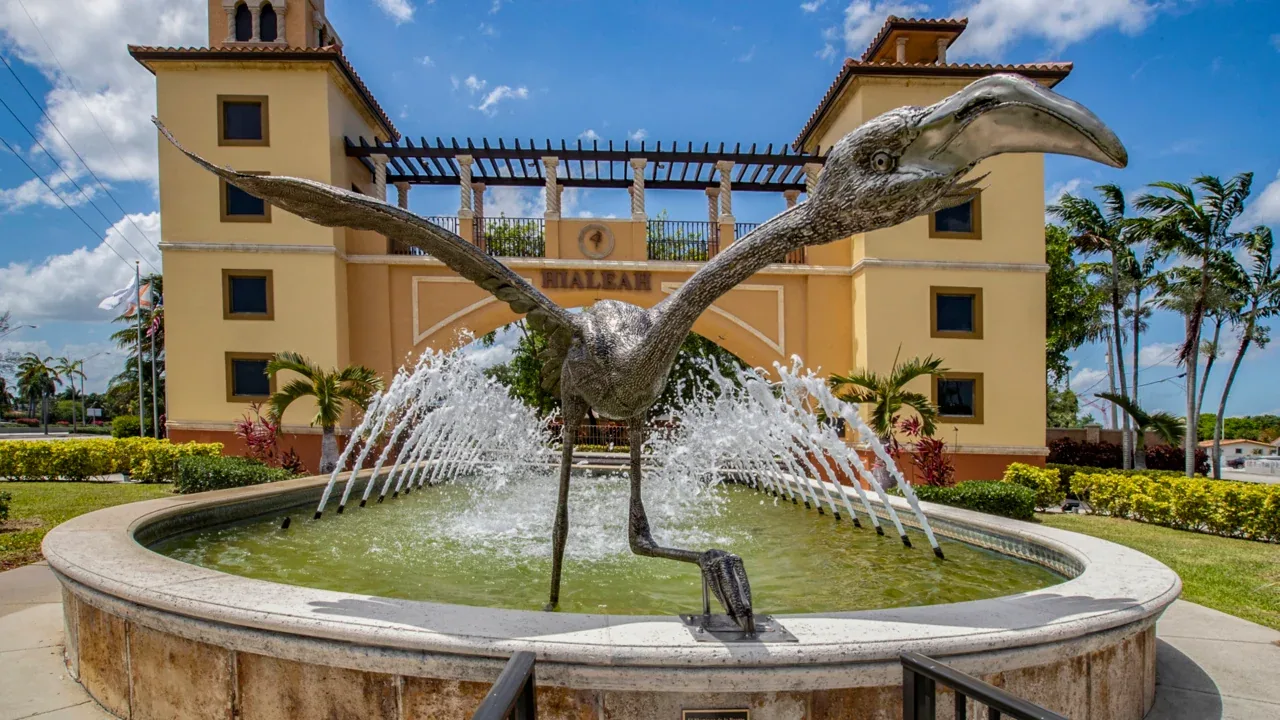
Hialeah Heights industrial properties, Palm Springs Mile businesses and facilities near Palmetto General Hospital have different operating constraints. We confirm the access and work window with each property's contact. For owners overseeing several properties, we can log each repair with its location, photos, urgency and repeat-failure history in a roof asset record. The record lets facilities compare recurring leaks with earlier work before setting another repair limit. That makes it easier to compare current repair spending with likely replacement timing through capital planning.
Work safely around active operations
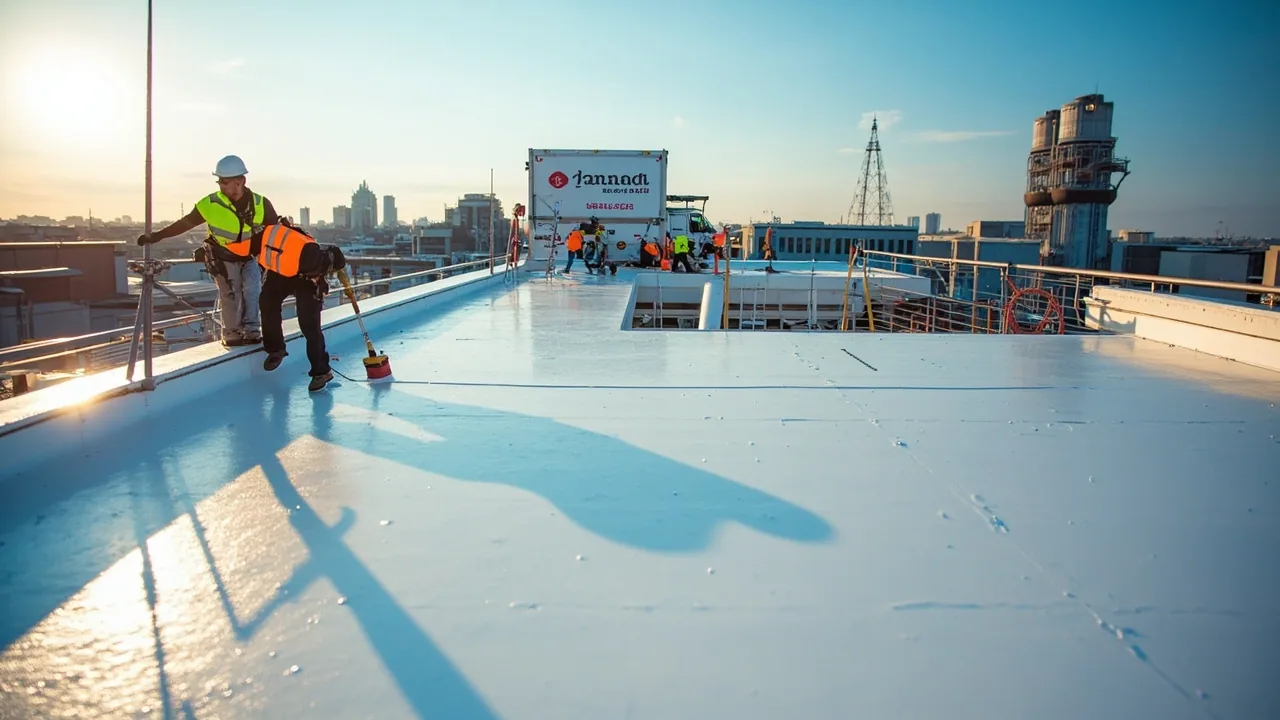
Before mobilization, we confirm who grants roof access, where equipment can be staged and which areas must remain open. A repair near a loading door may need a different work window from one over an administrative suite. We identify interior protection needs, coordinate noise or odor concerns and secure the work area. If a facility has restricted access or sensitive operations, those constraints belong in the schedule and not in an informal field assumption.
Hialeah's concentrated wet season, with its stormiest period from mid-May into early July, makes open repairs and incomplete tie-ins a daily concern. The crew checks the forecast, limits exposed materials and leaves a watertight temporary condition if the permanent work cannot finish that shift. During summer thunderstorms, the work lead must know the stop-work threshold and protection plan. If water is actively entering, our emergency roof response can stabilize the opening before a permanent repair is scheduled. Property contacts around West 49th Street and the Hialeah Heights industrial area receive the same documented handoff.
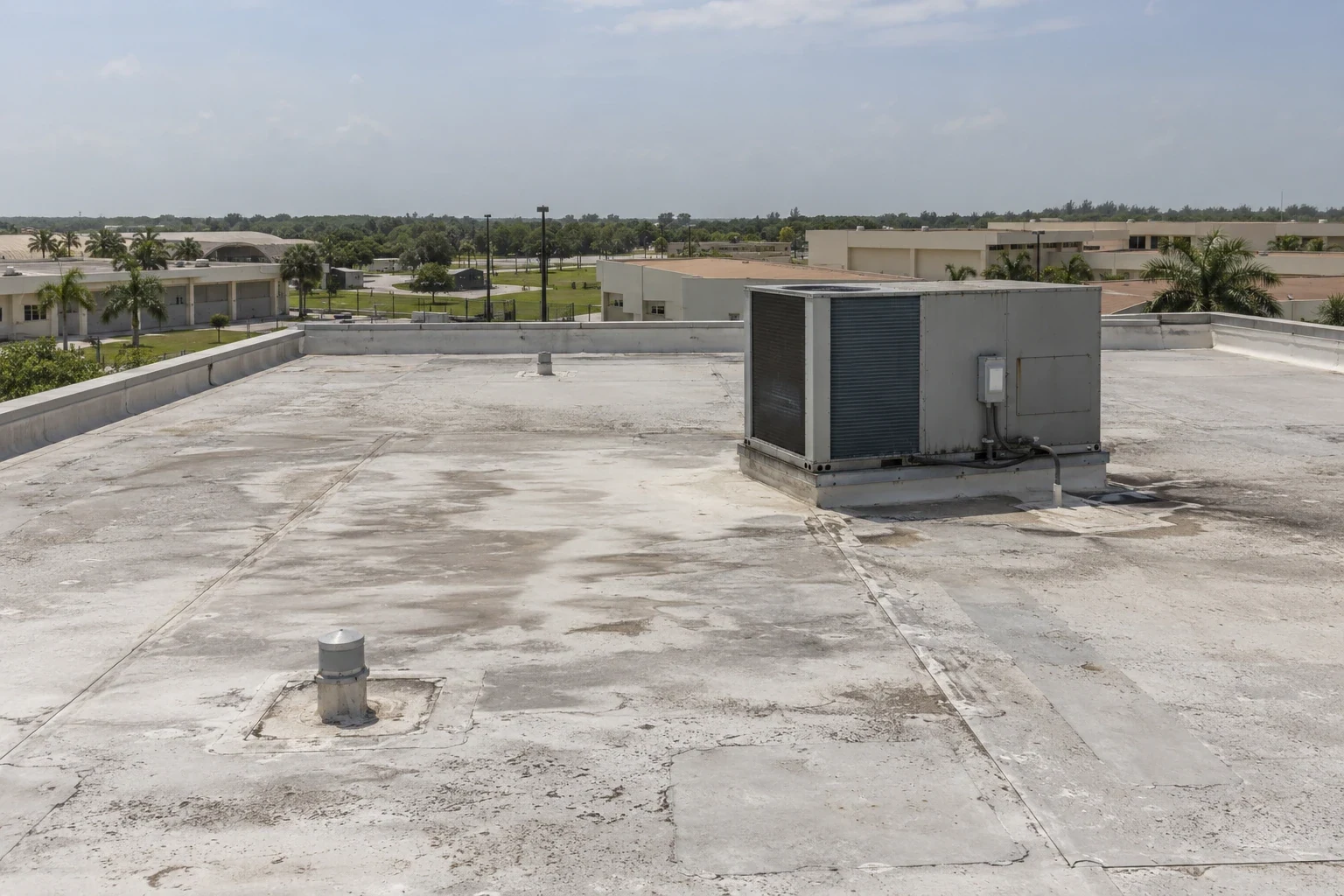
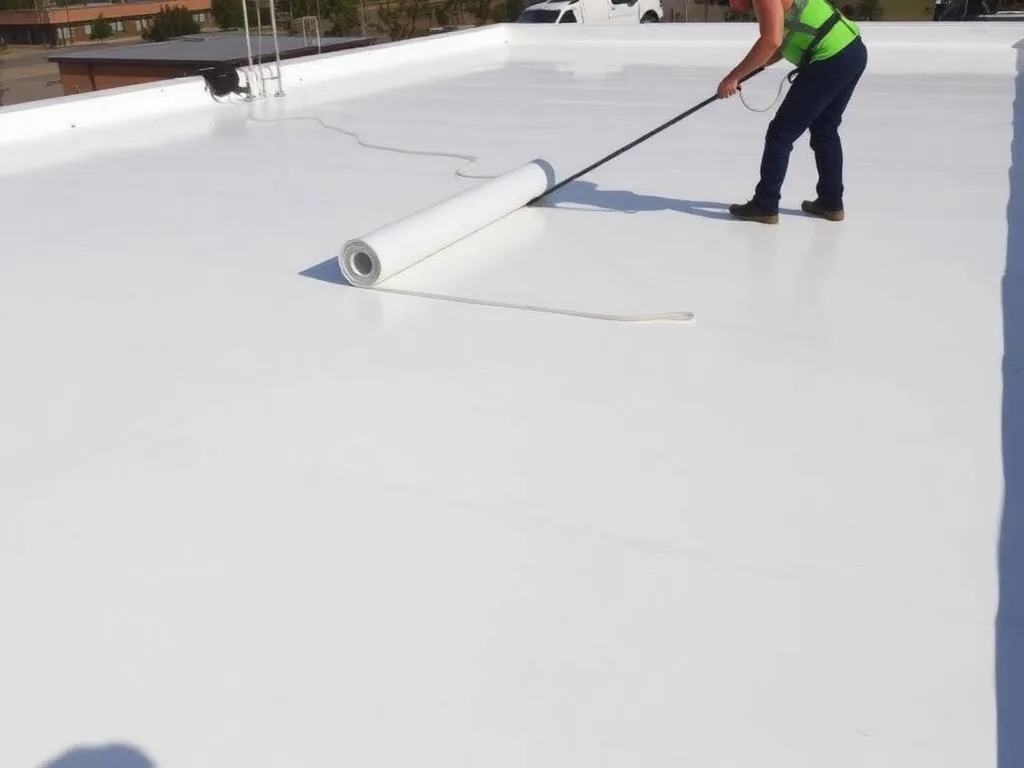
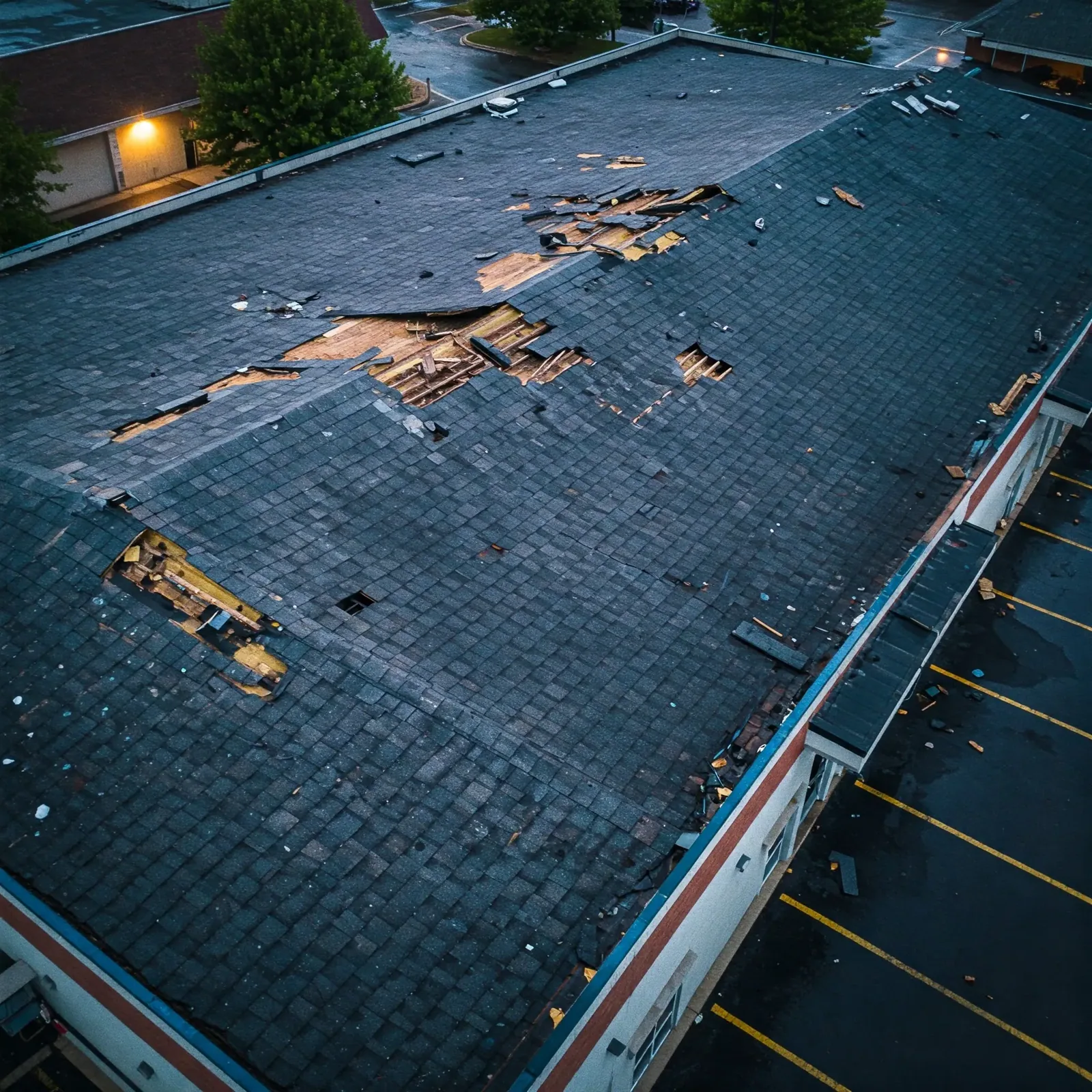
Confirm the repair and leave a useful record
After installation, we photograph the completed detail and note materials, date, weather conditions and any limits that remain. Where practical, we check the repaired area during a controlled water test or after the next meaningful rain, while recognizing that a test cannot reproduce every wind-driven event. We record wet insulation outside the repair boundary as a separate follow-up item in the roof file.
Closeout lists the reported symptom, inspected section, repair completed, exclusions, photos and next check. It identifies nearby drains or equipment, any temporary cover and who owns the follow-up. If water returns, facilities can compare the new location with the original entry path. Send the address, leak photos, repair history and access contact. We will state whether the evidence supports testing, broader maintenance or a capital review. If weather delays the permanent tie-in, the record names the interim protection and return task. A scheduled maintenance visit can then check the repaired detail and adjacent drainage before another interior report.
Questions
WHAT OWNERS ASK
How do you find the source of a commercial roof leak?
We compare interior symptoms with seams, penetrations, walls, drains and prior patches above. Water can travel before appearing indoors, so we use targeted inspection and testing where needed. The repair boundary follows the confirmed path and affected materials.
Can a small patch solve a recurring leak?
It can when the defect is localized and the surrounding assembly is sound. Repeated failures may indicate wet insulation, weak attachment or a failed transition beyond the patch. We document that evidence and explain whether further testing or replacement should be compared.
How do you set the price of roof repair?
Access, roof height, material compatibility, patch size, wet layers, deck condition and the detail involved all affect scope. We identify included work and concealed-condition assumptions so the owner can review what the price covers.
Will the repair include interior ceiling work?
Roof repair addresses the exterior entry path unless interior restoration is specifically included. We record interior impacts and coordinate access, but the proposal identifies responsibility for ceiling, insulation or contents work separately.
What information should I provide before a repair visit?
Share the address, leak locations, photos, timing, prior repairs, roof plans if available and access requirements. Tell us whether the leak is active and which areas must remain operational so the visit can be scoped safely. Include the best on-site contact and any rules for ladders, escorts or roof keys.
Related Roofing Work
Get a repair boundary you can review
Send the Hialeah property address, leak locations, roof history and access contact. We will trace the entry path, document affected materials and recommend the next action.