
PVC Roofing in Hialeah, FL
Roof Systems
A membrane decision gets harder when a roof has open seams, standing water or rooftop discharge near the field sheet. We inspect those conditions before recommending PVC, repair or another assembly. Hialeah's industrial and light-manufacturing properties may have different rooftop processes from retail along West 49th Street. The building's actual exposure, substrate and operating schedule belong in the record before a system is specified.
Trace the exposure before selecting PVC
PVC is a thermoplastic single-ply membrane with heat-welded seams. It is commonly selected where the roof needs a membrane with resistance to many oils and chemicals, but chemical compatibility must be checked against the actual substance, concentration and exposure. We ask what reaches the roof, where it drains, and whether exhaust or service work affects a particular area. A generic statement that a facility is industrial does not answer those questions.
We inspect field welds, patches, corners, walkway pads and transitions at curbs, pipes and drains. A seam that looks closed can still need probing; a stain beneath a penetration can point to flashing failure rather than a membrane-wide problem. We map findings by section, then use test cuts when insulation or deck condition remains uncertain. The repair boundary follows those observations. An inspection with a written condition map helps the owner distinguish a localized detail from a broader assembly problem.
Check every component as one assembly
The PVC sheet is only the visible layer. Insulation, cover board, fasteners or adhesive, deck, perimeter attachment and flashing all contribute to the completed assembly. We identify the substrate, slope, parapets, equipment penetrations and existing layers, then select a configuration whose approval covers those conditions. Changes at corners and edges need special attention because wind forces and movement differ from the center of the roof.
Miami-Dade lies in the High Velocity Hurricane Zone, so the product approval and installation details must match the proposed configuration. Permit plans also call for roof drainage, pressure zones and parapets to be shown. We check those elements with the membrane submittal before work begins. Depending on the building and exposure, a TPO assembly or KEE-modified PVC may also be evaluated. We do not treat a material label as proof that its complete roof package fits.
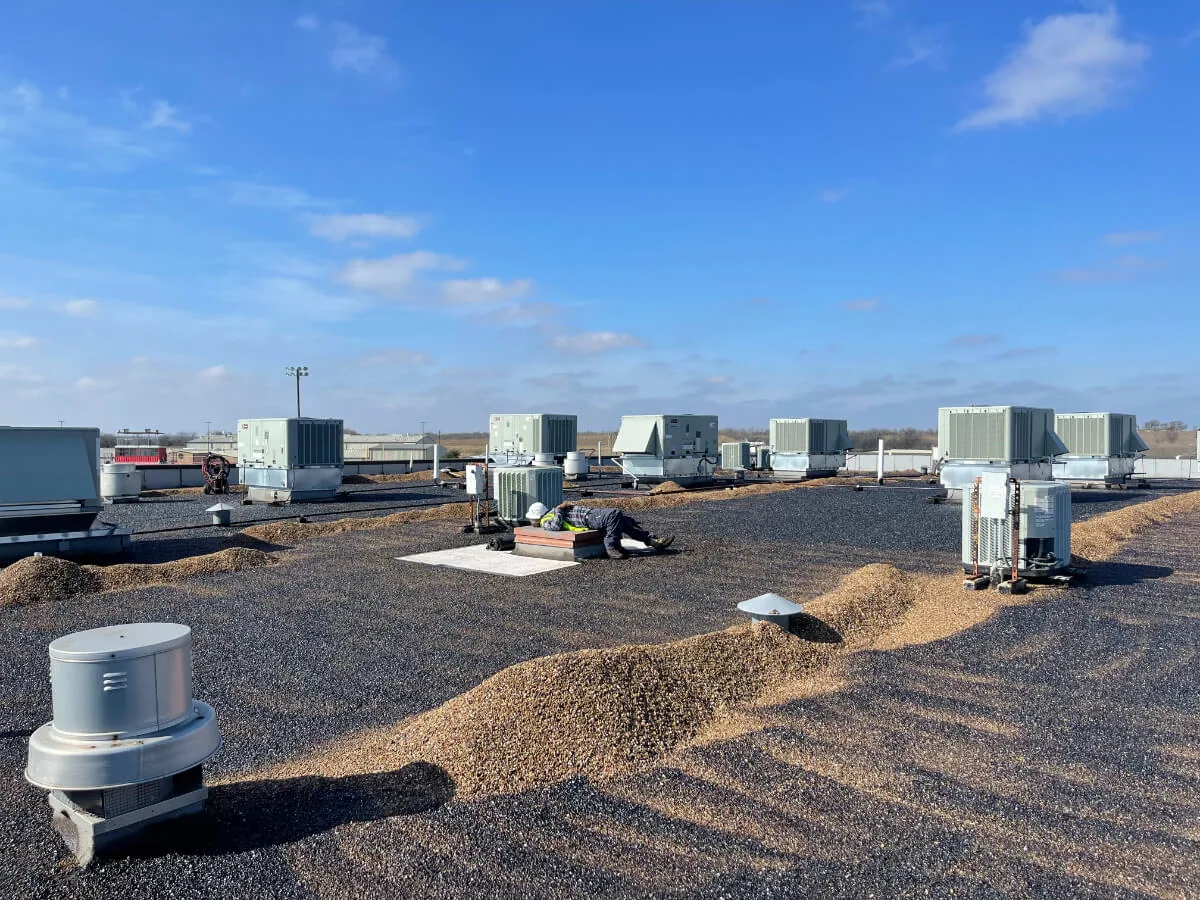
We also check how the facility uses rooftop space. Maintenance crews may cross a membrane to reach exhaust or mechanical equipment, and an unprotected route can wear the surface or disturb a flashing. We identify access paths, note existing walk pads and specify protection where needed. That detail matters on an occupied property because routine service continues after the reroof is finished.
Protect weld quality and the drain path
Hialeah's wet season carries a 48.19-inch normal rainfall, and the stormiest period runs from mid-May into early July. Rain can interrupt installation and expose incomplete tie-ins, so each day's work area needs a planned limit and a secure temporary close. We keep drains and scuppers clear as tear-off and membrane work move across the roof. Where water crosses between sections, the sequence must preserve a continuous discharge route.
Heat adds a separate installation concern. July and August can bring heat-index readings at or above 100 degrees, affecting crew work windows and safe material handling. Welds require clean surfaces and controlled equipment settings; rushed work in difficult conditions is a quality risk. We plan staging and inspection points so completed seams can be checked as the field advances. A damaged or leaking area can be stabilized through commercial roof repair while the larger system proposal is prepared.
Separate membrane price from roof scope
Pricing changes with tear-off, wet insulation, deck repair, attachment method, cover board, edge metal, flashings, penetrations and access. Chemical exposure may require confirmation of compatibility or separation from a discharge source. We identify the assumptions in the proposal: what assembly is included, which details need replacement and how concealed conditions are handled. If PVC is being compared with a different membrane, compare equivalent attachment, insulation, perimeter details and warranty terms rather than sheet cost alone.
At Miami Dade College's Hialeah Campus, the operating calendar and pedestrian routes would be part of any occupied-site work plan; an industrial building has its own loading and production limits. Those examples do not establish any particular roof condition. They show why access and schedule should be confirmed with the property contact. A roof condition report can pair observed defects with the scope choices and next approval.
Record the finished system and remaining risk
At completion, the owner should have the assembly description, product information, detail photos, repair locations and notes on exclusions or remaining conditions. We label sections consistently so future inspections can compare the same seams, penetrations and drainage points. That record is useful when one property manager changes, when capital work is phased, or when a later leak needs to be compared with the original scope.
Share the property address, available plans, roof age if known, repair records and the person who approves work. We inspect the membrane and the layers that support it, then document the choices with the field evidence. A site near West 49th Street may need customer access protected; a Hialeah Heights warehouse may require loading routes kept open. The plan starts with the actual building and its next operating constraint.
Questions
WHAT OWNERS ASK
Is PVC a fit when the roof has rooftop exhaust?
Compatibility starts with the material leaving the exhaust and where it lands. We inspect discharge points, nearby seams and membrane condition, then confirm whether the proposed PVC product is suitable for that exposure. If a plume reaches only one section, detailing or separation may be part of the scope. Facility use alone does not tell us what the roof receives.
How do you test PVC welds in the field?
We probe completed seams after the weld has cooled and inspect transitions where sheets meet flashing or accessories. Areas that do not pass inspection are repaired and checked again. The proposal should identify whether existing seams can be maintained or if broader replacement is needed. We also examine substrate and insulation so a strong weld is not mistaken for a sound assembly.
Does Miami-Dade approval cover any PVC configuration?
No. Approval applies to the listed product assembly and its stated conditions, not every deck, fastening pattern or edge detail. We match the proposed components to the approval and project documents, including wind zones and parapet conditions. Permit plans in Miami-Dade identify drains or scuppers and pressure zones. The installation must follow the approved limits at the building.
What roof records help compare PVC bids?
A roof plan, previous repair invoices, leak map, test results and the scope of any existing warranty help define equivalent work. We compare removal depth, insulation, cover board, perimeter details, flashings and closeout records. A low membrane price may exclude conditions that drive labor or performance. The approval contact should see each assumption and allowance before selecting the assembly.
Related Roofing Work
Get a PVC scope tied to actual exposure
Send the property address, available roof plans and repair history. We will inspect the membrane, discharge paths and assembly details, then document a scope for the approval contact.