Commercial Roofing for Logistics and 3PL Operators in Hialeah, FL
Industries We Serve
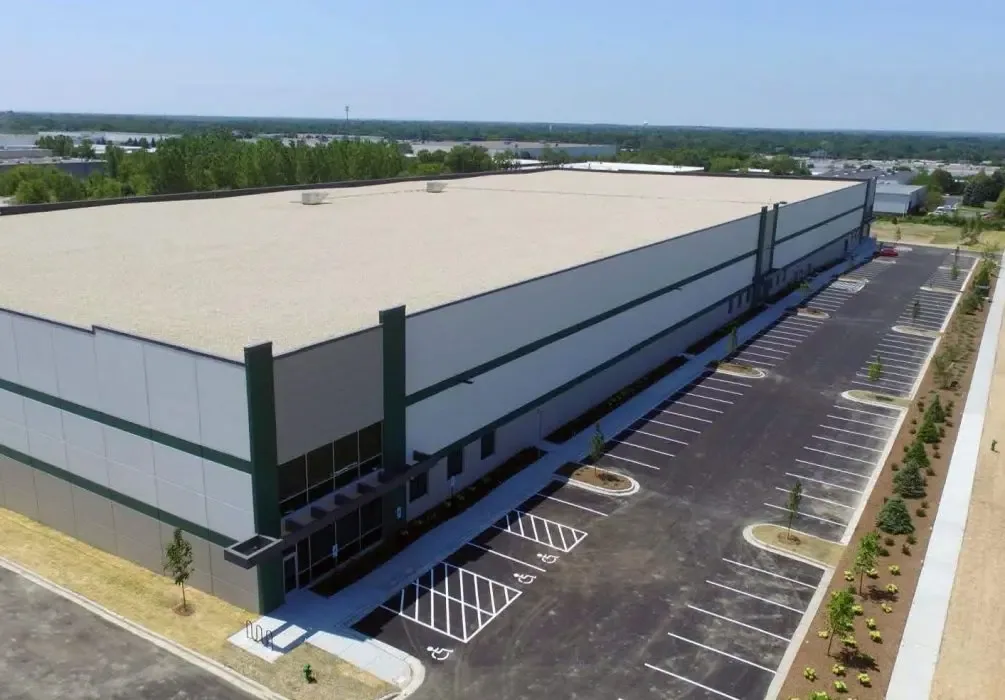
Water over a sort lane or cross-dock can interrupt dispatch. We trace the opening, protect goods and equipment below, and stage repairs around the site's appointment calendar. Medley connects the Turnpike, Palmetto Expressway, U.S. 27 and FEC freight rail. Nearby Miami International Airport has cargo warehouses and maintenance shops in its property inventory. Each operator's actual facility layout and contract schedule still need confirmation.
Trace the leak against the freight floor
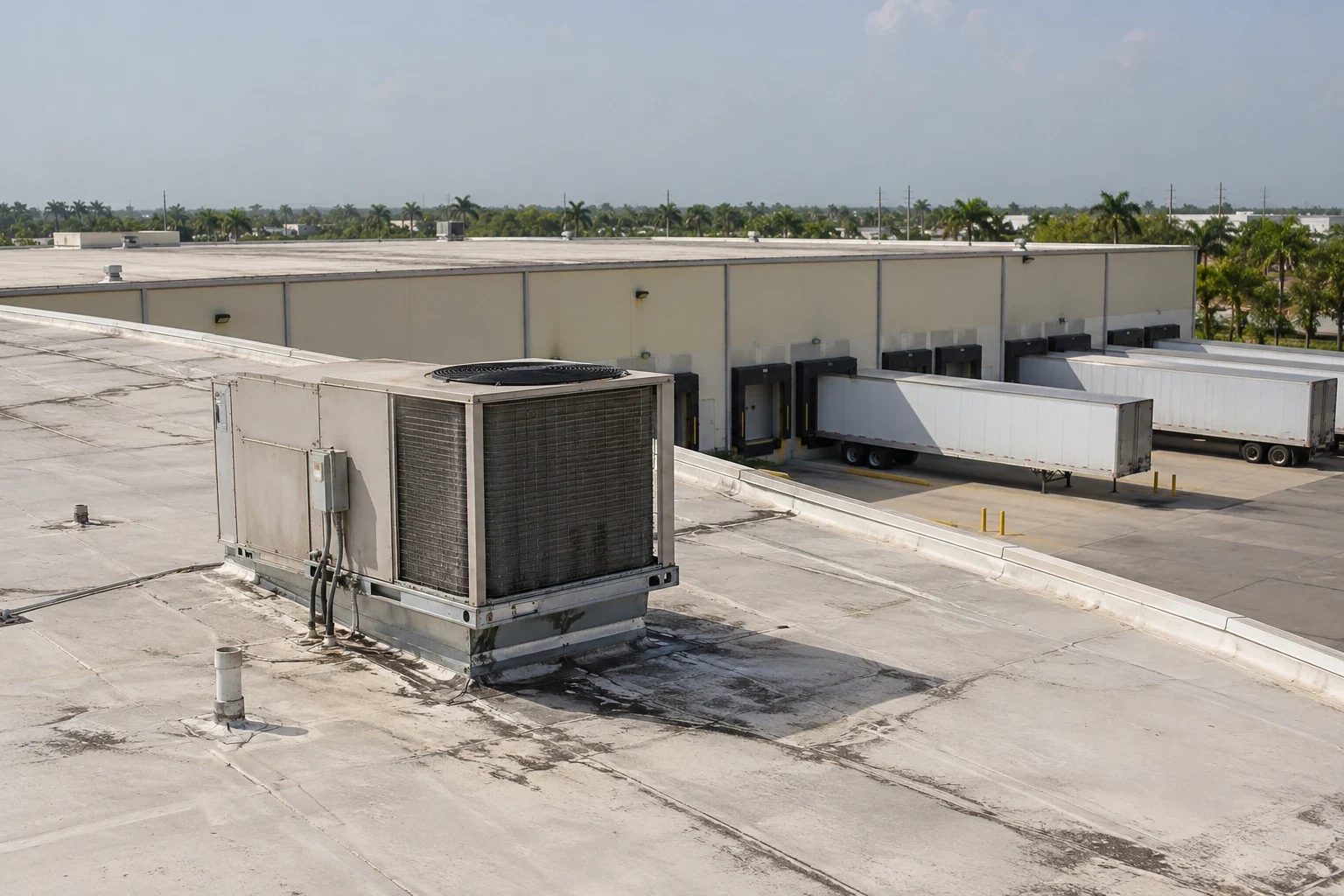
We match interior reports to roof sections above dock doors, storage aisles, conveyor lanes and equipment. Seams, skylights, penetrations, drains and perimeter joints are checked along the likely water route. A drip may travel before it reaches cartons or a dock plate, so we note both the ceiling location and the suspected opening. Moisture testing can show whether insulation is wet beyond the first visible spot.
We ask the operator to flag high-value or time-sensitive freight, vehicle lanes and areas that must stay accessible. The condition map identifies any space not surveyed because shipments or security rules limited access. A distribution-center roofing plan can handle dock and conveyor coordination; an industrial storage roof review addresses a different flow when inventory is held longer. The property file records which operating model applies at the address.
Work between inbound and outbound peaks
We request dock appointment windows, trailer staging rules, yard circulation, gate credentials and the contact who can pause a lane. Roofing materials and debris need separate travel paths from forklifts and loaded trailers. The operator may have client-specific service levels or inventory controls that affect the work window. We identify those limits before mobilization so the site can keep promised handoffs visible.
Work is divided into zones small enough to close each shift. We secure the roof before inbound activity resumes and report any dock, parking or vehicle route that remains restricted. Roof access may involve a security desk or escort, depending on the property. A property manager can coordinate tenant notices, while a manufacturing operator may need process-line controls alongside freight movement. Each facility's contact approves the actual sequence.
Each shift ends with a status message showing the roof zone closed, the route reopened and any remaining restriction for dispatch.
Keep freight dry through Hialeah rain
Hialeah's wet-season normal is 48.19 inches, with storm activity most concentrated from mid-May into early July. Rain protection must account for freight under the work area and for runoff across dock aprons. We inspect drains and scuppers, confirm where water discharges and keep the path clear while material is removed. The final roof section of the shift is chosen by what can be closed before the next inbound wave.
Summer heat can limit safe rooftop hours, and tropical conditions later in the season can disrupt dispatch timing. We check the forecast and material instructions before opening a section, then set a secure stop point. If a leak affects current freight operations, emergency roof repair can protect the immediate bay while the operator approves the larger scope. The report logs the temporary step and the remaining repair decision.
Separate roof cost from service interruption
Roof cost reflects removal, wet insulation, deck repair, drainage, edge details, equipment density and access. Logistics operations add staging, dock closures, night or weekend windows, temporary goods protection and security coordination. We show which controls are included and what site staff must provide. If the building is part of a multi-client contract, the operator can review the schedule impact separately from the roofing quantity.
Medley's road and freight connections and nearby MIA cargo properties frame regional freight movement. We confirm each facility's throughput, access plan and roof system from its own records and inspection. We confirm appointments, trailer routes, loading rules and client deadlines at the property. Drain and scupper work may need a separate line if discharge or blocked outlets affect dock operations. A capital plan can compare phased repairs across addresses without transferring one site's findings to the next.
For a logistics operator serving several clients from one building, we can label work notices by dock, zone and date. The site team can then match roof access to its appointment dashboard and tell account managers which lanes may be affected. If an unplanned leak changes the scope, we document the revised area and approval before the sequence shifts. That keeps facility communication aligned with the service commitments already in place.
We also identify whether roofing deliveries need a slot through the same gate as inbound freight or a separate contractor entrance. Staging location, vehicle height limits and trailer turning space are checked before mobilization.

Return each bay to its service window
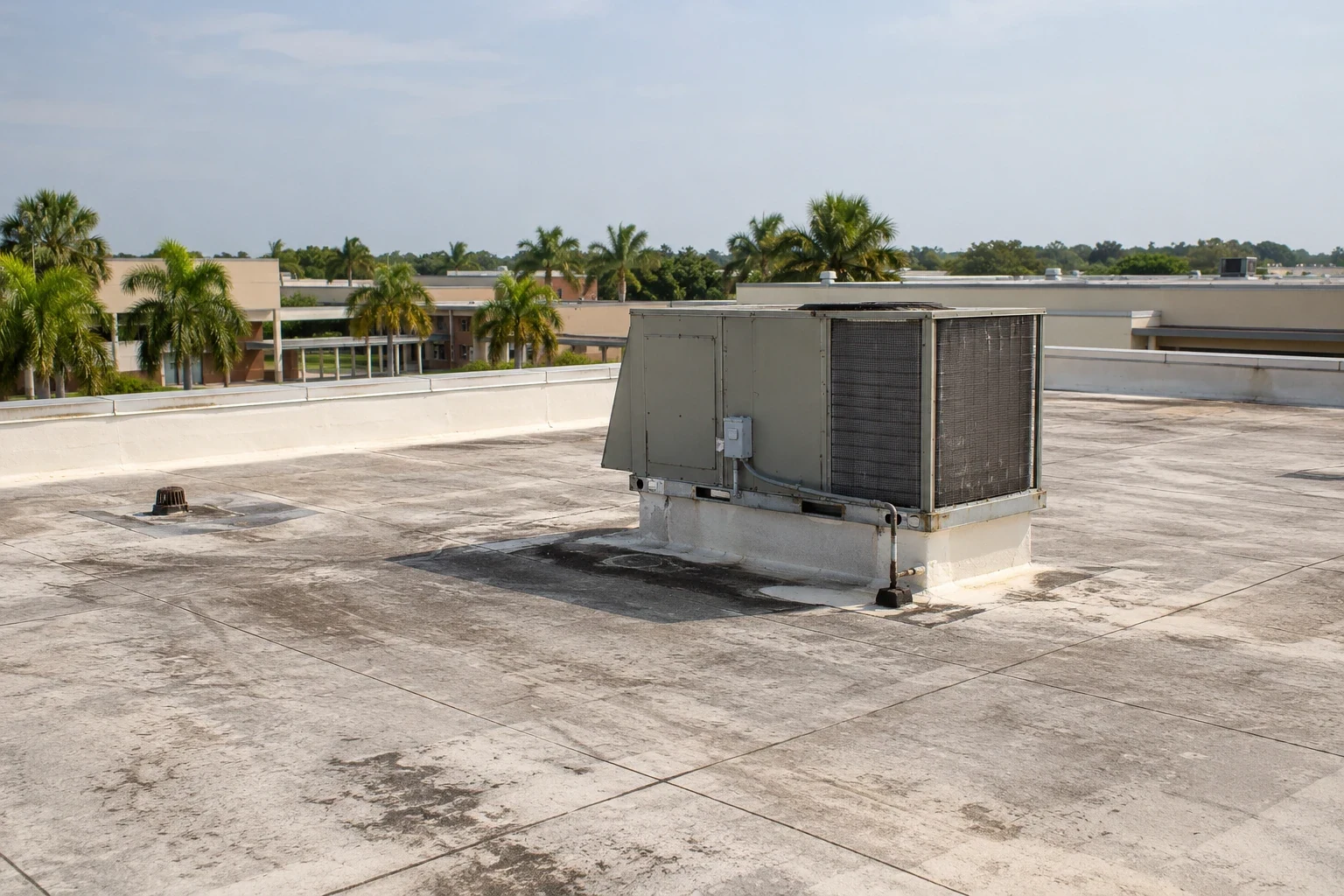
After a stage, we provide the completed roof map, detail photos, material information, water-path corrections and any area still awaiting access. The operator can line that status up with dock appointments and client reporting. We note which bay or storage lane was protected, what route reopened and whether a follow-up inspection remains. The roof record and the freight incident log can be reviewed together without conflating their scopes.
Provide the address, roof plan, dock schedule, gate rules and authorized contact. We will inspect the sections that can be accessed and prepare work stages around the operation. At Medley or the MIA cargo area, truck access and security procedures are defined by the specific facility. We confirm those details with the site's dispatch and property teams.
Questions
WHAT OWNERS ASK
Can roofing proceed without closing a distribution dock?
Some sections can be repaired while nearby docks remain in service if vehicle paths and overhead protection are separated. We coordinate appointment windows, yard routes and the area below the active work. If the roof opening sits over a live lane, that bay may need a short closure. The operator approves the shift and customer communication.
How do you protect freight below a roof repair?
The operator identifies the freight zone, handling rules and any goods that cannot be moved. We limit removal to a section that can be made watertight and coordinate covers or relocation with site staff. The report records the affected bay and temporary protections. We do not move freight or enter restricted storage areas without authorization.
What roof information should a 3PL provide?
Send the roof plan, leak locations, dock schedule, appointment peaks, security protocol and site contact. Include any client deadlines or areas with sensitive inventory. We use these details to map access and prepare a sequence. The inspection identifies which roof sections were reachable and which require a separate window.
Does Hialeah's freight access change the roofing scope?
Regional road and rail connections can affect deliveries, but site gates, dock hours and security rules determine actual staging. We verify those at the property rather than assume an access route from a nearby corridor. The proposal names delivery windows and work zones so operations can coordinate freight commitments.
Related Roofing Work
Protect the freight schedule during roof work
Share the facility address, roof map, appointment calendar and site access rules. We will define repair sections and daily closures that operations can review.