Restaurant Roofing in Hialeah, FL
Property Types We Roof
Water near a kitchen hood or exhaust curb needs a different first check than a ceiling stain over a dining room. Locate the roof opening, inspect the flashing around penetrations and check whether grease, heat or service work has affected nearby details. The city's retail clusters include West 49th Street, Palm Springs Mile and Westland Mall. We confirm restaurant access and customer hours with the building contact before scheduling roofing work. We inspect the roof system in place, document the defect and set the repair limit with the person managing the building.
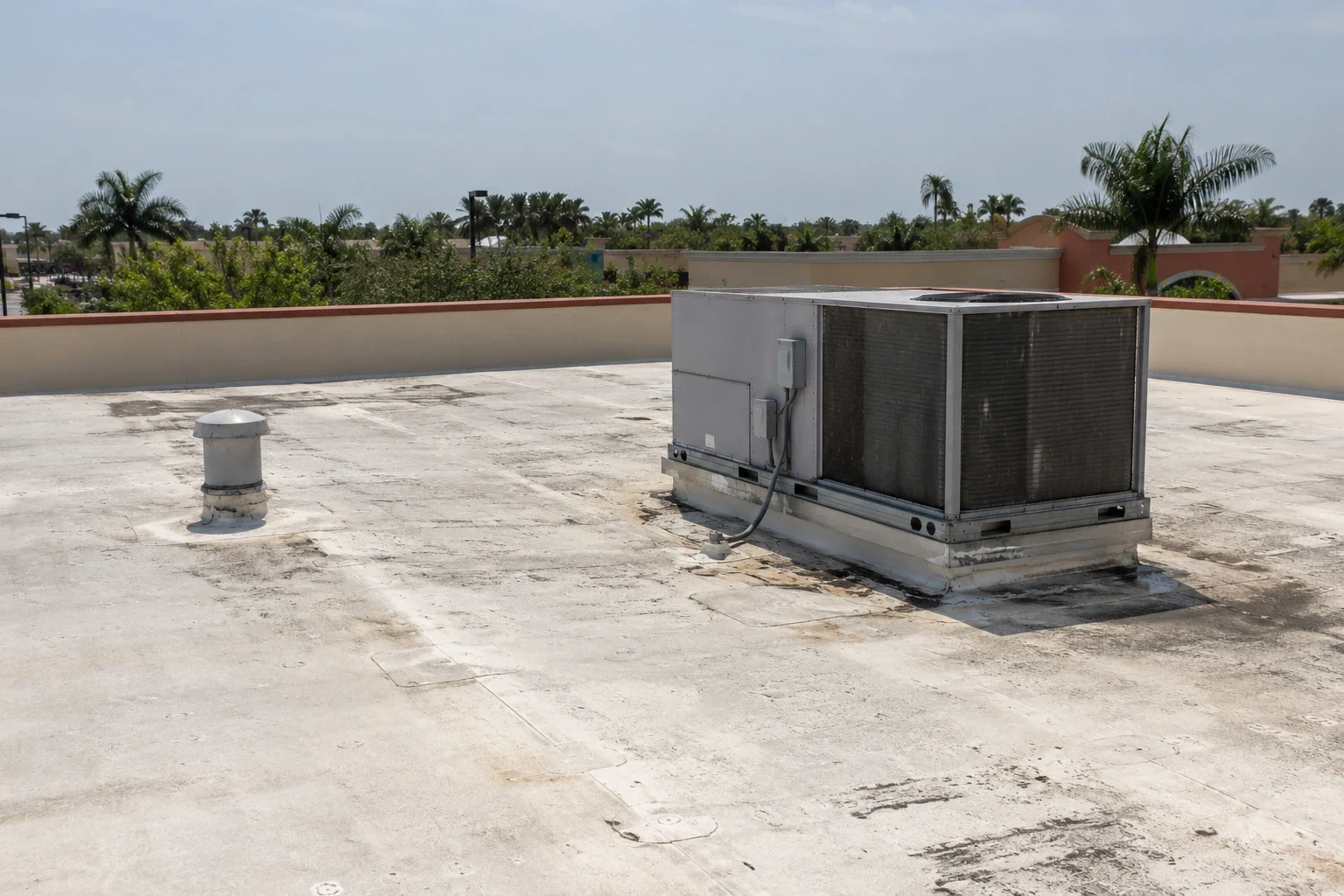
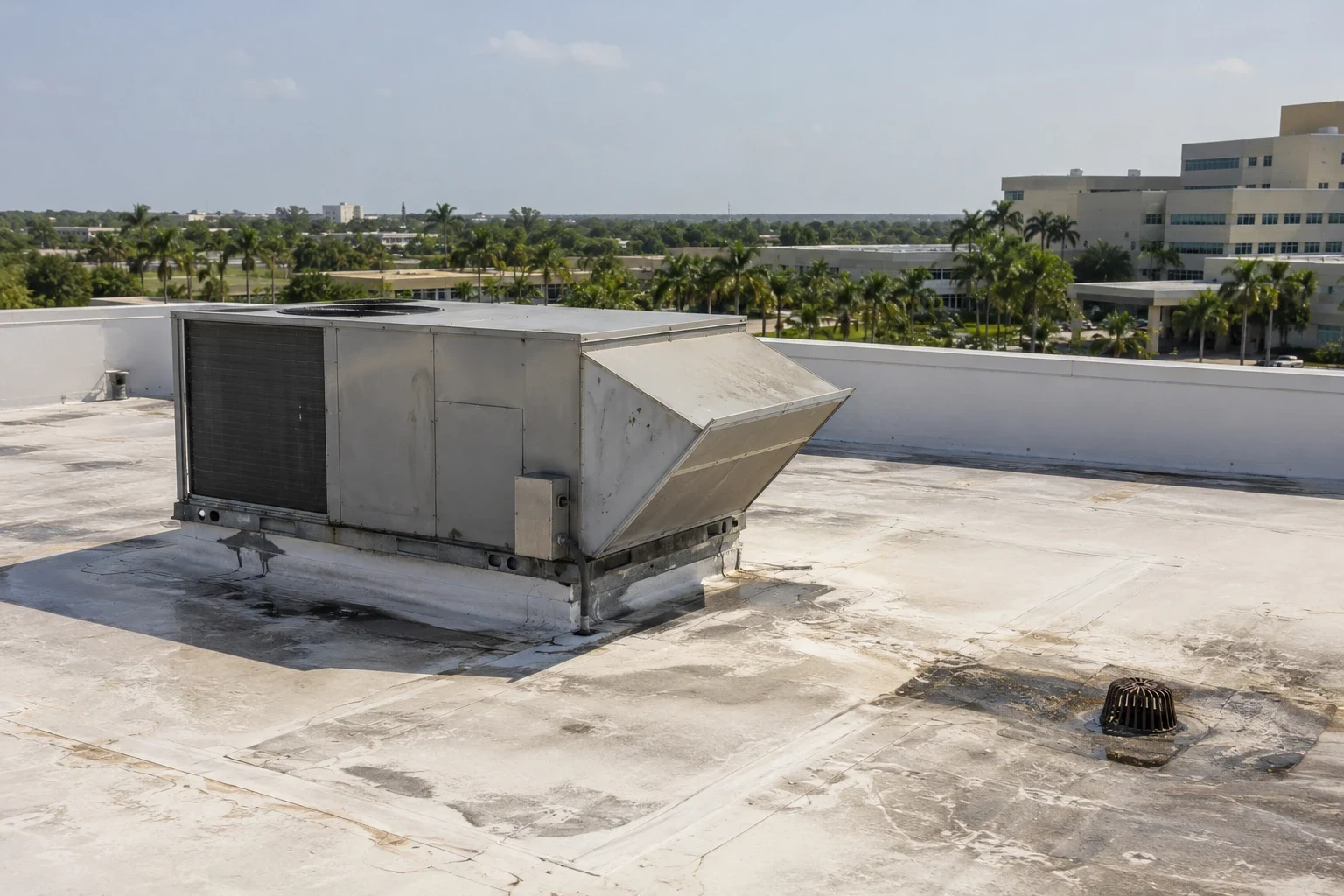
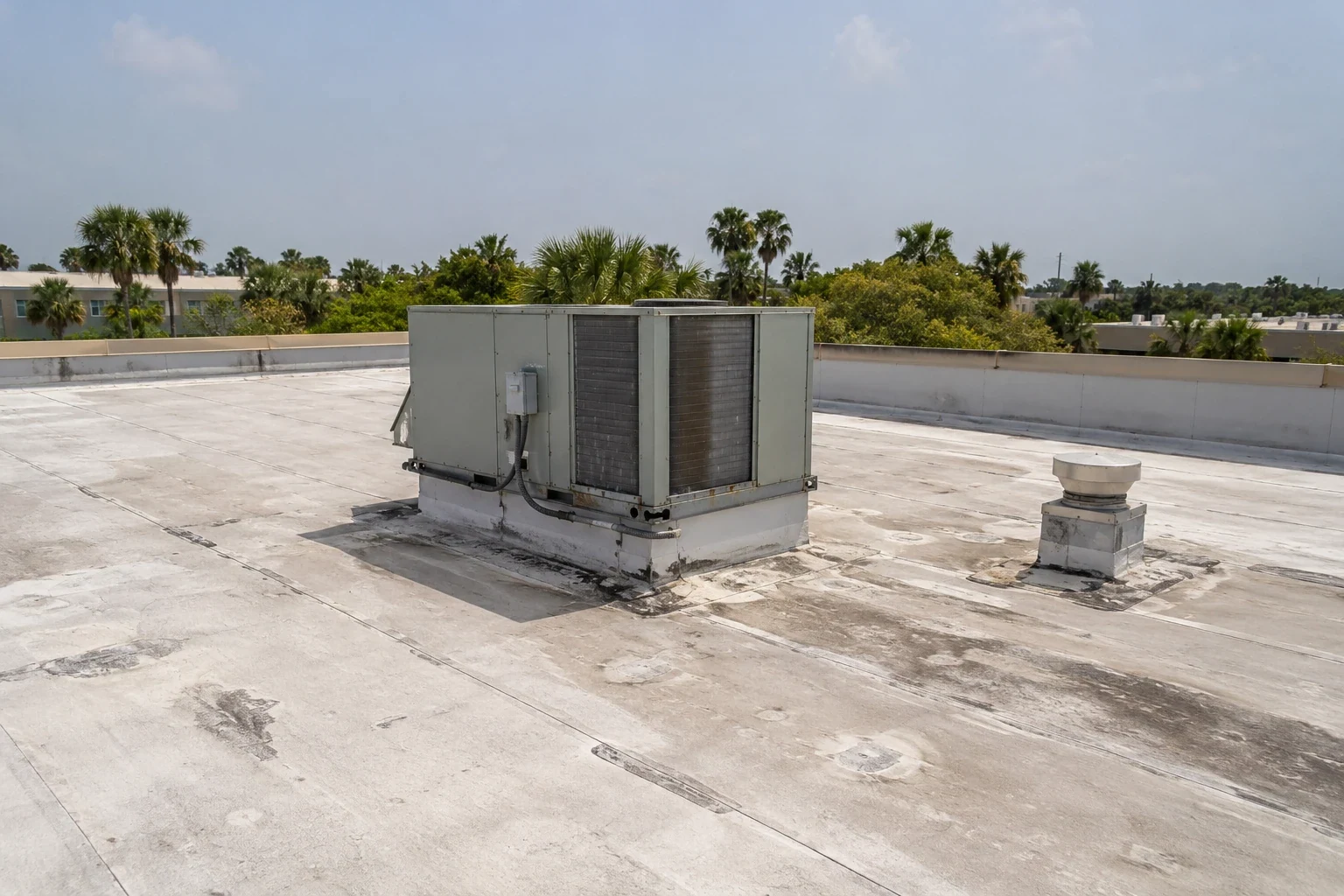
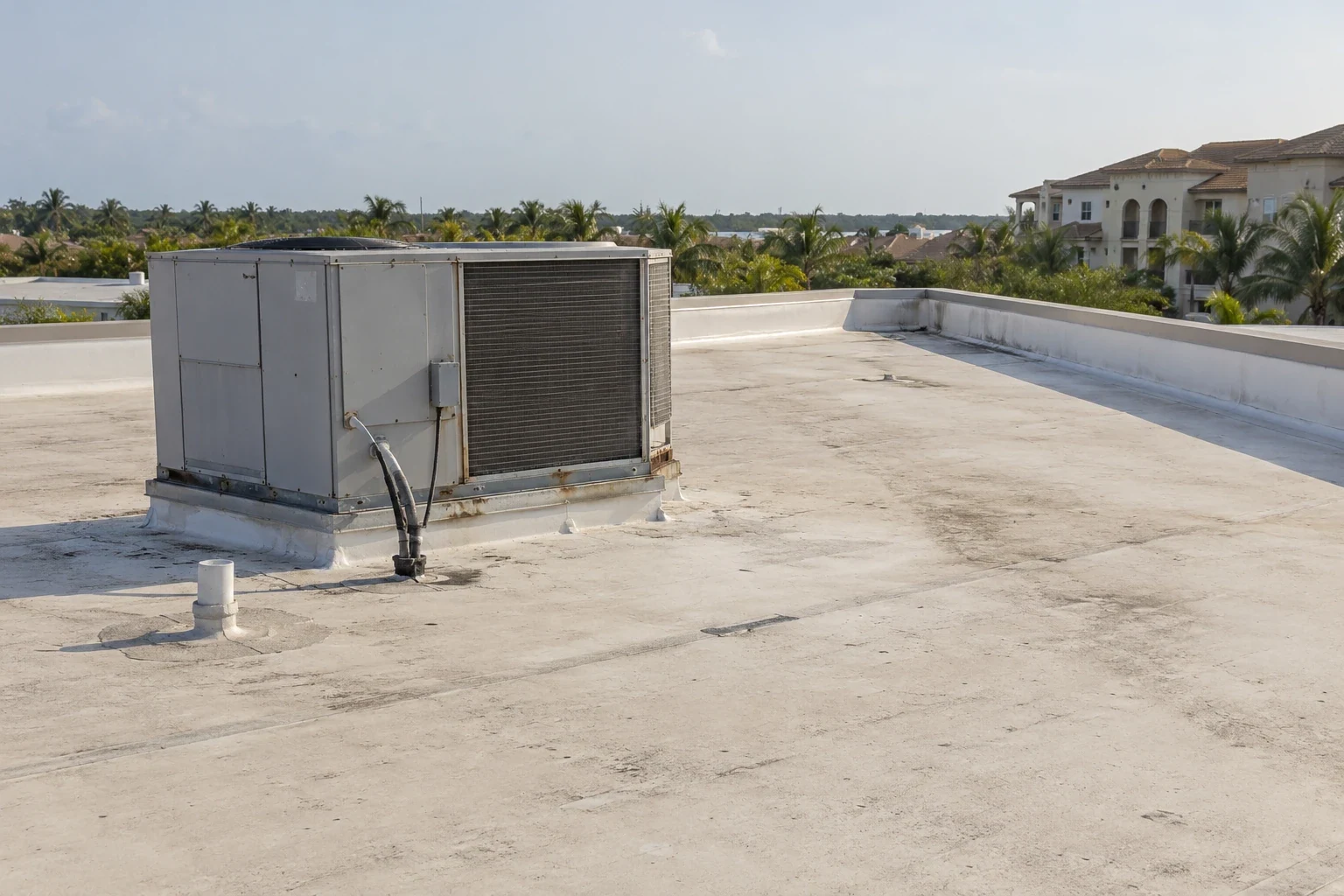
Restaurant roofs can carry exhaust equipment, ducts, vents, gas lines and electrical runs. We identify the membrane and layout from roof details, plans and field inspection. The inspection identifies the assembly, curb condition, seams, drains, edge details and signs of trapped moisture. A roofer handles the membrane and flashing scope; equipment shutdown or hood-system service may require coordination with the restaurant’s mechanical vendor. Our penetration flashing work addresses roof details around equipment and other openings.
Trace the leak around exhaust and service details
Kitchen exhaust penetrations create several adjacent roof transitions: curb corners, membrane flashing, counterflashing and nearby seams. We inspect those interfaces and compare them with the interior location and timing of the leak. A dining room stain can originate at a roof point across the deck, while water near the hood could enter at a curb or travel from another detail. We note which components we examined and whether moisture reaches insulation or cover board. If access or shutdown is required, the scope names that dependency before work is scheduled.
The drainage path matters too. Hialeah’s wet-season normal reaches 48.19 inches, and the stormiest period is usually mid-May through early July. Debris around drains, grease deposits near service equipment or a low roof area can slow runoff and keep water at vulnerable transitions. We document drains, scuppers and ponding alongside flashing condition rather than assigning every leak to the hood curb. For an urgent opening, our commercial roof repair service can stabilize the affected section while the permanent scope is evaluated.
Protect service and dining hours
A restaurant roof plan should keep deliveries, waste handling, customer entry and crew access from competing for the same route. We confirm work hours, roof access, staging, noise limits and any interior protection with the operator or property manager. If a job sits above a kitchen, the contact can coordinate hood operation and any needed mechanical shutdown. The roofer’s scope should state how the work area stays protected at the end of each shift and how the operator will learn about a change.
Food-service roof work needs a heat plan: local July and August heat-index values can exceed 100°F and shorten safe shifts. Tropical risk increases from late August through mid-October. We set the production sequence around heat and weather, maintaining a daily dry-in plan and defined stop conditions. Around-the-clock response is available all week, holidays included, for active leaks that threaten the kitchen, dining space or equipment. An occupied-building roof sequence can account for food service hours and keep sections closed only when the agreed scope requires it.
Separate roof labor from kitchen equipment needs
Pricing depends on roof access, the number and condition of curbs, flashing repairs, membrane damage, moisture extent, drainage changes and timing restrictions. A single loose detail may need a contained repair. Multiple weak seams or saturated insulation can require more extensive replacement. We identify the limits between roofing work and equipment work, list shutdown or vendor dependencies, and state whether interior protection is included. This keeps the proposal from hiding a mechanical assumption inside a roof line item. If the operator wants to minimize downtime, we can show which tasks can proceed while equipment remains in service and which require a coordinated pause. That distinction makes the schedule legible to kitchen management before a crew is assigned.
For a major reroof, Miami-Dade permit plans show drains or scuppers, parapets and pressure zones. The county is in the High Velocity Hurricane Zone, where selected products and assemblies must meet their approved use and installation conditions. We confirm existing assembly and project requirements before recommending a replacement, recover or coating. A coating does not correct wet insulation or a loose exhaust curb. Restaurant owners also need a defensible record of what was repaired. Our roof condition report can document the affected roof section, photos, open questions and next decision. A broader shopping-center roof program may coordinate work across several tenant spaces. A food retailer has different roof and operating concerns; a grocery roof scope may need additional coordination near refrigerated equipment and receiving.
Return a closeout the manager can use
Closeout records should show the repair location, date, detail or material addressed, photographs, drainage notes and remaining recommendations. If the hood or another unit needed a separate vendor, record whether that coordination remains open. Tell the restaurant contact which interior areas were protected and when they can return to normal use. A follow-up check after rain helps determine whether water entry stopped; a continuing symptom should trigger a new trace, not an undocumented repeat patch.
At a restaurant near Palm Springs Mile or Westland Mall, we confirm customer routes and work windows with the property contact. A maintenance visit can review drains, seams, exhaust curbs and previous repairs before the wettest seasonal period. For businesses near the city’s main retail corridor, our Palm Springs Mile service area provides location context. Send the street address, leak location, hours, roof history and approval contact. We will give the operator a scoped action, coordination needs and the record required for the next decision.
Questions
WHAT OWNERS ASK
Who handles the roof flashing around a kitchen exhaust curb?
We inspect and scope the membrane and flashing interface. If the unit must be shut down, moved or serviced, we identify that need so the restaurant can coordinate its mechanical vendor. The work limits should distinguish roofing from equipment service.
Can roof repair be done outside restaurant hours?
We can schedule within an agreed work window when site access, noise limits and weather allow. Some repairs need daylight or time for materials to set, so we state the sequence and daily protection plan before the operator approves it.
Does a coating fix recurring kitchen leaks?
Only if inspection confirms that the existing substrate and details are suitable. A coating cannot replace wet insulation, correct a failed curb or resolve a blocked outlet by itself. We document those conditions before including a coating option.
What should be checked before the rainy season in Hialeah?
Clear drainage, examine exhaust and equipment flashings, review prior repairs and verify the route to scuppers or drains. The stormiest stretch generally runs mid-May to early July, so work that depends on dry conditions should be planned with that period in mind.
Related Roofing Work
Get the kitchen and roof work coordinated
Share the restaurant address, hours, leak location, equipment contact and roof history. We will inspect the affected details and return a repair plan with any vendor coordination identified.