
About Commercial Roofing Hialeah
Commercial roof repair, replacement and maintenance for Hialeah buildings.
About Us
WHO WE ARE
A roof recommendation should tell an owner what was found, what needs attention first and what approval comes next. Commercial Roofing Hialeah works on low-slope and metal commercial roofs through inspection, leak investigation, repair, replacement, recover, restoration, coating and maintenance. We work with property owners, asset managers, facility teams and general contractors who need a defined scope and a record that can travel from the roof to the person authorizing work. The starting point is the building itself: its assembly, access, use, reported symptoms and repair history.
Hialeah has documented industrial and distribution activity, major retail areas, two hospitals and a Miami Dade College campus. Their roof conditions are not interchangeable. A warehouse roof near Hialeah Heights may have different equipment, drainage and access from a storefront on West 49th Street or a medical building near Palmetto General Hospital. We identify the roof section, inspect details, compare exterior observations with interior reports and state what remains unknown. The recommendation stays connected to evidence from that address.
Inspect the roof before defining the work
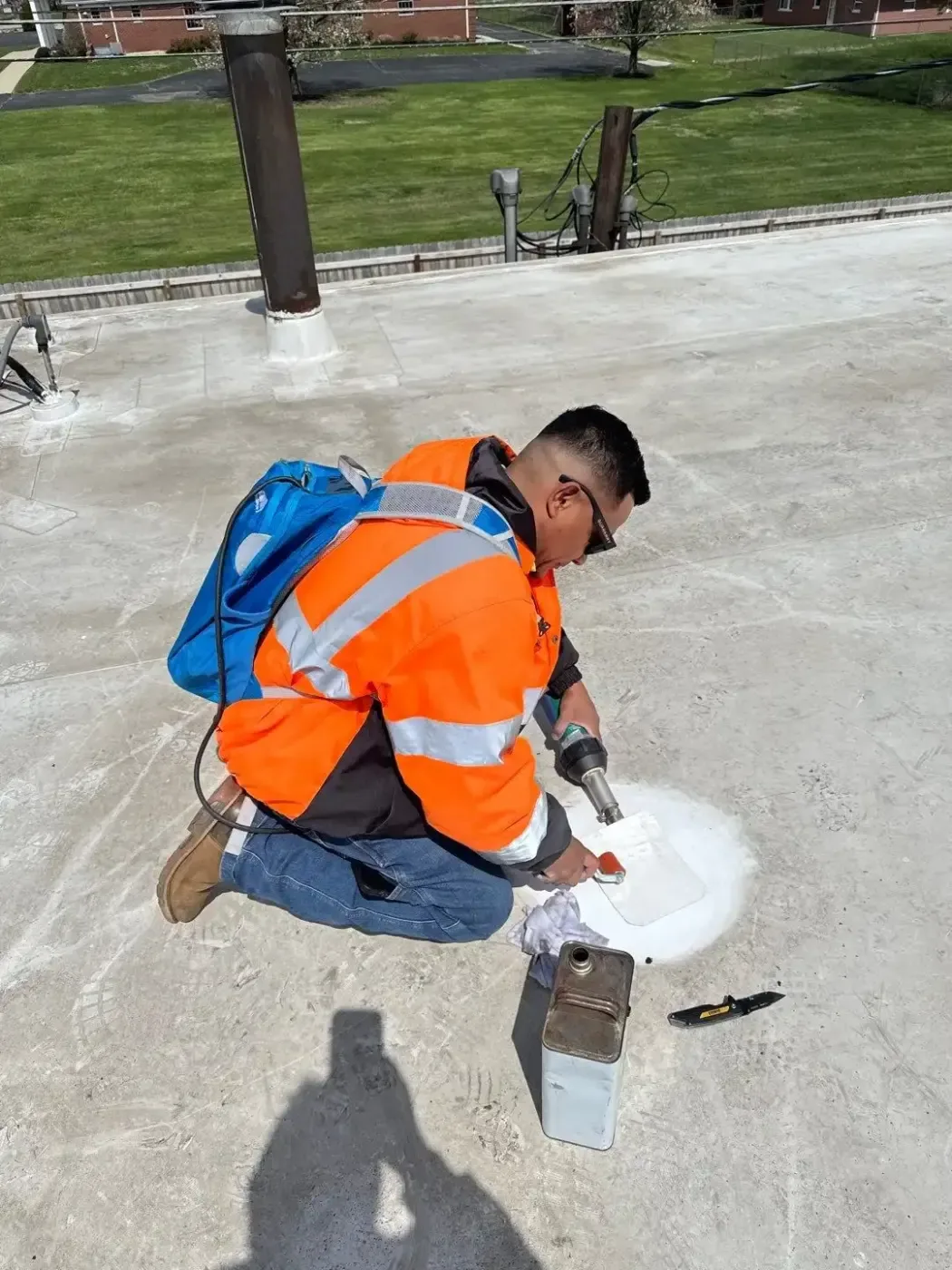
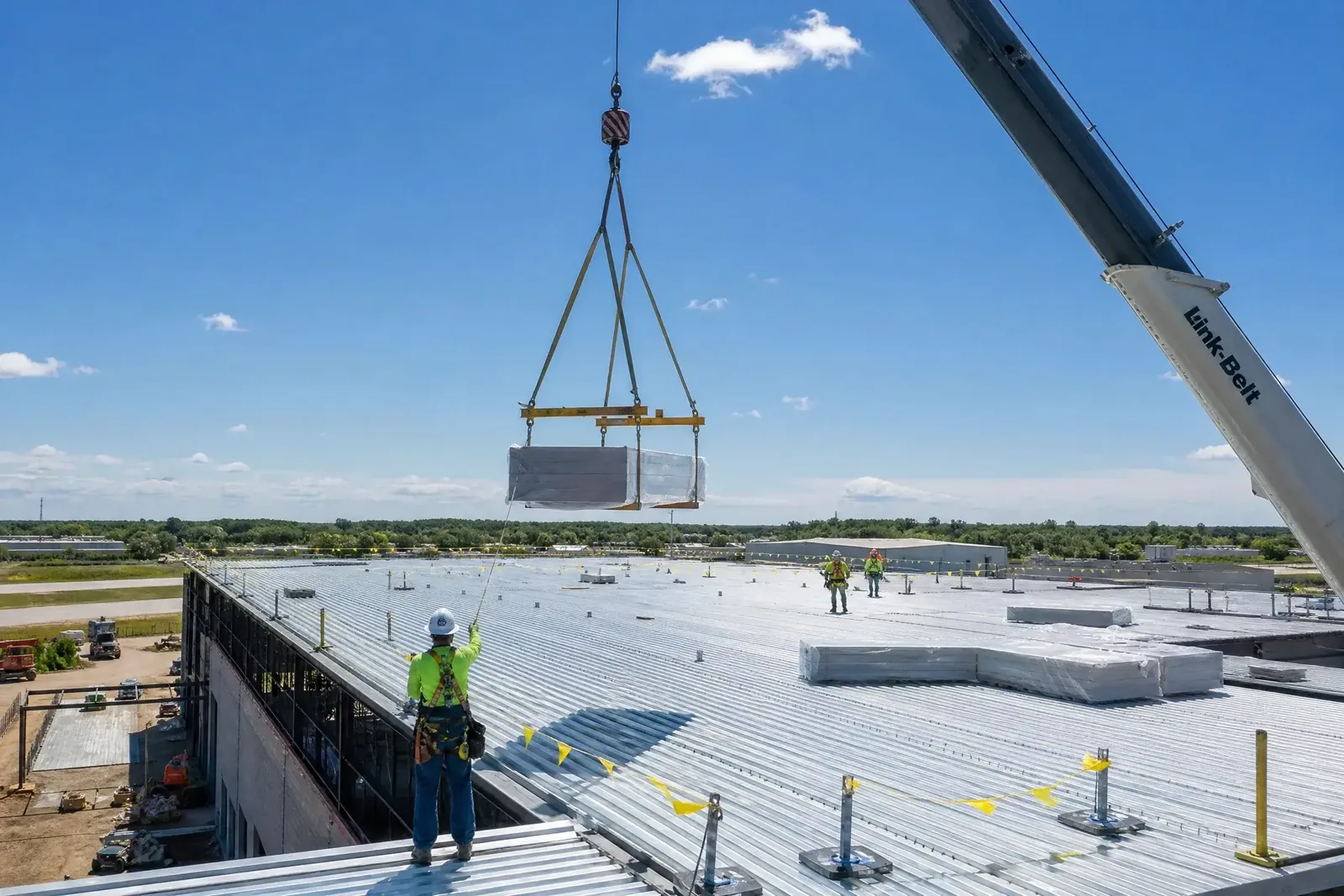
We begin by confirming the property address, reason for the visit, roof access and the person who will receive findings. Available plans, leak reports, repair invoices, warranties and prior inspection photos help us understand what has changed. On the roof, we note system type, seams or panel joints, flashings, edges, penetrations, equipment, drains, scuppers and visible repairs. We map observations by roof section and photograph details with enough context to locate them later. Where safe access is unavailable, we state the limit instead of treating that portion as inspected.
Interior evidence matters. A stain or active leak report can help identify where to investigate, but water may travel through insulation, deck flutes or framing before it appears inside. We compare the reported location with roof details and drainage paths. If surface review cannot answer whether insulation is wet or an attachment remains sound, we may recommend moisture testing, infrared methods or targeted test cuts. Each method has limits. The record identifies where testing occurred and how the result affects the scope.
Some owners need a focused repair visit; others need a baseline across several buildings. Our commercial roof inspection work can support a condition report, maintenance plan, due-diligence review or capital decision. The inspection scope is agreed before the visit so the owner knows which roof areas and questions are included.
Plan for Hialeah rain, heat and occupied buildings
Hialeah's wet-season rainfall normal is 48.19 inches, with the most active storm period running from mid-May through early July. That makes drainage, temporary protection and open roof work relevant to scheduling. We check the condition of drains and scuppers, look for debris or discharge restrictions and distinguish a maintenance need from a slope or capacity question. Summer heat affects rooftop work windows and handling. South Florida's tropical threat climbs toward autumn, making unresolved roof work and access plans worth reviewing before the seasonal risk peaks.
These conditions set planning questions, not the answer for an individual roof. A specific leak still needs a trace; a storm period is not proof that a building was damaged. We identify observed conditions and record the timing supplied by site staff. For a roof taking water now, crews can be reached any hour of day or night, weekends and holidays included. We can stabilize an opening, protect exposed areas when feasible and define the permanent repair after the roof is safe to inspect.
Work on an occupied building requires a separate sequence. We confirm where ladders or lifts can be placed, how roof access is controlled, which entrances remain open and whether noise, odor or falling-material protection needs coordination. A retail property by Westland Mall and a distribution building in Hialeah Heights may require different staging. We plan those requirements with the site contact instead of assuming the property is empty.
Repair, replace or restore with a defined boundary
A repair should identify the defect, preparation, materials, affected layers and limits of the work. We inspect adjoining details so the proposal does not stop at the nearest visible opening if evidence points elsewhere. If water has affected insulation, that area may need to be included or evaluated separately. The repair record notes any unresolved exposure and the check that would confirm the result.
When defects are widespread, repeated or tied to broader moisture or attachment issues, we compare repair with replacement or a recover evaluation. A recover is not suitable for every assembly. Existing layers, deck condition, moisture, load, code and attachment details can change what is allowed and prudent. We state the conditions behind the recommendation and identify testing or design information that must be resolved before work is fixed.
Roof coatings can be considered where the existing surface and assembly support them. A coating is not a substitute for repair of failed seams, wet insulation or unresolved drainage. We assess preparation, surface condition, flashing transitions and compatibility before proposing a restoration scope. With each option, the owner receives a defined area, access and staging assumptions, material approach and treatment of concealed conditions. That makes it possible to compare alternatives on the same roof evidence.
Keep the property record useful after closeout
Facilities teams need to know what was seen and what was done. We can provide photos tied to locations, a written condition report, repair descriptions and follow-up items. A roof asset record helps connect inspection, repair, maintenance and owner decisions over time. For multi-building portfolios, each address and roof section remains distinct. A property manager can see which items are urgent, which are planned and which need more information before approval.
Closeout documentation identifies work completed, limitations, temporary protection that remains and recommended checks. It should not turn a visual inspection into a promise about hidden conditions or exact remaining life. Where a warranty document or manufacturer requirement applies, we review the material supplied and record relevant scope limits. The owner can then retain the inspection and repair details with the building's project file and share them with future facilities staff.
Preventive maintenance can include clearing accessible drainage points, reviewing visible flashings and edges, noting changed conditions and addressing small repairs before they grow. The appropriate interval depends on roof condition, use, weather exposure, owner requirements and warranty terms. We can recommend a schedule after learning the building's history, then update the record when new leaks, repairs or equipment changes occur. The aim is a reliable sequence of observations and decisions, not a generic calendar disconnected from the roof.
Start with the address and approval path
To begin, send the property address, current leak locations, photographs, roof plans if available, previous repair records and site contact. Tell us who can authorize a follow-up visit, what areas must stay operational and how roof access is arranged. We will confirm the requested inspection or response, identify information that could change the scope and agree on a practical next step. For an owner with several properties, a list of addresses helps us keep separate records and arrange visits by operational priority.
Commercial Roofing Hialeah serves building owners and teams that need roofing work explained in direct terms. The record should show the condition, immediate action, remaining exposure and next approval. Whether the decision concerns a single active leak, planned replacement or a group of roofs, we tie our recommendation to what the inspection supports. That is how facilities and ownership can move from a reported problem to a work scope they can review.
Questions
WHAT OWNERS ASK
What information helps you prepare for a first roof visit?
The address, leak locations, photographs, roof plans, repair history, access rules and approval contact give us a useful starting point. We confirm the inspection scope and any operating restrictions before scheduling.
Can you inspect multiple buildings for one owner?
Yes. We can coordinate a group of addresses and keep each building's findings, photos, recommendations and costs tied to its own record. The schedule can prioritize active exposure and site access.
Which information changes a repair estimate?
The inspected roof section, removal depth, drainage or flashing work, and supporting material determine the price.
When should an owner request a second approval?
Request it when removal exposes a different repair boundary, cost or trade responsibility than the approved scope.
Bring the roof decision into focus
Send the Hialeah address, roof history, current leak reports and approval contact. We will confirm access, define the requested scope and return findings tied to the building.