
Commercial Roof Leak Repair in Hialeah, FL
Commercial Roofing Services
A roof leak repair starts with where water enters, not where it appears indoors. Ceiling stains can sit several feet from a seam, drain, curb or wall transition, and a patch at the stain's vertical point may miss the cause. We record the leak location, timing and weather conditions, inspect the roof above and trace the likely path through each layer. For a Hialeah warehouse near Hialeah Heights or a medical office near the Palmetto General district, the goal is the same: identify a repair boundary the owner can see and approve.
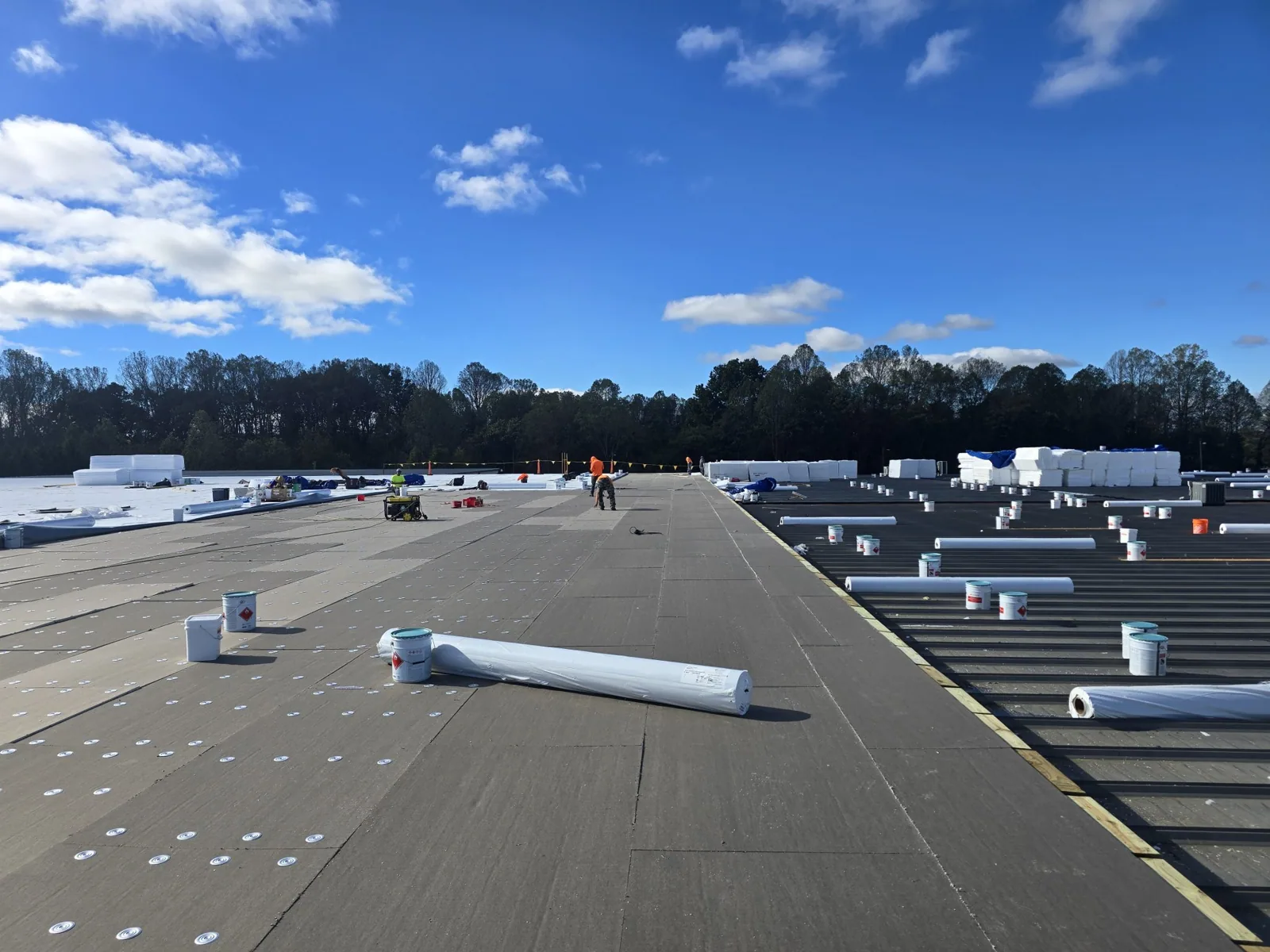
Capture the symptom while the evidence is fresh
Tell us which room or roof section is affected, when the water appears and whether the leak follows heavy rain, wind-driven rain or a particular equipment cycle. Photos of the ceiling, stored materials and any temporary collection help establish the impact. We note whether the stain is new, whether water is actively entering and what prior contractors changed. Facilities staff can often tell us if the condition returns at the same location or after a direction-specific storm.
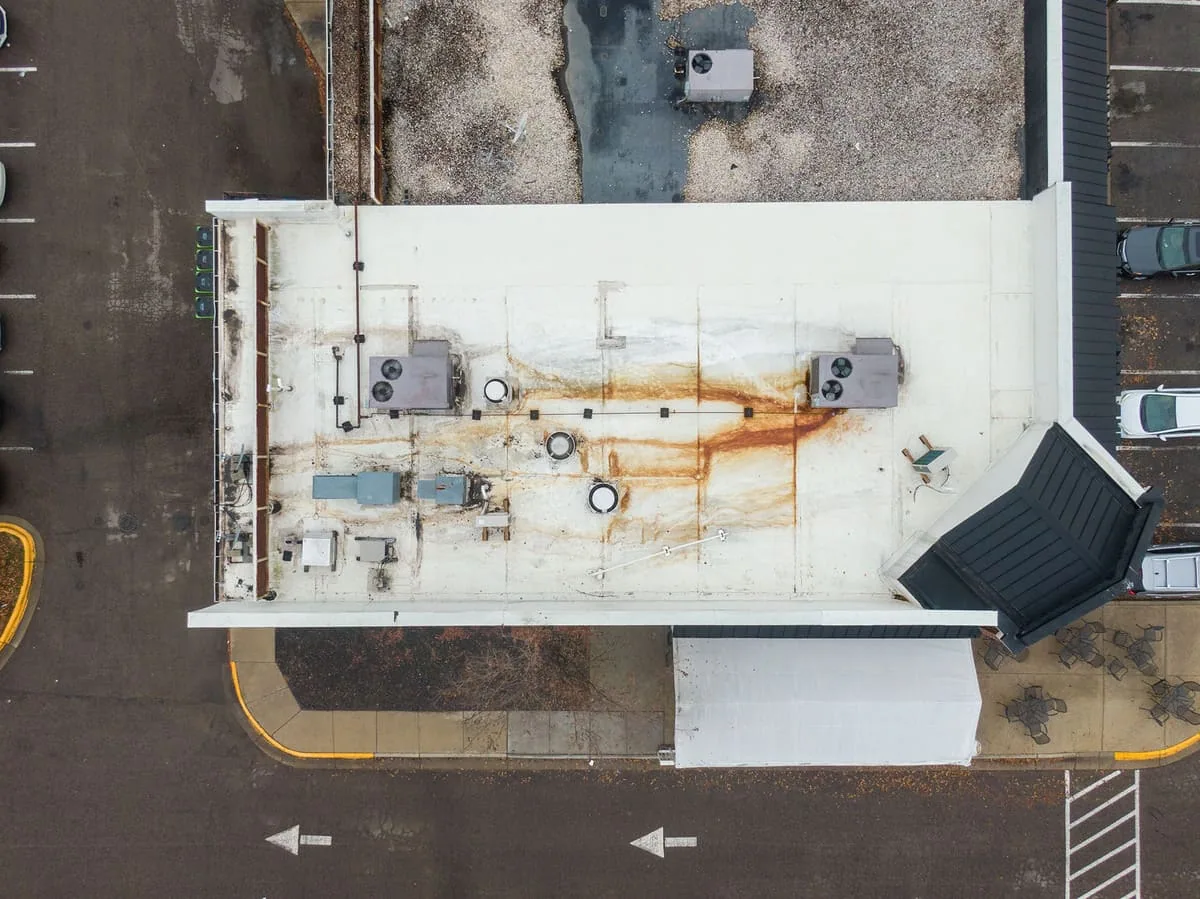
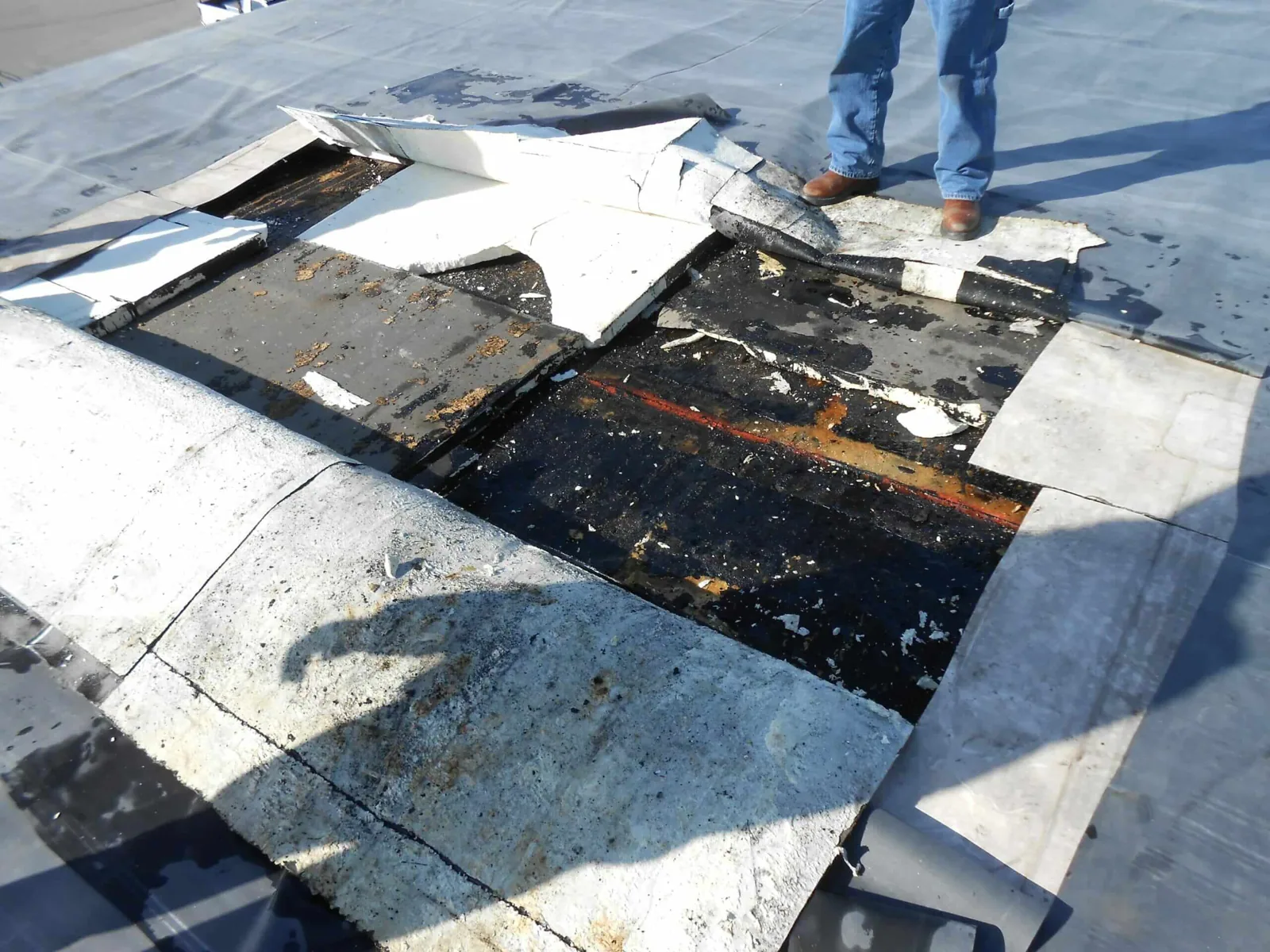
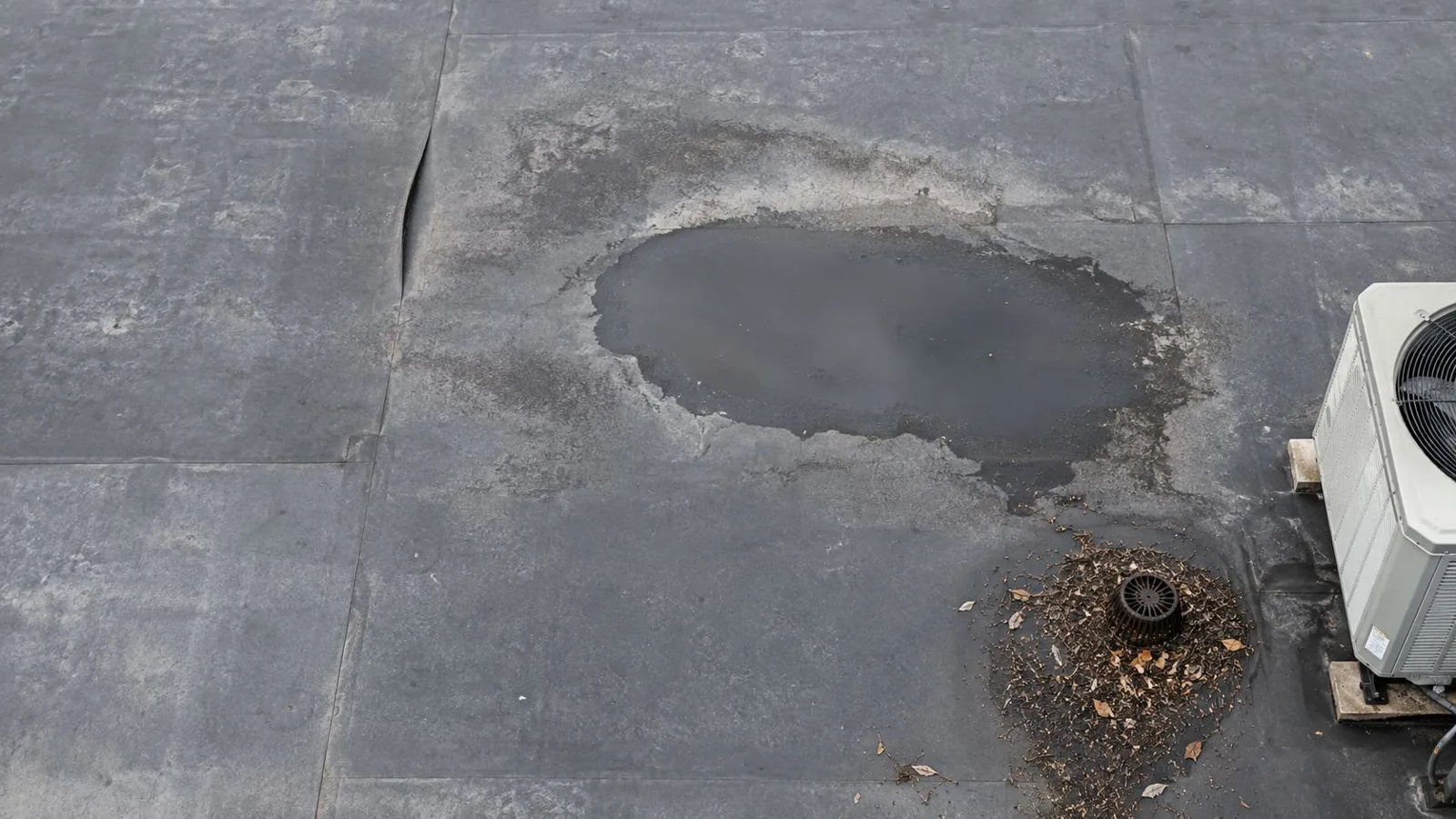
At the property, we compare the interior report with seams, flashings, penetrations, drains and roof transitions above. We look for displaced membrane, punctures, open laps, failed sealant, loose metal, blocked drainage and evidence of past patches. A roof surface can appear dry while wet insulation continues to release water inside. We recommend targeted testing when visual inspection cannot define the affected area. Our broader commercial roof inspection documents conditions beyond the immediate leak, while emergency roof response prioritizes stabilization when water is actively entering.
Follow the water through roof and building details
On a low-slope roof, water may move within insulation or along deck channels before appearing at a joint inside. We trace uphill and laterally from the reported spot, checking nearby penetrations, curbs, parapets, wall flashing and changes in roof elevation. If several interior locations are wet, we test whether they share a roof section or a common drainage path. A single opening is not presumed to explain every stain.
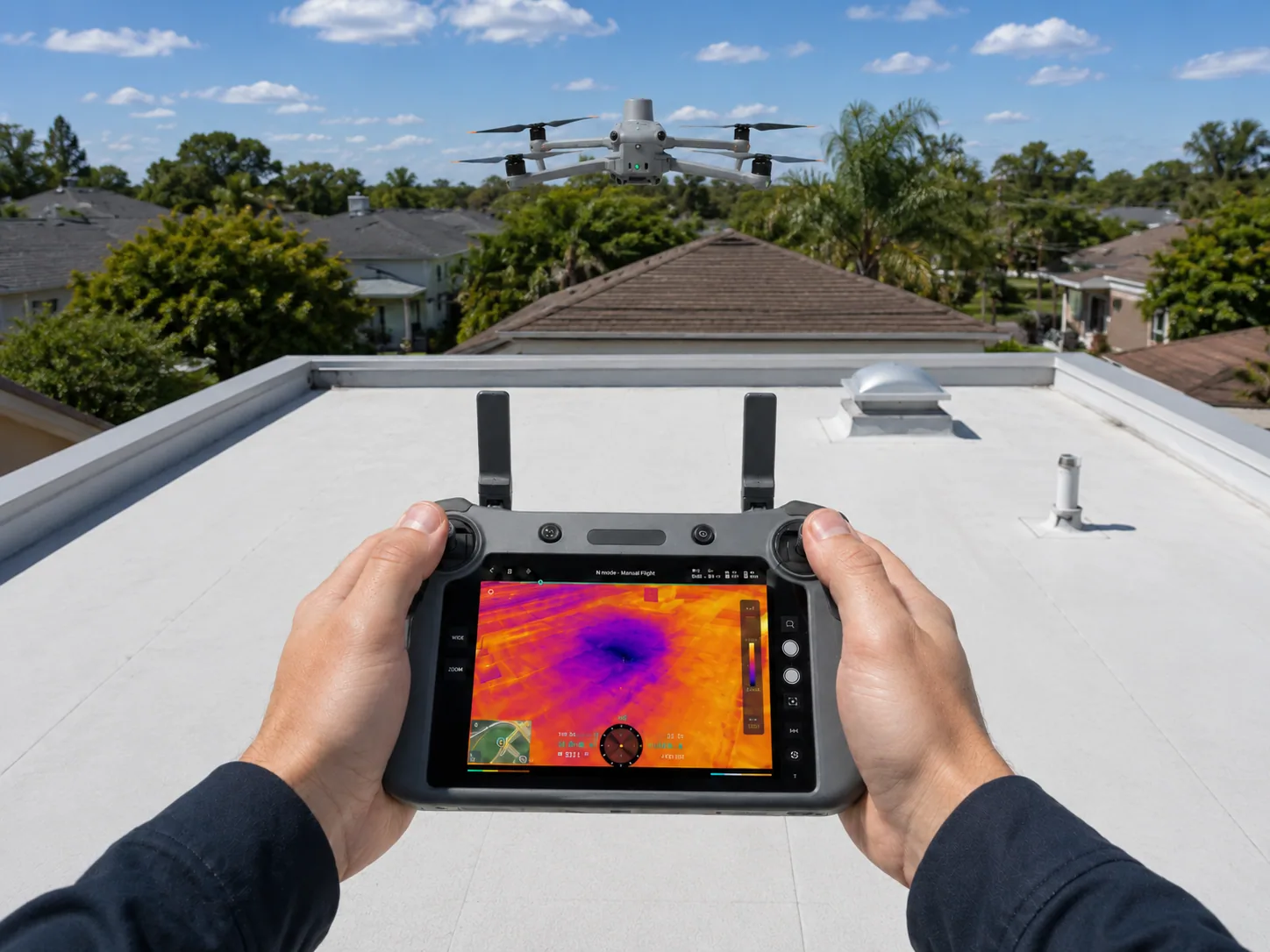
Where needed, test cuts or moisture readings help distinguish a dry surface defect from a larger concealed condition. We mark each test location and record the material observed at each layer. A localized opening with sound surrounding material may support a focused commercial roof repair. Broad moisture, recurring seam failure or unstable attachment may call for a larger scope. If water follows a drain or scupper, we document that path and consider drainage repair instead of sealing unrelated field membrane.
Write a repair that addresses the confirmed entry point
The repair description names the failed detail, materials to remove, substrate condition and replacement method. For membrane work, we specify preparation, compatible patch material, seam treatment and termination. For a curb or parapet, we describe the flashing transition and the adjacent surfaces needed for a sound tie-in. If the original material cannot be identified with confidence, the scope says what must be tested or reviewed before selecting a repair product.
We separate confirmed work from contingencies. If hidden wet insulation or damaged deck becomes visible after opening the roof, the crew photographs it, measures the added work and obtains direction under the agreed change process. That prevents an undefined allowance from being mistaken for a known repair. We also list what the repair does not address, such as interior finish restoration, unrelated leaks or a roof-wide moisture condition. A focused recover evaluation or replacement assessment can be considered when repeated leak repairs no longer make financial sense.
Account for Hialeah rain and operating demands
The Hialeah wet season peaks from mid-May into early July, when fast-moving thunderstorms can test temporary protection before a permanent repair is ready. We check forecast conditions before opening a roof, limit the work area and maintain a plan for securing the section if the shift ends early. A repair is not complete until exposed layers and transitions are protected against the next rain. Drainage pathways stay clear during work so that debris or staging does not create a second water problem.
Operating requirements also shape the visit. A retail entrance near Westland Mall, a loading bay along West 49th Street and an occupied medical building have different access, noise and interior-protection needs. Those are examples of local property contexts, not claims about a particular roof. We confirm hours, escort rules, roof access and any sensitive rooms with the site contact. For locations near Westland Mall or West 49th Street, tell us about deliveries and public access so the crew can plan the route and work window.
Verify the result and watch for a return
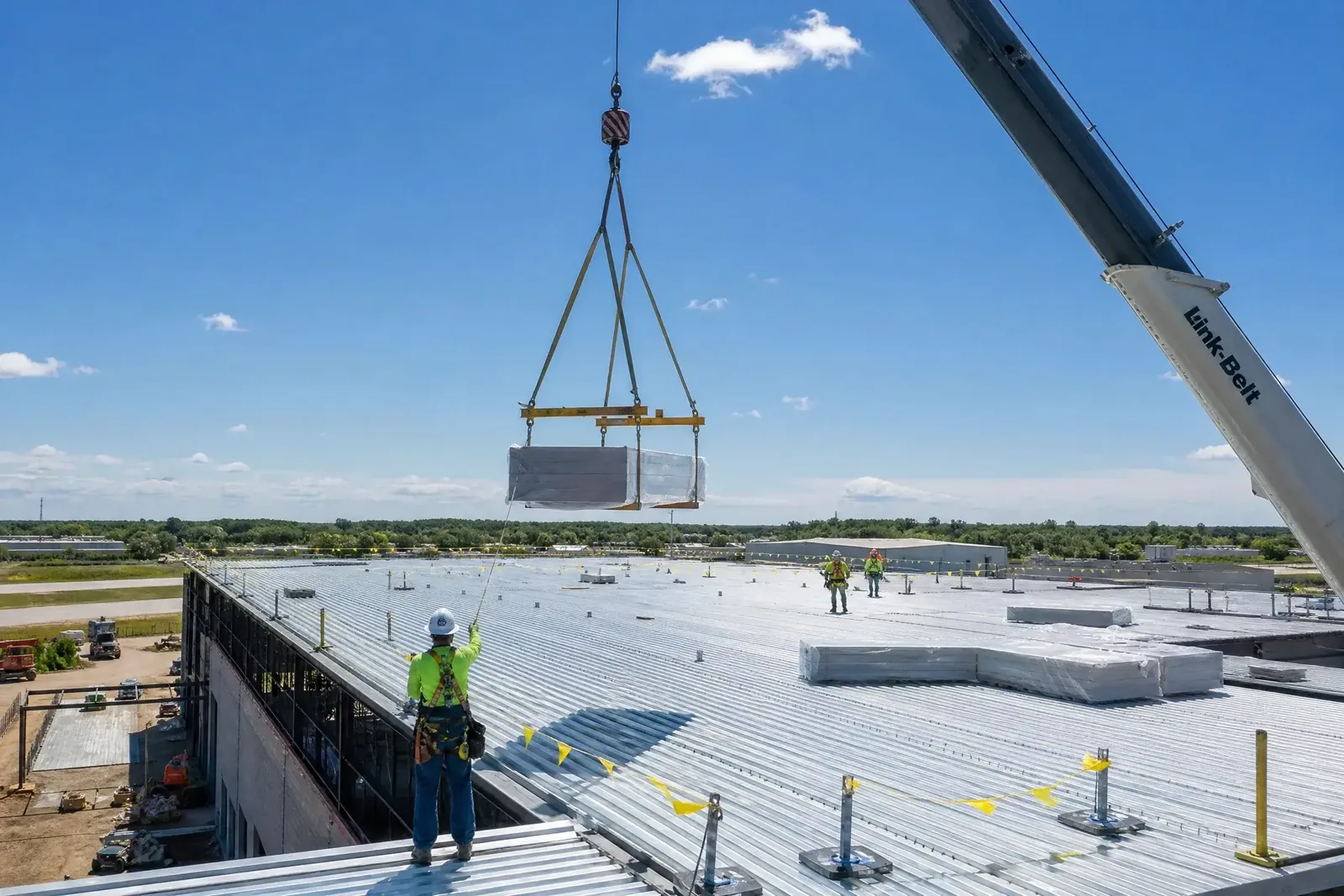
We photograph the completed repair and record the date, materials, roof section and any remaining limitations. When practical, a controlled water test can check the repair area, but it may not reproduce wind-driven rain or the full drainage load. The owner should also know whether nearby wet insulation remains, whether a temporary repair needs a return visit and what conditions would justify reopening the area.
After meaningful rain, the facility contact can check the original interior location and report whether water returned. If it did, we compare the new timing and path with the original record rather than repeating the same patch automatically. A persistent issue may need additional tests, adjacent detail repairs or a broader condition assessment. We can keep the outcome in a roof condition report, including the repair boundary, photo references, test locations and follow-up recommendation. That makes the next decision traceable for a property manager or capital approver.
Give the repair team the details that matter
Send the property address, interior leak photos, the rooms or inventory affected, timing, recent rain conditions and prior repair notes. Add any roof plan or warranty record you have, along with the site contact who can arrange access. We will return the likely entry path, work boundary, repair method and questions that still need an owner decision. When the evidence points beyond a local leak, we will identify the next inspection or capital step rather than implying that a patch resolves the whole roof.
Hialeah's Leah Arts District is a live-work arts area reusing industrial buildings; Palm Springs Mile is a major retail district, and Hialeah Heights has industrial and distribution development. We confirm each property's layout, operations and roof assembly during inspection. If a leak is active, tell us that when arranging the visit so temporary protection and access can be prioritized. If it is intermittent, note which storms brought it back and whether nearby drains were clear. Those details help us test the right area and reduce repeat visits caused by an incomplete symptom history.
Questions
WHAT OWNERS ASK
Why is the ceiling stain not directly under the roof leak?
Water can travel through insulation, deck channels or framing before it reaches the interior. We trace from the stain toward roof seams, penetrations, walls and drains, then use targeted testing when the path is not visible.
Can you repair the roof during the first visit?
Sometimes, if access, weather, materials and the cause are clear. When the entry point or damage boundary remains uncertain, we document the condition and propose the needed tests or temporary protection before permanent work.
What if the leak returns after repair?
We compare the new timing and location with the repair record, then inspect adjacent details and concealed layers as needed. A return leak can mean the path extended beyond the first boundary or a separate opening is involved.
Do you repair the wet ceiling inside the building?
The roof scope covers the exterior water entry unless interior restoration is expressly included. We record affected rooms and can coordinate access, but interior finishes and damaged contents should be assigned separately in the proposal.
What should I do while waiting for leak repair?
Protect people and contents, report active electrical or structural concerns to the responsible facility team, and use safe interior containment if available. Do not access a roof without authorization. Share photos and timing so the response can be prioritized.
Related Roofing Work
Trace the leak before choosing the patch
Provide the Hialeah address, interior photos, leak timing and access contact. We will inspect the likely path and document the repair boundary and follow-up.