
Commercial Roofing at Miami-Opa locka Executive Airport, Opa-locka, FL
Service Areas
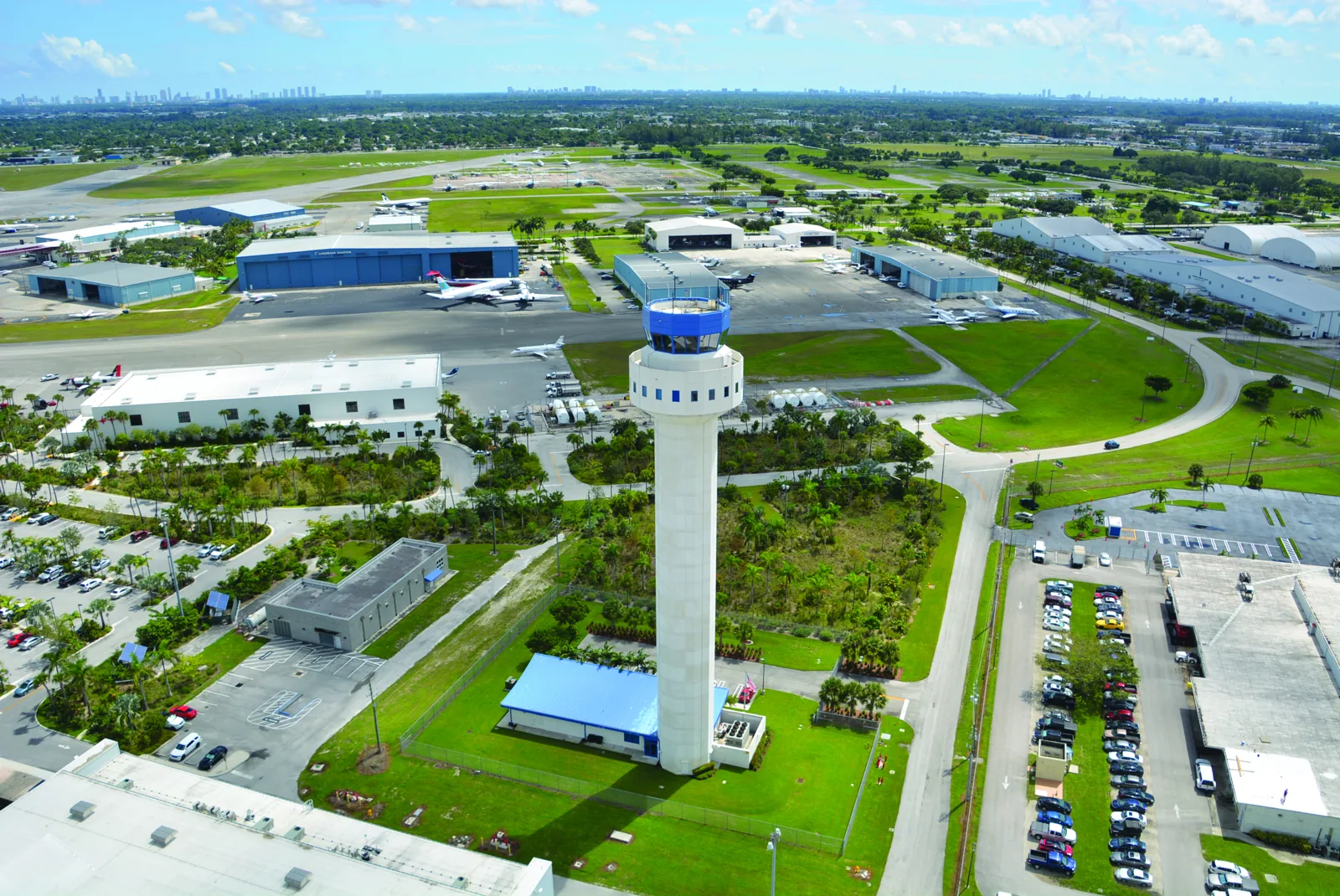
Roofing at Miami-Opa locka Executive Airport starts with the specific hangar, shop or service building, not with the airport name alone. OPF supports business aviation, light cargo moving to the Caribbean and large-aircraft maintenance facilities. Those operations make roof access, staging and work hours part of the inspection plan, while the roof's material and condition still need to be identified at the building. Miami-Opa locka Executive Airport is a separate airport property from nearby Miami International Airport and Hialeah commercial addresses.
Our inspection, leak repair, replacement, recovery and maintenance work is available for commercial properties near the airport. We map roof sections, inspect seams and flashing, check drains and penetrations, and document moisture where tests are warranted. The Hialeah rainy-season average is 48.19 inches; South Florida's strongest storms cluster from the latter half of May into early July. At OPF, we measure drainage at the inspected roof. The airport contact and roof plan set the access window for each facility. A commercial roof inspection starts the record at the correct facility.



Separate hangar, cargo and shop sections
Confirm the building number, occupant, roof section, equipment layout and access contact before the roof walk. Hangar spans, office areas, cargo space and maintenance shops present different inspection questions, but the installed membrane or metal must be identified from field markings and details. We inspect seams, roof edges, curbs, vents, penetrations, drains and visible patches. Each finding is linked to a section and a fixed roof reference so an owner can compare it with future observations.
For large aircraft maintenance, nearby exhaust, rooftop units or service penetrations may have been added after the original roof was installed. We inspect those interfaces and check whether water has reached the insulation or cover board. Site staff confirm where a lift can stand, what equipment must remain accessible and which areas require coordination. A hangar roof assessment can document span and edge details; a warehouse roofing survey can organize findings where the facility includes cargo or storage buildings.
Trace leaks through flashing and outlets
A leak at a maintenance shop may appear below a curb or interior bay even when the entry point is elsewhere. Follow the water path across seams, parapets, equipment supports and drains. We inspect repair edges as well as the original membrane because a patch may cover the first defect without correcting a nearby flashing separation. Where visual evidence is limited, test for moisture or open a controlled sample after the owner approves the location and restoration detail.
Miami-Dade replacement drawings map each drain or scupper, the wind-pressure areas and the parapet conditions. We compare the available detail with what is installed at OPF, then identify any mismatch that affects replacement or edge repair. A drain restriction can require a different scope from an open seam. A drain and scupper inspection documents the outlet and membrane connection. We identify a hangar's roof assembly and condition through field inspection and available building records.
Schedule around aircraft and maintenance work
Before mobilization, confirm the authorized entrance, escort or security needs if any, truck route, roof access, lift position and service window with airport property staff. Set a material staging area that does not block cargo movement, aircraft service or maintenance tasks. Keep each day’s exposed area small enough to seal before crews leave. If tear-off exposes wet board or deck damage, photograph the layers and obtain authorization before expanding the repair.
Emergency leak response is available every hour of the day, throughout the week. We can stabilize an active opening, protect the interior and return to the permanent repair after the system and access conditions are documented. A long recover or tear-off can use occupied-building reroofing phases to coordinate crews with continued facility use. Opa-locka's historic landside barracks and warehouses were converted to industrial use after Naval Air Station decommissioning; any current building still needs its own roof and use verified before sequencing work.
Set the airport roof budget by section
Price depends on roof area, membrane or metal system, fastening, seam count, penetrations, drainage work, moisture below the surface, deck repair, access, staging and disposal. A limited flashing repair differs from a roof replacement requiring temporary protection and removal of multiple layers. We state the measured work area, the materials included and the assumptions that remain unresolved. If a test opening finds additional wet board or corroded deck, the owner receives photos and a quantity before the scope expands.
Repair can retain serviceable material around an isolated failure. A recover may be considered if existing layers are dry, attached and compatible, with new height resolved around drains, curbs and wall details. Tear-off may be needed when the deck or attachment cannot support another assembly. We base recover and tear-off decisions on surveyed roof layers, drainage and attachment. For a separate Opa-locka landside property, the industrial-area roof record belongs to that address; MIA cargo buildings have their own airport service-area assessment.
Keep the airport record ready for service
At closeout, we record the facility and repaired area, note the roof type only if confirmed, add moisture and drain findings, and identify exclusions. Keep photographs and a marked plan with the maintenance file. Note which access requirements were confirmed by the property representative and which zones were not available during inspection. This keeps future emergency response from repeating identification or access steps.
The Hialeah-area wet-season normal is 48.19 inches, with peak storms from mid-May to early July; OPF follow-up timing also accounts for the inspected roof's drainage and exposure. Recheck seams, curbs, drains, parapets and temporary patches ahead of the wettest period that affects the facility. A roof condition report can carry test results and open approvals into the next budget review. Send the airport address, roof plan, leak history and facility contact to set the first inspection. The report returns a condition, an immediate action and the next decision for each roof section.
Questions
WHAT OWNERS ASK
What airport functions should the roof inspection account for at OPF?
The airport supports business aviation, Caribbean light cargo and large-aircraft maintenance. We confirm which function operates in the inspected building, then coordinate access, staging and roof sections with its facility contact.
Can a hangar leak be repaired without closing the full building?
The work area and access decision depend on the leak location, interior exposure and facility operations. We define a limited stabilization zone when possible, then document the permanent repair and any conditions that require broader work.
Does the airport's former Naval Air Station use establish the roof type?
No. The historical industrial reuse of landside buildings does not identify a current assembly or condition. We inspect the address, identify the existing roof from evidence and review any available renovation records.
How should Hialeah's rainfall figure be used for OPF work?
The 48.19-inch wet-season normal is for Hialeah, and the stormiest period runs from mid-May through early July. Treat that as market context; inspect OPF drainage directly and set the schedule with airport staff.
Related Roofing Work
Set the OPF roof inspection by facility and access window
Send the Opa-locka building address, roof plan, leak history and airport contact. We will document roof sections, drainage, moisture and the work boundary.