
College and University Roofing in Hialeah, FL
Property Types We Roof
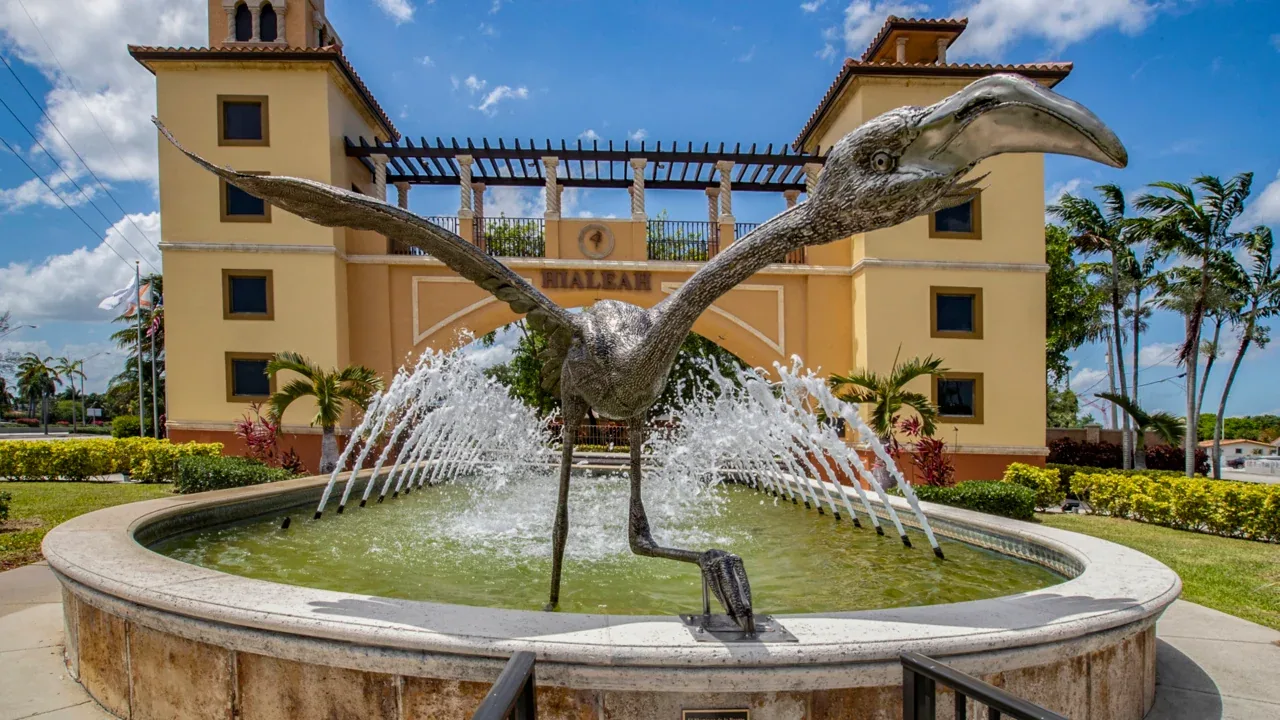
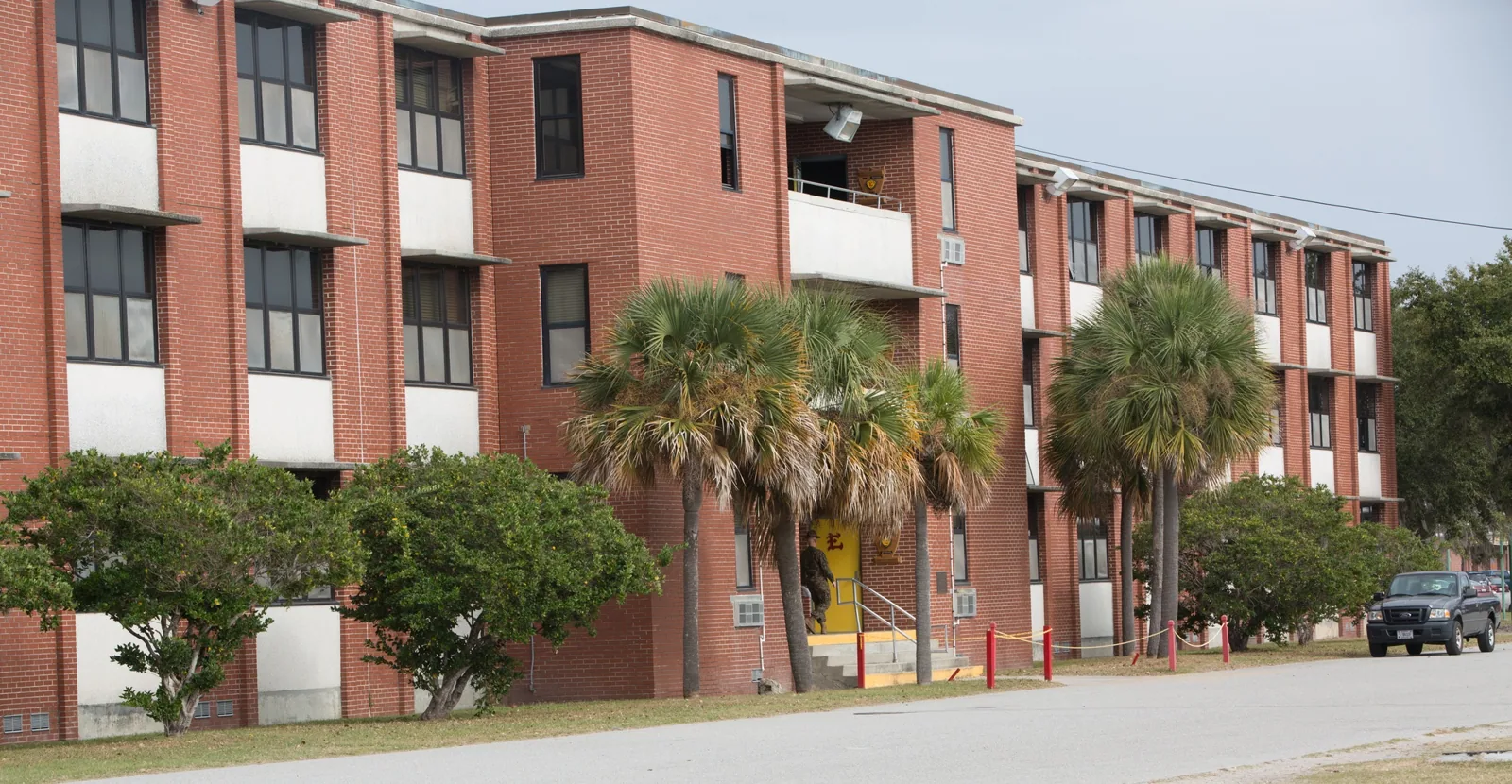
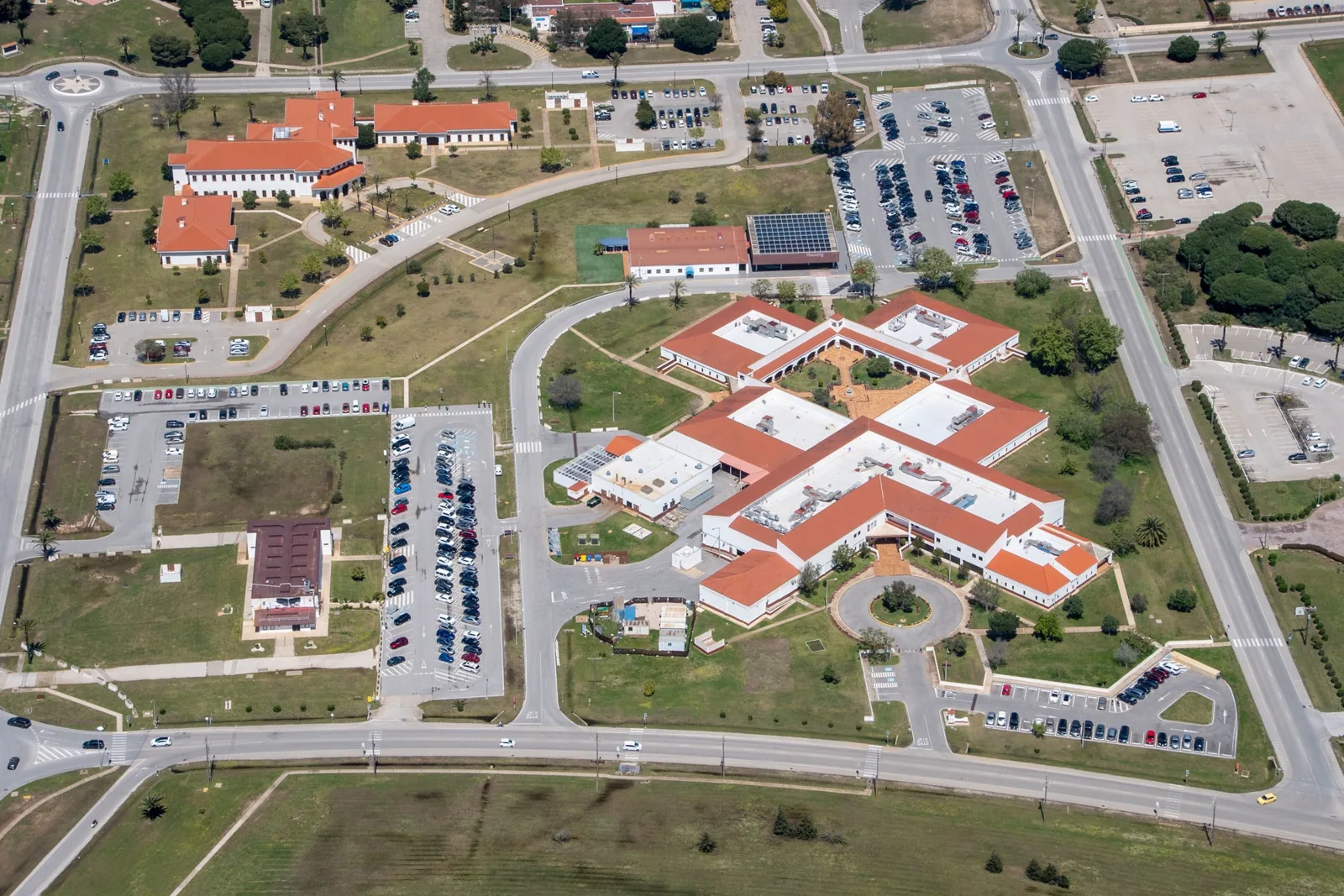
A campus roof decision is harder when one building holds classrooms, offices, labs and student services under the same maintenance budget. Start with the roof section and the observed condition, then connect each finding to the building use and available work window. Miami Dade College’s Hialeah Campus sits on West 49th Street and supports business, technology, pre-health, engineering and transportation-related programs. Facilities can map access and work windows to the campus programs and building areas served. K-12 facilities have separate occupancy patterns, as outlined in this school roof program. By contrast, a warehouse roof scope may hinge more on loading continuity and stored goods. We inspect the actual roof, photograph defects and moisture indicators, and separate immediate repair from capital planning.
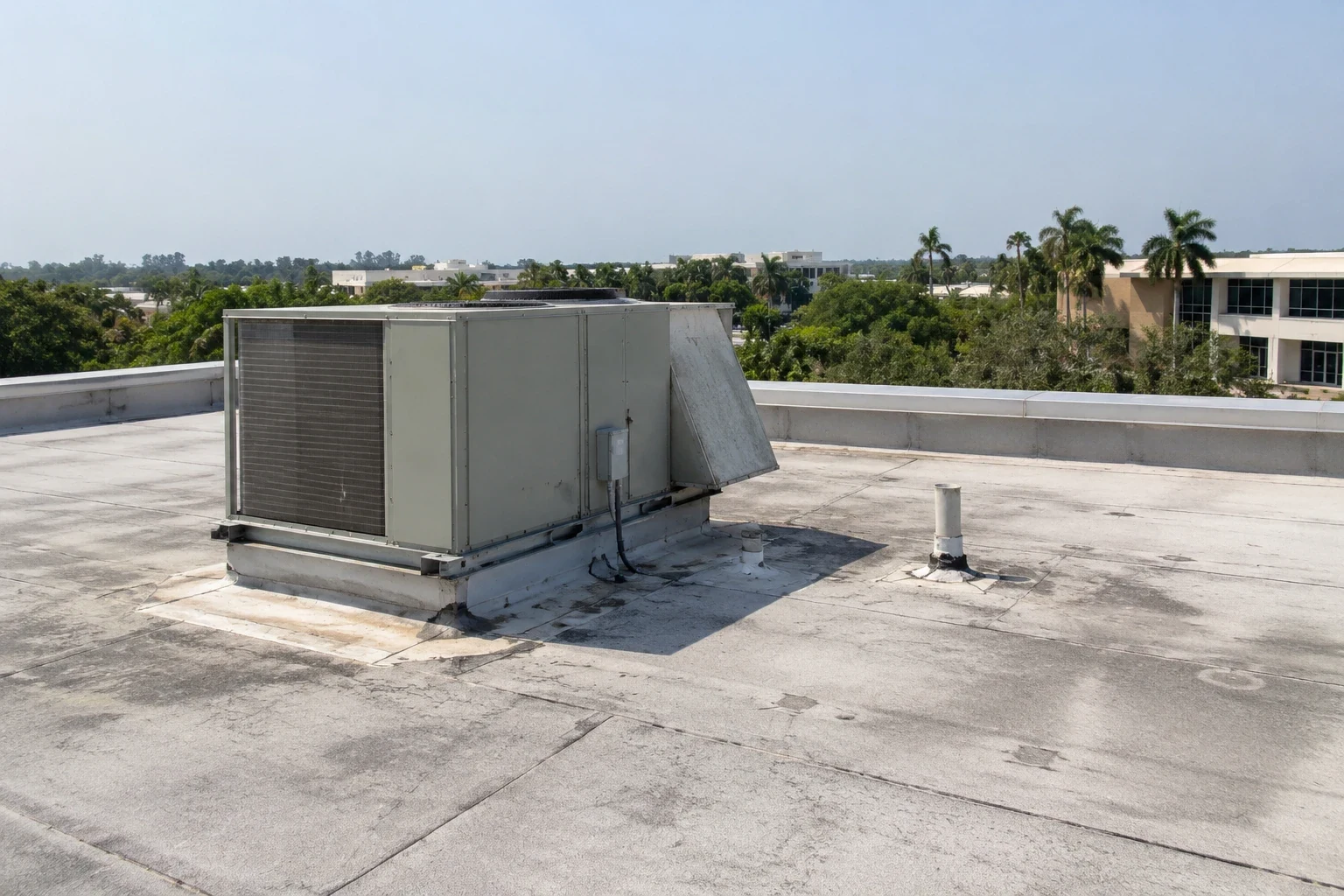
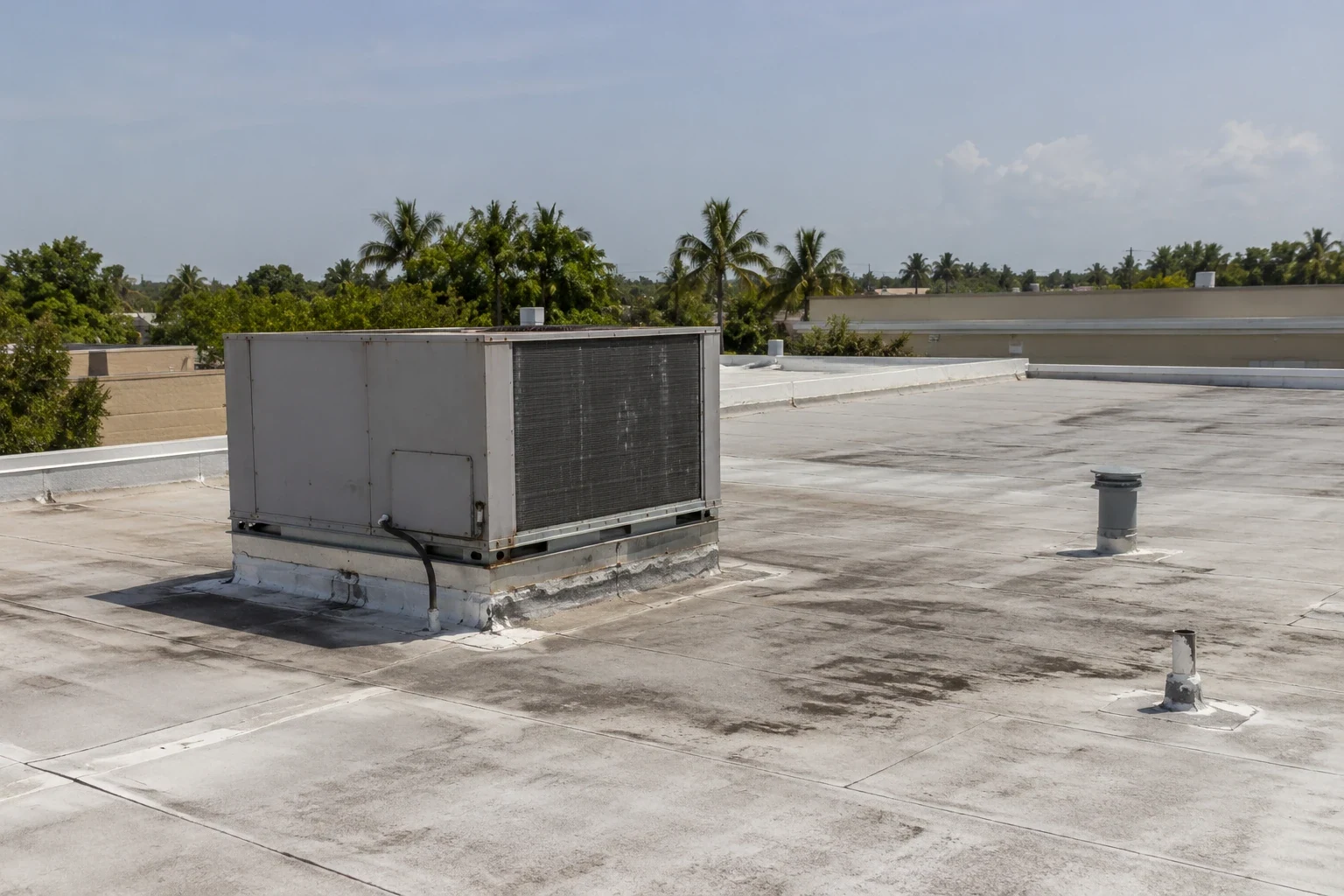
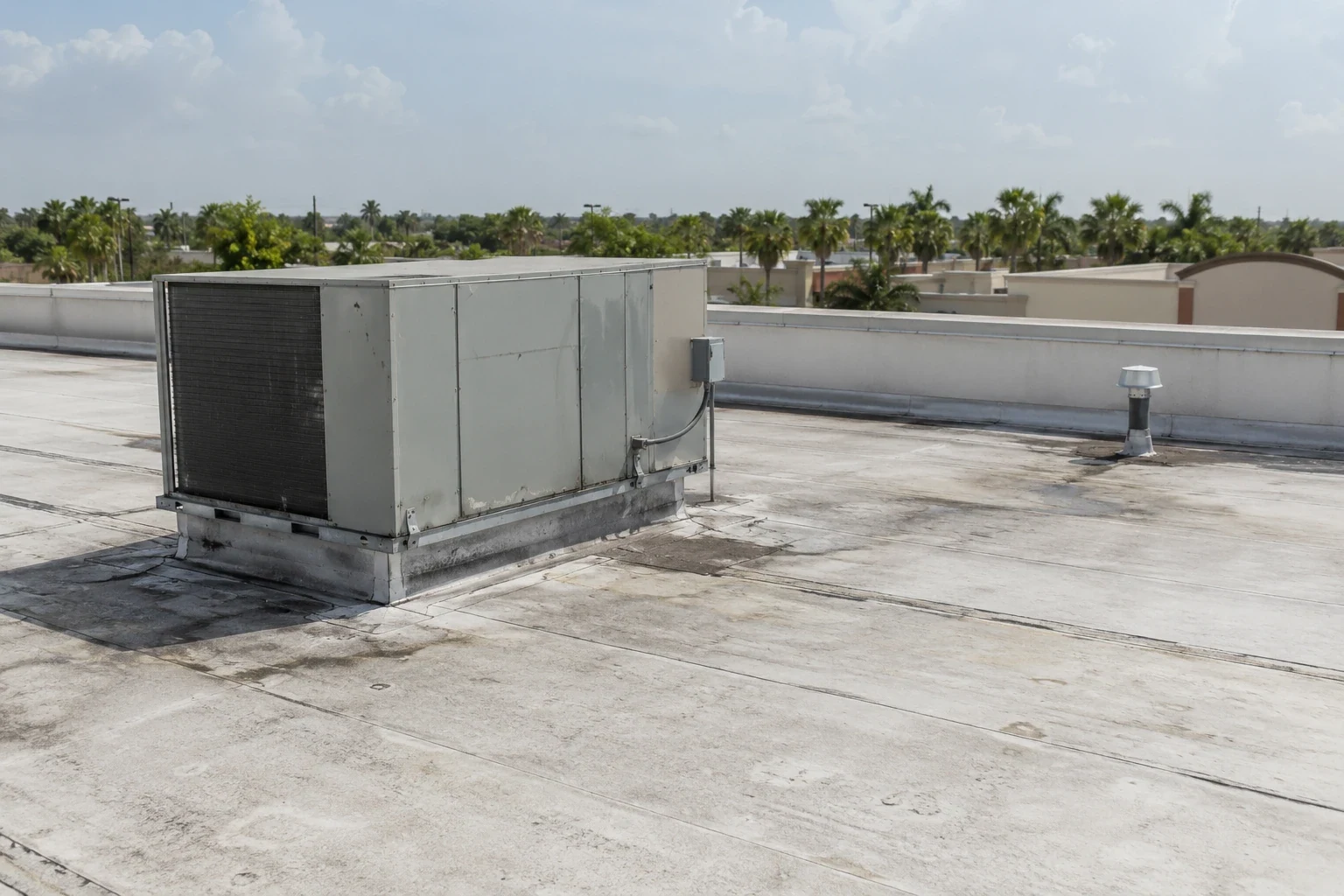
Our work covers repair, replacement, recover, restoration, coatings, inspection and maintenance on low-slope and metal roofs. We identify the membrane or metal system, its attachment, transitions, drainage and penetrations before recommending a scope. We report roof conditions by building and section so facilities can prioritize work and approvals accurately. A targeted drone roof inspection can document broad surface conditions, while close access verifies details that images cannot resolve. The decision record should say what was seen, what was tested, what remains uncertain and who owns the next approval.

Build an evidence record by building
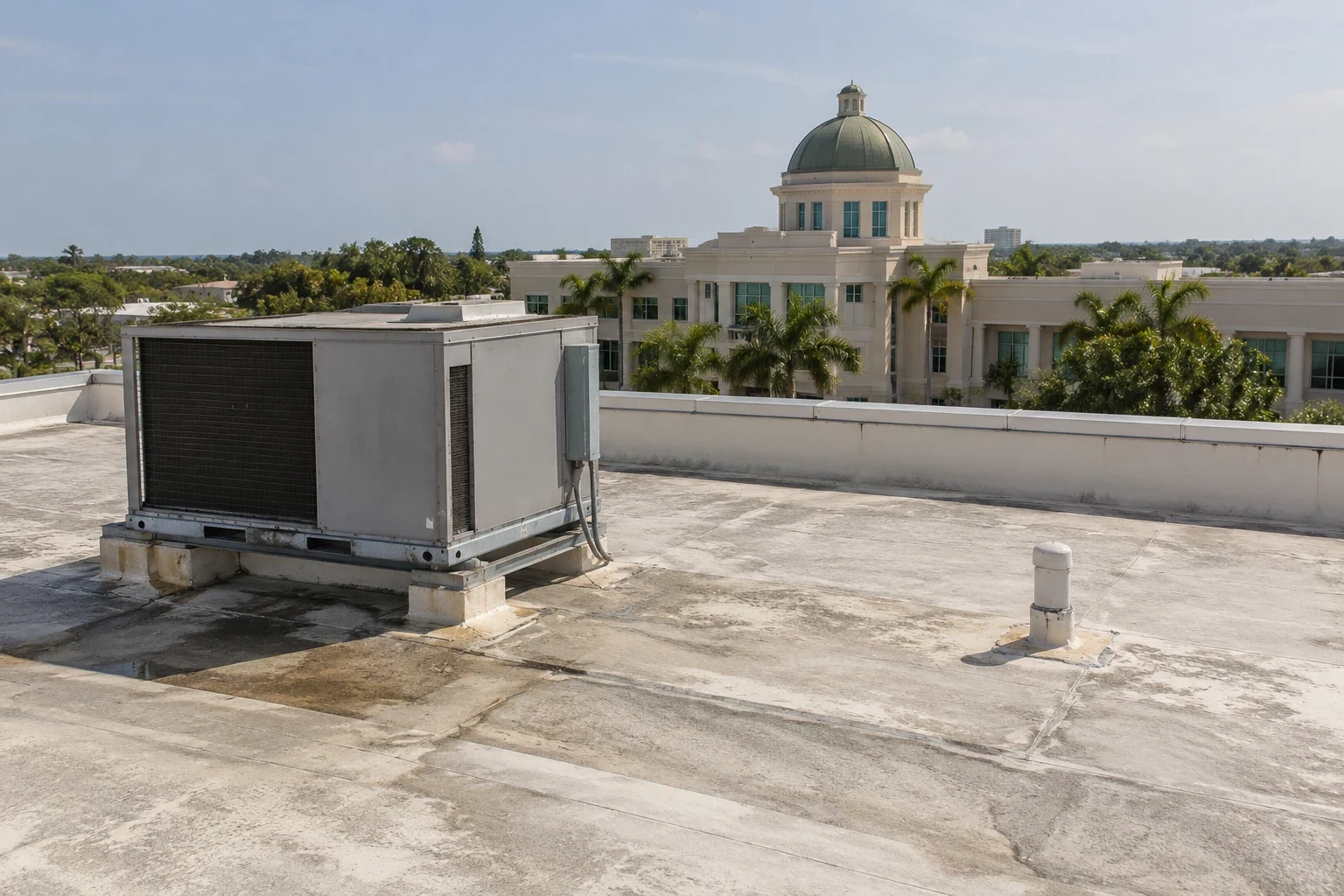
Roof areas over a lab or classroom may carry a different consequence than a small administrative annex. We map each roof section to the building, note active leaks and interior effects, then inspect seams, flashings, curbs, drains and edge conditions. If staining appears far from an opening, we trace the likely water path instead of treating the ceiling mark as the repair location. Moisture testing can help distinguish damp insulation from dry material, which changes both the repair boundary and the amount of roof assembly that must be opened.
The record needs enough detail for facilities staff to compare the next inspection with this one. Include dated photographs, a marked roof plan, the observed condition, recommended action, and a plain statement of what cannot yet be confirmed. Hialeah’s wet season averages 48.19 inches of rain; the stormiest part typically falls from mid-May through early July. On a campus, a blocked scupper can affect multiple rooms or circulation areas, so we note drainage performance alongside membrane condition. A written roof condition report turns field observations into an approval-ready record.
Keep capital choices tied to operating impact
A capital request should explain why a roof section needs work now, what a repair can reasonably address, and what exposure remains after that repair. If deterioration clusters around one curb or seam, localized work may be enough. If wet insulation, recurring leaks or attachment concerns span a larger area, replacement or a recover may warrant evaluation. We price options against the documented conditions and note dependencies such as drainage correction, structural review or access restrictions. This lets an owner compare a near-term repair with a larger project without pretending they are equivalent.
Hialeah’s industrial and service economy gives portfolio managers a mix of building functions across the same market, but campus projects need their own operational logic. We can phase work by building or roof section, coordinate staging, define access routes and keep disruption-sensitive tasks in agreed windows. Miami-Dade roofing plans identify drains or scuppers, pressure zones and parapets, and products in the county’s High Velocity Hurricane Zone have specific approval and installation conditions. Those requirements matter when selecting a new assembly. For a multiyear decision, a roof capital plan can rank work by condition and consequence, while a portfolio process can keep records consistent across facilities.
Schedule around wet-season and heat constraints
Hialeah’s rainy season changes the cost of an open roof. Drainage must work before a project begins, and temporary protection has to remain effective if a storm interrupts installation. July and August often bring maximum heat index at or above 100°F, narrowing safe rooftop work periods. Campus roof planning also has a later weather window: South Florida’s tropical threat is greater between late August and mid-October. A workable schedule sets weather hold points, identifies what can be dried in each day and assigns a contact who can approve a changed sequence.
Emergency response runs at all hours, every day of the week, including holidays, for a roof failure that threatens campus space. The first visit controls active water and records the condition; the follow-up scope addresses the assembly, not just the interior symptom. If severe weather damages a section, photograph the condition and separate direct damage from prior deterioration in the report. Campus inspections identify the rooms and roof sections that need protection, then coordinate the work sequence with facilities. For campus leaks, we can perform commercial leak investigation and repair before planning the permanent work.
Close each phase with a usable handoff
At the end of a phase, the facilities contact should receive the completed roof sections, repaired details, remaining open items, photographs and any monitoring instruction. Do not let a temporary patch disappear into a work-order note without showing its location and date. That matters when multiple buildings are managed by separate teams or when a later project depends on the condition of an adjoining section. We mark completed and deferred work distinctly so the next budget review starts with current evidence.
For ongoing upkeep, we can set a preventive maintenance schedule around drains, seams, penetrations and prior repairs. If renovation is needed above active campus uses, our occupied-building reroofing work can be sequenced with access and interior controls agreed in advance. Keep the address, building name, roof section and approval owner together in the portfolio record. The report pairs each image with a roof location, finding and next decision. The Miami Dade College Hialeah Campus is on West 49th Street, a major Hialeah commercial area. Request the Hialeah Campus address and the last roof report, and we will return findings that identify immediate action, longer-range exposure and the next approval.
Questions
WHAT OWNERS ASK
How should we compare repair and replacement for a campus roof?
Start with the mapped condition. A contained defect with dry surrounding materials may support a repair, while widespread wet insulation, recurring openings or assembly-level failure can justify replacement analysis. We identify assumptions and unresolved conditions so the funding request reflects evidence rather than the age of the building alone.
Can a drone inspection replace walking the roof?
A drone can document broad surface patterns and help locate areas for closer attention. It cannot confirm every seam, concealed wet layer or detail condition. We use visual coverage as one input, then access and test the areas that drive the repair decision.
What belongs in the facilities record after roof work?
Keep the building and roof section, dated images, repaired details, materials noted, drainage observations and open recommendations together. Mark temporary measures so the next inspection can tell whether they held and where follow-up is due.
When should campus roofing be scheduled in Hialeah?
The mid-May to early-July stormiest stretch raises the value of working drainage and reliable dry-in plans. Summer heat can reduce safe rooftop hours, and tropical risk is greater from late August into mid-October. We develop the work sequence with those constraints and the campus calendar in view.
Related Roofing Work
Make the campus scope easy to approve
Send the Hialeah building address, roof history, affected section and approval contact. We will document current conditions and lay out practical repair, replacement or maintenance steps.