
Air Force Base Roofing in Hialeah, FL
Property Types We Roof
A roof issue near an active installation is first an access and mission-coordination problem, then a repair scope. Identify the building, the affected roof section, the installation contact and the route the crew is permitted to use. Homestead Air Reserve Base is about 27 miles south of Hialeah; its 482d Fighter Wing operates F-16 aircraft. For each installation building, we inspect the assembly in place, record the defect and define work under the project's access and approval requirements.
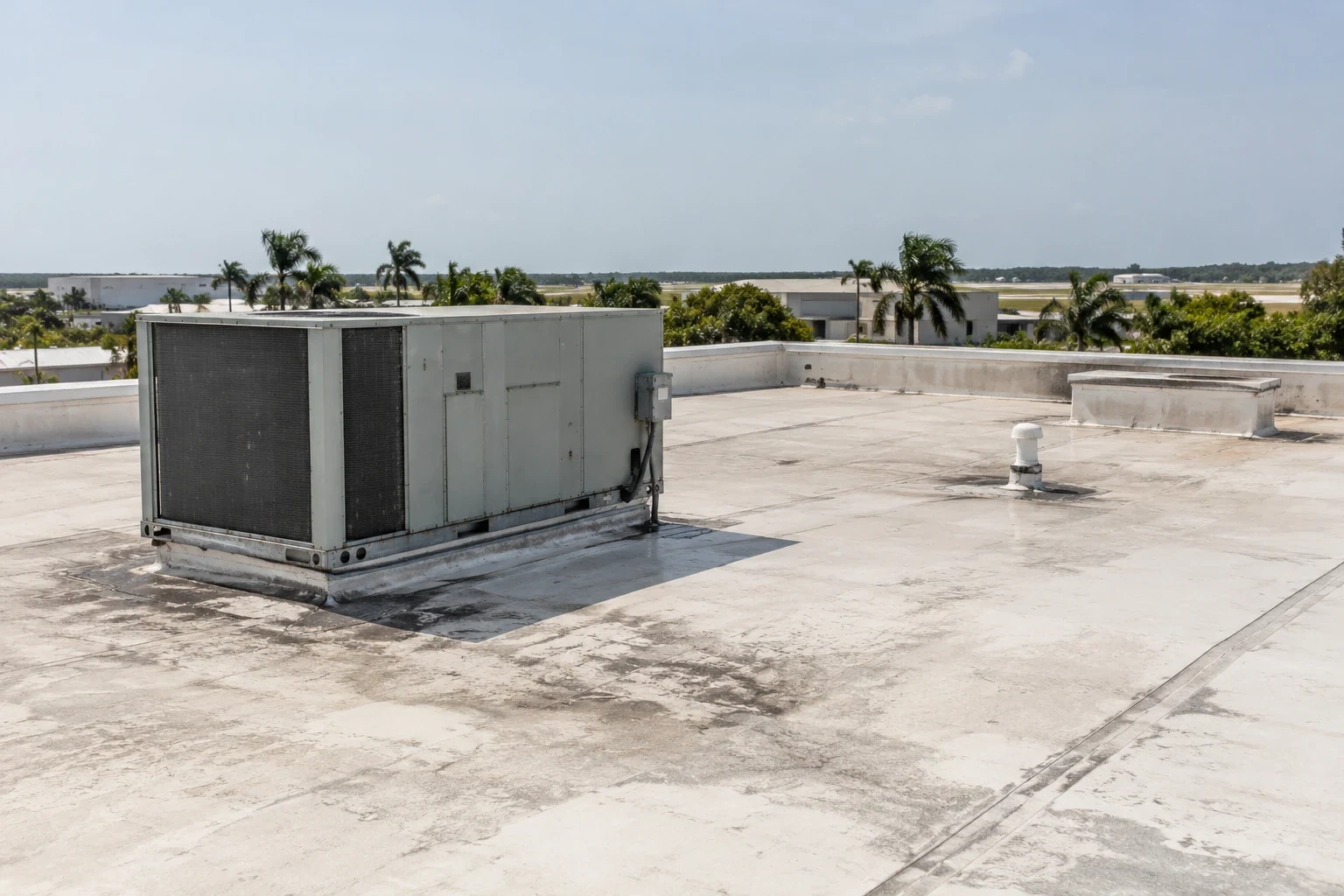
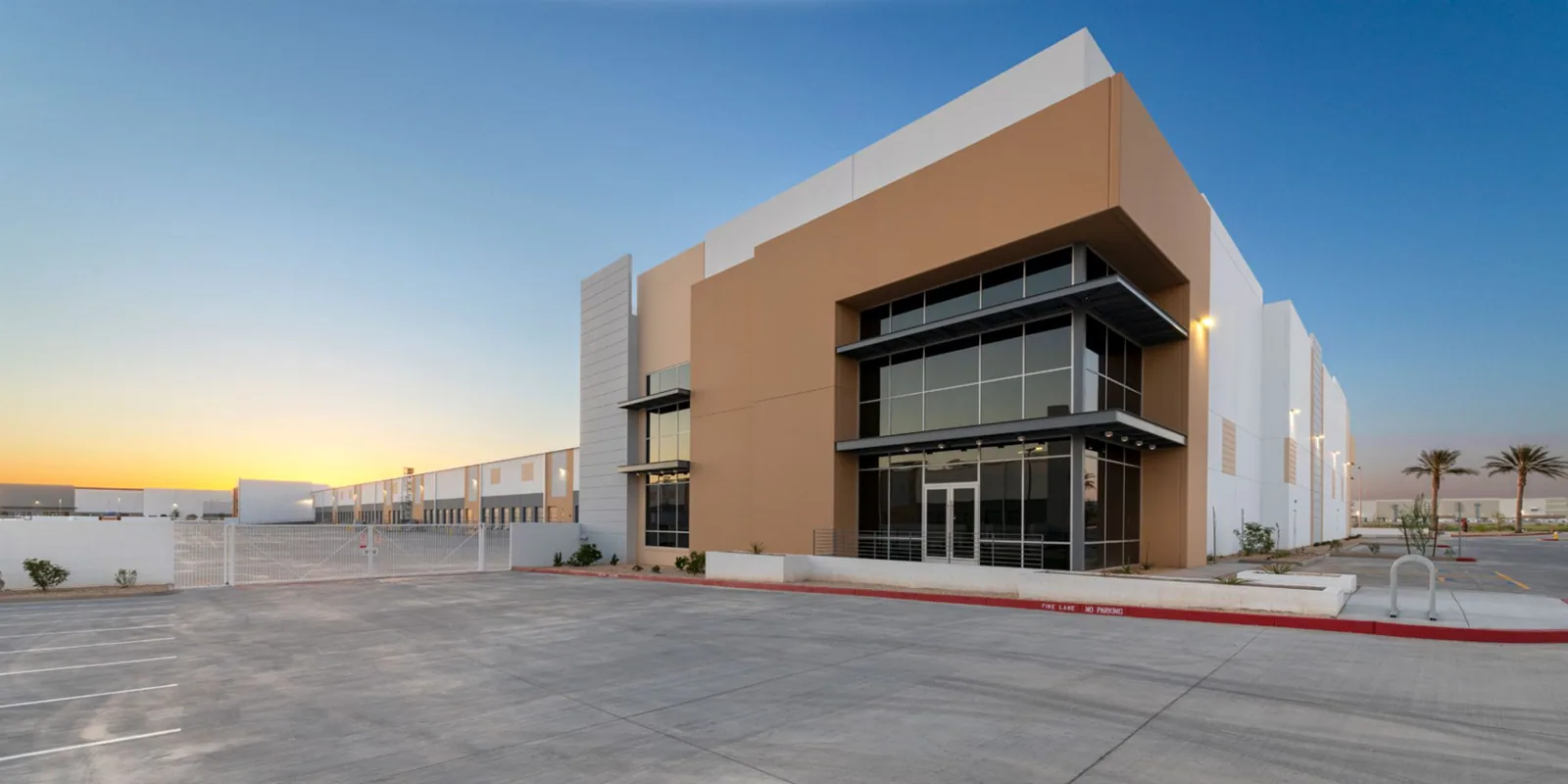
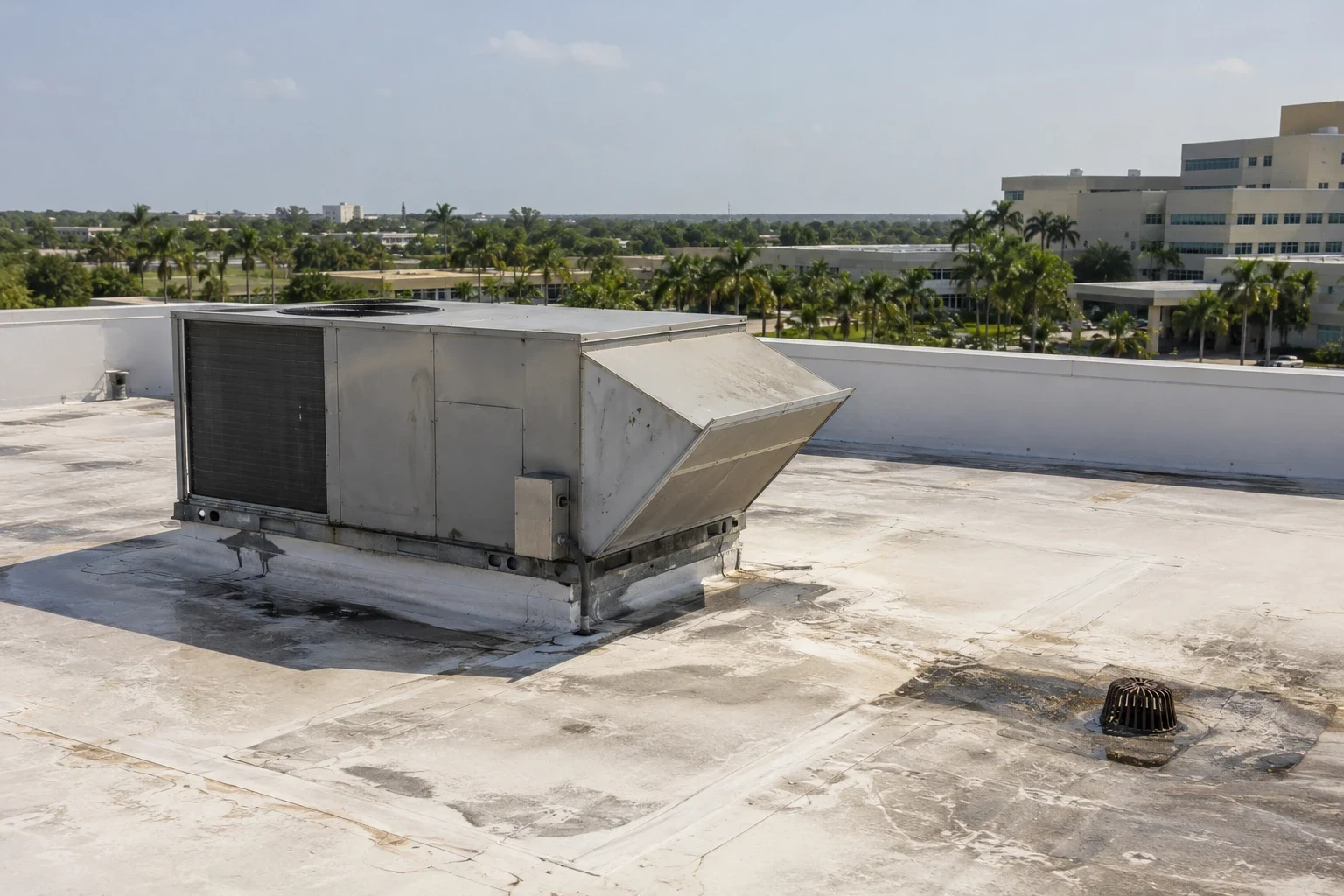
Our commercial roofing work includes inspection, repair, replacement, recover, restoration, coatings and maintenance on low-slope and metal systems. Air Force projects may involve offices, hangars, maintenance spaces or support buildings, but each facility needs a building-specific survey. We confirm membrane layers, attachment, drains, curbs, perimeter details and interior effects before pricing. The project documents govern material selection and installation. Where they specify roofing work under the Unified Facilities Criteria, we follow the applicable contract requirements rather than assuming a generic assembly. A commercial roof inspection produces the condition record and repair boundary for review.
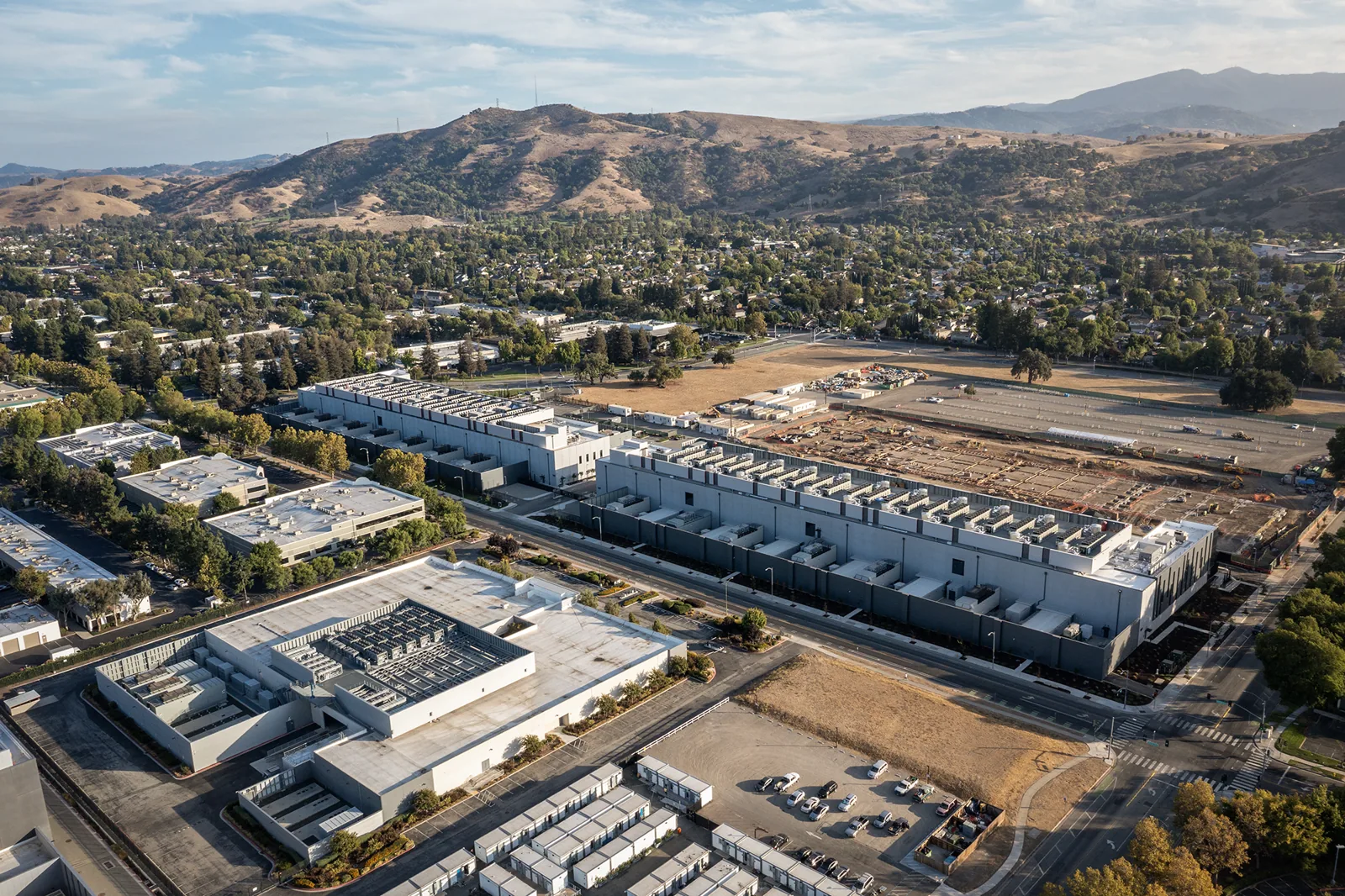
Clear access before planning production
Installation work can require advance badging, escort procedures, vehicle checks, restricted routes and limits on photography or tool movement. The contracting officer or designated facility contact provides the current entry rules. We build the crew list, delivery plan, roof access method and material staging around those directions. A repair sequence also has to respect aircraft movement, maintenance operations and any restricted work windows. We confirm these controls before mobilizing because a crew delayed at the gate cannot protect an open roof or meet a dry-in deadline.
Homestead Air Reserve Base is a working flying installation. Opa-locka Executive Airport serves business aviation and Caribbean light cargo, and its facilities include large-aircraft maintenance. The installation or airport contact sets the access rules and approval path for roof work. A roof plan identifies the approval contact, escort, route, equipment list, roof hatch or ladder, work area and stop-work communication. At an Army-controlled property, installation roof coordination identifies site approvals; each military roof repair then follows the approved access and work sequence.
Verify the assembly and its wind details
Aircraft and support buildings may present long roof runs, equipment curbs, large penetrations, edge conditions and drains, but the actual configuration must come from the site survey and drawings. We inspect seams, fasteners, flashing transitions, parapets, roof-to-wall details and any prior repairs. If water appears indoors, the nearest ceiling mark may not locate the opening. We trace the path and test for moisture before setting the repair limit. For hangar roofs, the scope must also account for large door clearances, work-at-height access and any structure or equipment restrictions.
Miami-Dade permit plans identify drains or scuppers, pressure zones and parapets, and the county is within Florida’s High Velocity Hurricane Zone. Product approvals and installation limits apply to the chosen assembly. July and August heat index often reaches or exceeds 100°F, while the greater tropical-risk period runs from late August through mid-October. Those conditions affect rooftop hours, dry-in and material staging. A military hangar and maintenance roof scope should document doors, equipment routes and work boundaries separately from an office roof.
Separate urgent repair from project alternatives
Price depends on the damaged area, number of roof layers, wet insulation, deck or edge repairs, penetration density, access method, escort schedule and installation limits. A temporary measure may protect an active leak while a permanent repair is reviewed. If widespread moisture or attachment concerns are found, show a broader replacement option separately. The report should distinguish confirmed defects from conditions hidden beneath the assembly and name any testing or opening needed before final quantities are known.
When installation requirements, material submittals or operating windows change, update the scope before the work boundary expands. A photo log should show the defect before repair, the opened layers, concealed conditions, new detail and completed tie-in. Keep each building and roof section in its own record for facilities review. For a nearby Guard readiness property, an armory roof assessment uses the same evidence-first method but follows that facility’s specific schedule and access controls. A roof condition report can record the recommendation, assumptions and next approval without mixing those buildings.
Document work for the next inspection
Closeout includes marked roof limits, dates, photographs, material and detail notes, drainage observations, approved substitutions if any and open follow-up items. Record the personnel who accepted the work and any temporary protection still in place. The facility team should be able to locate the repaired section and confirm which areas were outside the approved scope. If the work was phased, note which section was dried in and what remains for the next authorization.
Hialeah’s normal wet-season rainfall is 48.19 inches, with the stormiest part generally from mid-May into early July. Drain and scupper condition should be tracked before repeated summer rain. We can provide a roof maintenance inspection with a record of seams, outlets and prior repairs, subject to installation access rules. The regional context includes Homestead Air Reserve Base south of Hialeah and the Miami-Opa locka Executive Airport north of the city; each remains a separate site with its own authority. Hialeah Heights is the city's northwest annexation area, with substantial commercial and industrial designation and reported distribution growth. Send the building address, roof history, access contact and project requirements so we can return an inspectable scope for the next approval. That gives the facility lead a reviewable record before any crew or material is scheduled.
Questions
WHAT OWNERS ASK
Can a roofing crew work on an active Air Force installation?
The work proceeds only under the facility’s access and scheduling rules. We coordinate badging, escort, routes, deliveries, roof access and any mission-related work windows with the designated contact before mobilization. Those controls shape the schedule and daily work plan.
Do you assume hangar and support buildings use the same roof assembly?
No. We identify the system, attachment, details and condition for each roof section. A hangar’s door and equipment constraints differ from an office or storage building, and project documents may specify different assemblies or installation requirements.
What should a military roof condition report include?
It should identify the building and roof section, show the observed defect, map the repair limit, record moisture or drainage findings, note hidden conditions and state the next approval. Photographs and dates help the installation team compare later inspections.
How does South Florida weather affect installation work?
Wet-season rainfall and the stormiest stretch from mid-May into early July make drainage and temporary protection central. Heat in July and August can shorten safe rooftop hours, while tropical risk increases from late August through mid-October. The work plan needs weather holds and dry-in steps.
Related Roofing Work
Scope the installation roof under its access rules
Provide the facility, building, roof history, project requirements and access contact. We will document the condition, identify dependencies and return a repair or replacement scope for approval.