
Infrared Moisture Survey for Commercial Roofs in Hialeah, FL
Commercial Roofing Services
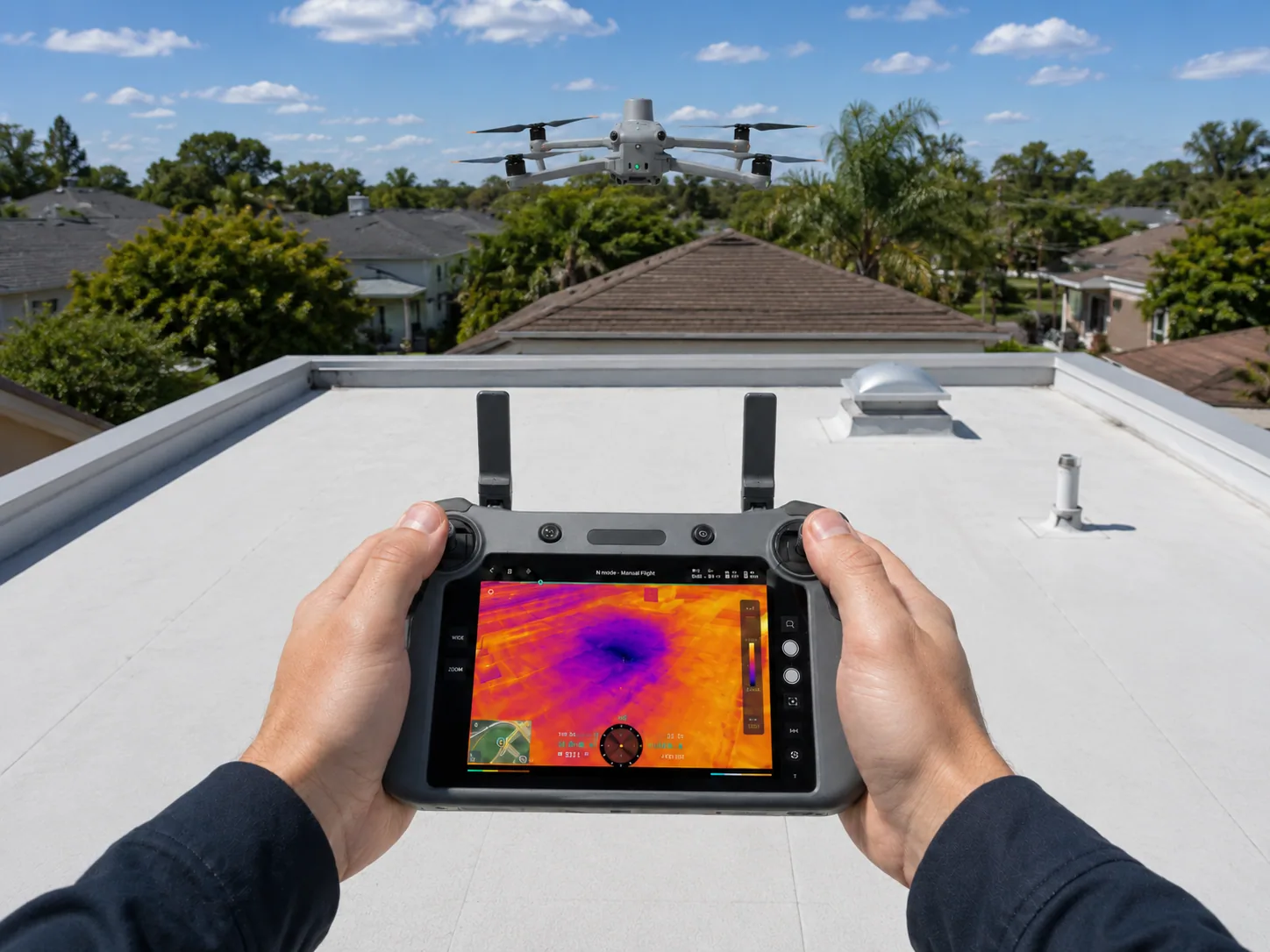
An infrared moisture survey can help identify roof areas with thermal patterns that differ from surrounding sections, giving an owner a place to investigate. It does not directly see water through a roof membrane or prove that every warm or cool area is wet. We collect thermal and visual images under suitable conditions, compare patterns with roof construction and leak history, then verify suspect areas with an appropriate field method. For large warehouse and distribution roofs in Hialeah Heights, that process can help focus test cuts and repair planning across a wide surface.
Confirm the roof and timing are suitable
Before scheduling, we review the roof type, insulation, membrane or surfacing, access, recent weather and the decision the survey should support. Thermal methods depend on conditions that create a useful temperature difference between roof components. Rain, cloud cover, wind, surface shading, rooftop equipment and changes in construction can affect image patterns. We choose the survey timing based on the roof and method, rather than promising results from any time of day or season.
Some assemblies and coverings are difficult to interpret thermally, and standing water or mechanical heat can produce misleading patterns. We identify known equipment, repairs and roof sections that may need a different diagnostic method. The survey plan states what can be imaged, which areas require safe access and what conditions could limit interpretation. A standard drone roof inspection can create an overview but does not establish hidden moisture; thermal work requires its own image review and field verification.
Collect paired thermal and visual evidence
We document the roof with thermal images and corresponding visible-light views, identifying roof sections, image direction, date and relevant conditions. Thermal patterns need a location and a visible reference to become useful later. We note penetrations, drains, shadows, equipment and changes in roof construction that may explain a pattern. The image set is reviewed as a whole so an isolated temperature difference is not treated as a confirmed wet area without context.
Survey coverage is mapped to the accessible roof area, with obstructions and missed sections marked. If a thermal pattern repeats across similar bays or aligns with a known leak history, it may deserve priority for testing. If a pattern follows equipment or a construction transition, we investigate that explanation before recommending removal. A labeled condition report can connect each suspect area with a photo and planned verification step, giving facilities and ownership teams a record they can use.
Verify suspect areas before setting a repair boundary
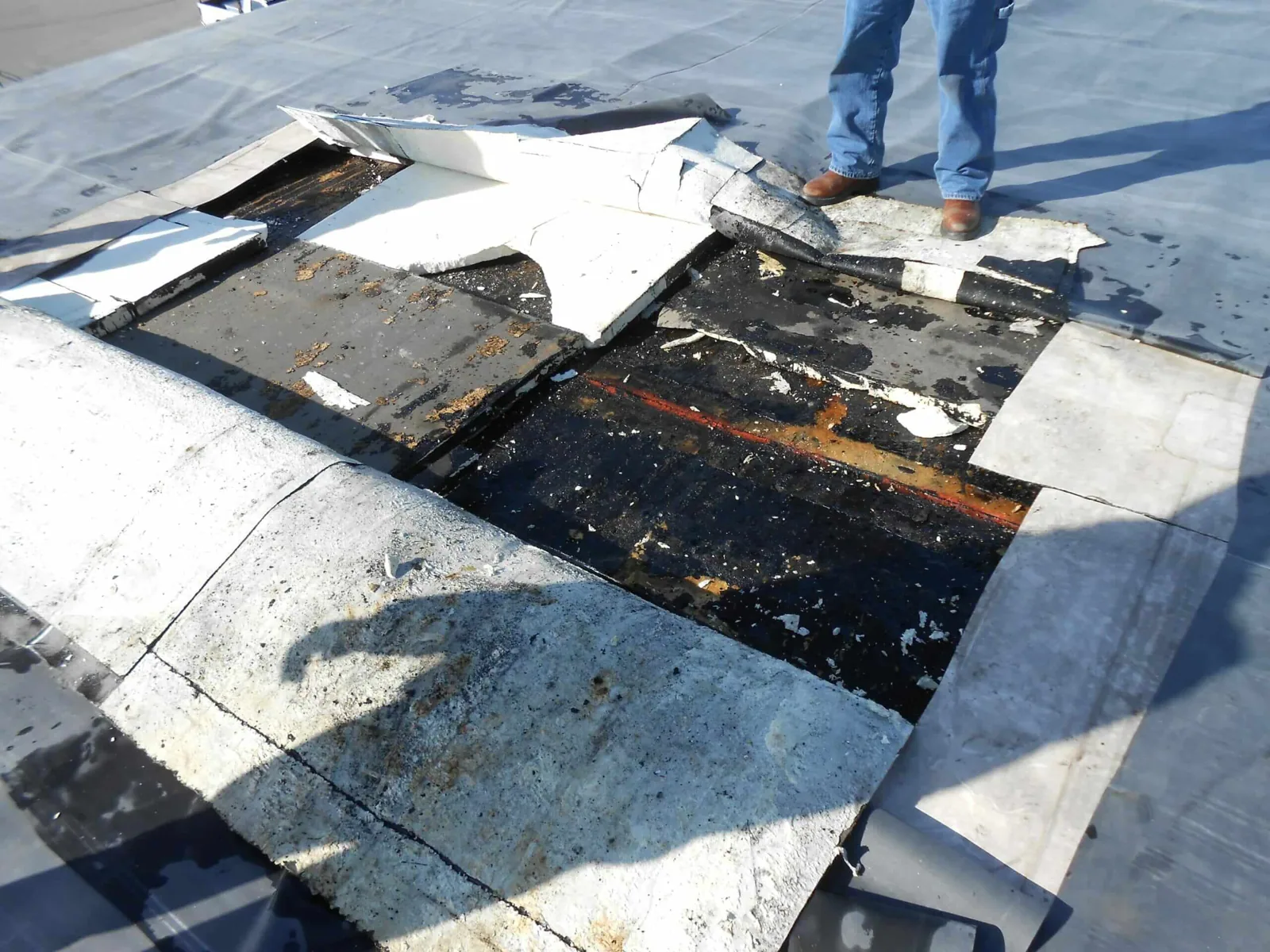
Thermal anomalies are leads for further investigation. We compare them with visual inspection, moisture readings or test cuts selected for the roof assembly and question. A test cut can expose the layers and help determine whether insulation is wet; it also creates an opening that must be repaired. We mark each location and record what was found. If the field check does not confirm moisture, the thermal pattern remains an observation with an alternative explanation rather than a mapped defect.
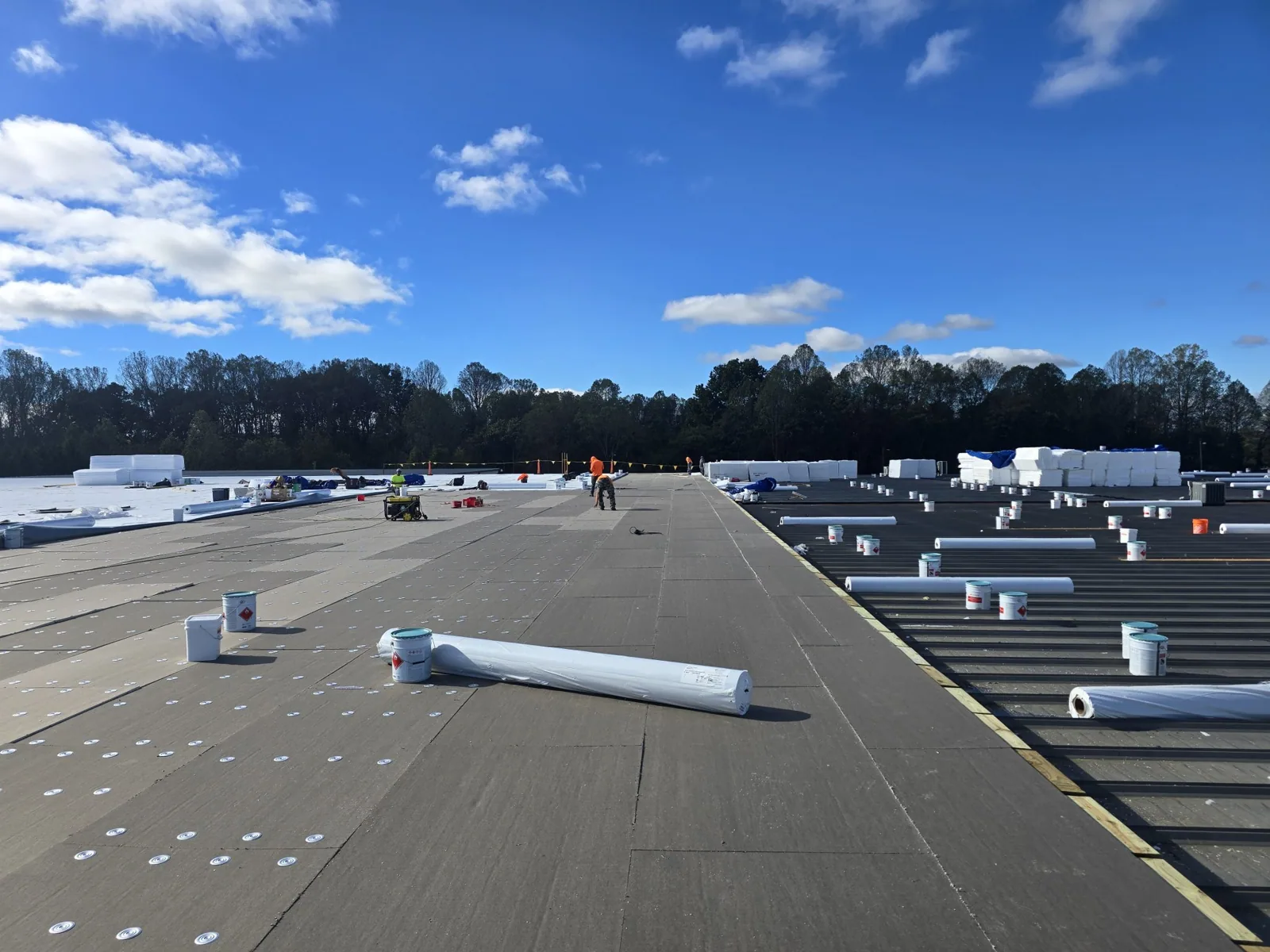
Verification matters because a repair or replacement proposal may depend on the moisture boundary. A false positive can expand removal unnecessarily; a missed wet section can leave damaged material below a new assembly. We describe the sampling method, location and limits, including areas that were not tested. Once the findings are clear, the owner can compare targeted repair, a recover evaluation or replacement where each option fits observed conditions.
Use the survey to make a building decision
A survey is most useful when it answers a specific question: where should test cuts be placed, whether reported leaks align with a larger pattern, or which roof sections need closer review before budgeting. We group suspect areas by roof section and record their estimated extent for planning. The estimate remains provisional until physical verification establishes the actual boundary and material depth.
For an owner with multiple Hialeah assets, we keep findings attached to the correct address, assembly and survey date. Hialeah Heights has industrial and distribution development; West 49th Street and Westland Mall are major commercial areas. We confirm each building's roof construction and operating restrictions before the survey. The report ties each thermal indication to a roof section, field check and address. If a survey is part of a portfolio review, we can organize the result in a roof asset record and track confirmed repairs separately from unverified thermal indications. This prevents a flagged image from being mistaken for a completed diagnosis.
Account for local weather and roof heat
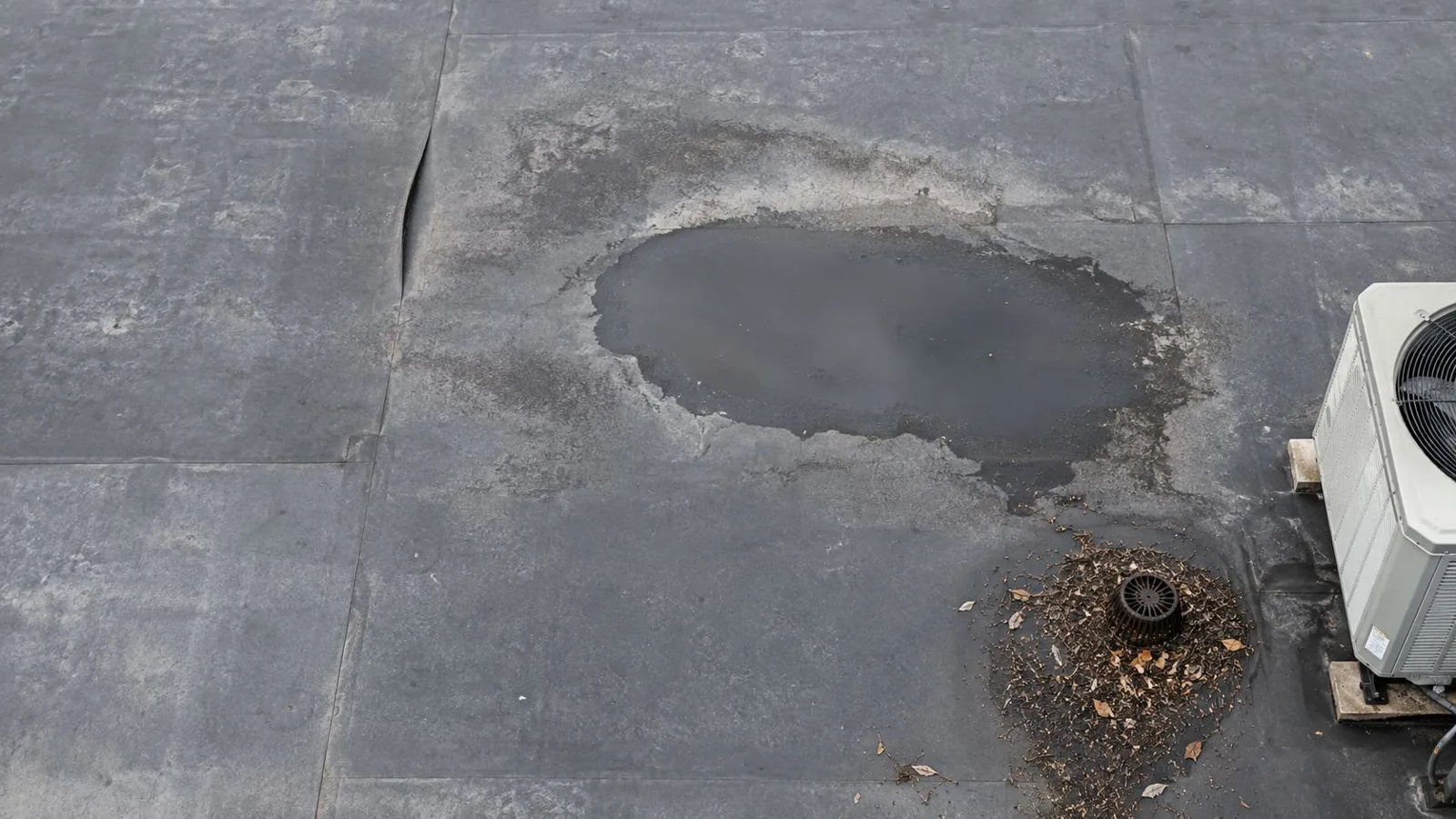
The local wet season's highest rainfall period runs from mid-May through early July. Recent precipitation can affect a survey's thermal contrast and complicate interpretation. We ask about precipitation, roof wetting and drainage conditions before fieldwork, then record relevant conditions at the time of imaging. Summer heat also changes surface temperatures through sun exposure and shade. A roof area can show a thermal difference for reasons unrelated to moisture, so interpretation has to account for the assembly and site context.
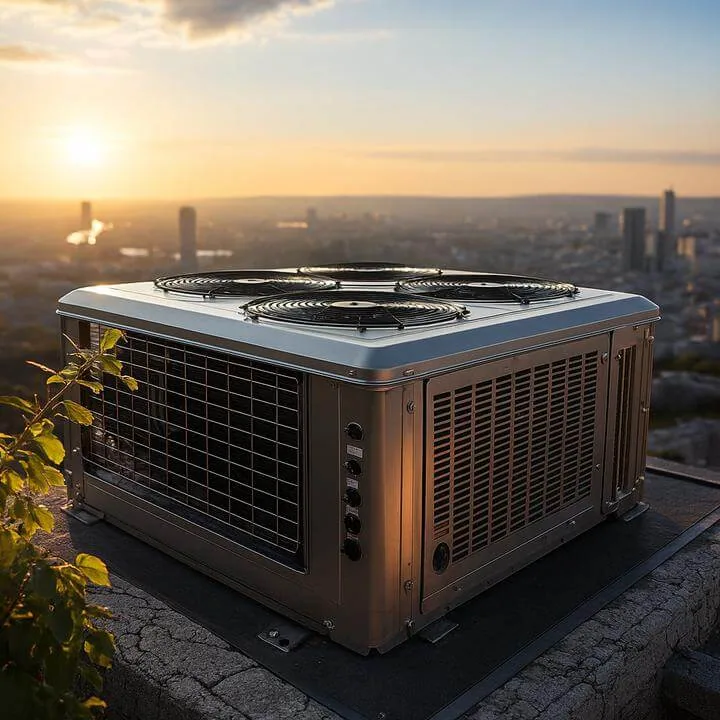
Rooftop units, exhaust discharge, solar equipment, parapets and adjacent shade may create localized patterns. We identify these influences where visible and avoid assigning a moisture conclusion to a pattern without a test. If a Hialeah property is near Hialeah Heights, West 49th Street or Westland Mall, access and operating hours still need to be confirmed with the property contact. Imagery is collected only where the approved method and site conditions allow it.
Explain findings, limitations and next tests
The final report includes survey coverage, paired images, suspect locations, interpretation notes and verification recommendations. It distinguishes a thermal indication from moisture confirmed by a field check and records weather or access limits that affect confidence. We identify which sections appear consistent with surrounding areas, which should be tested first and what additional access is needed. The report can also include a prioritized verification sequence, a list of assumptions and a handoff for the person approving test cuts or access. This turns image review into a bounded next action instead of an open-ended request to investigate the whole roof. If field tests change the interpretation, we update the decision record to separate confirmed conditions from initial thermal leads. We label each anomaly as a thermal indication until field verification identifies whether moisture or another cause is present.
Send the address, roof plan, leak history, prior repairs, known equipment locations and the decision you are trying to make. We will confirm method suitability and propose the field checks needed to turn image patterns into a usable scope. If a survey identifies a confirmed moisture area, the report can support a commercial roof inspection or repair estimate. Where budget timing matters across several buildings, capital planning can distinguish verified work from areas still awaiting testing.
Questions
WHAT OWNERS ASK
Does infrared imaging prove that roof insulation is wet?
Not by itself. Infrared imaging identifies temperature patterns that may justify field testing. We compare thermal and visible images with roof construction and conditions, then verify suspect areas before labeling them as moisture.
When should an infrared roof survey be scheduled?
Timing depends on roof construction, recent weather, surface conditions and the diagnostic method. We review suitability first and record conditions that could affect image interpretation.
Will the survey identify every leak?
A survey can help prioritize visible roof areas for investigation, but it may miss concealed conditions and cannot trace every water path. Interior reports and direct inspection remain part of leak diagnosis.
Do you make test cuts during the survey?
Only when testing is part of the approved scope. Test cuts expose roof layers and must be repaired. We identify locations in advance where practical and record the materials observed.
What should I send before the survey?
Provide the roof plan, address, assembly history, leak locations, prior repairs, equipment map and site access contact. Tell us which decision the survey should support so coverage and verification can be planned.
Related Roofing Work
Turn thermal patterns into verified roof findings
Share the roof plan, property address, leak history and decision you need to make. We will confirm survey suitability, map suspect areas and define follow-up verification.